
 E-Paper



Closure of educational institutes hits PG owners in DU’s north campus area hard
Since there are less than 4,000 beds available for undergraduate students in different college and university hostels, most outstation students end up staying in PGs or sharing rented accommodation with other students

 Prefer HTon Google


The closure of educational institutes and the shift towards online classes due to Covid-19-related restrictions since March last year have hit the rented housing business in Delhi University’s (DU) north campus area. Many owners said they have had to shut their businesses down.
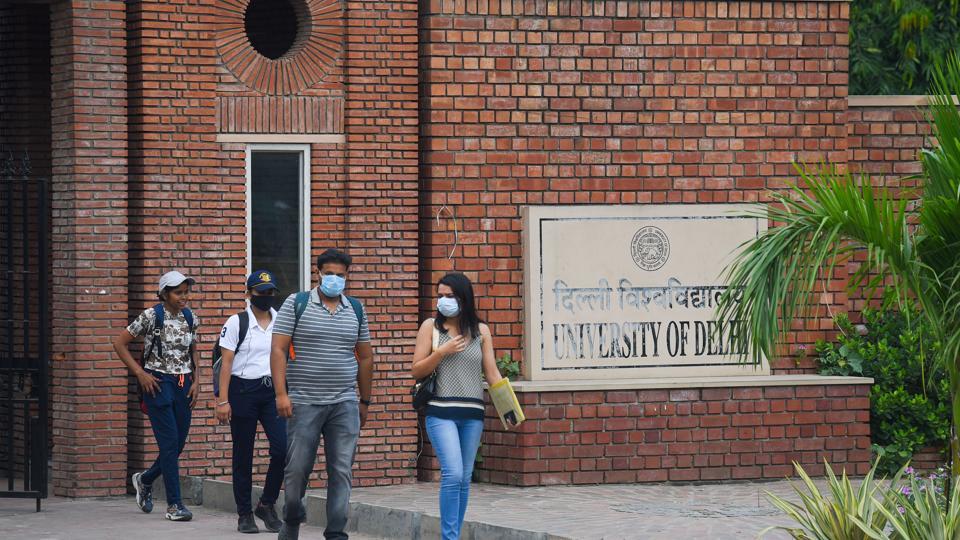
With a new academic session set to begin in online mode and the impending danger of the third wave of Covid-19, paying guesthouse (PG) owners said if students do not return soon, the economic impact might be irreversible.
Like previous years, of the around 280,000 applicants to DU this year, only 40% of the aspirants (115,000) are from Delhi-NCR areas. Since there are less than 4,000 beds available for undergraduate students in different college and university hostels, most outstation students end up staying in PGs or sharing rented accommodation with other students.
Thanks to online classes, scores of PG owners who rented buildings to run hostels for outstation students have shut down their businesses in the past year.
Vikas Bansal, who runs the famous Circuit House PG in the Kamla Nagar area, owns four buildings and had rented five others to house around 500 students every year before the pandemic. Due to the pandemic-generated financial crunch, he said he can now offer students only 200 beds in the four buildings he owns.
“Most of the hostel buildings and PGs currently operational in the north campus area are owned by people running the businesses. Those who rented property for the purpose had to give up their lease because it was impossible to pay rent, electricity, water, and other charges,” said Bansal, who is also the vice-president of the Delhi Student Housing Association-- a collective of students, property and PG owners formed during the pandemic to address housing issues.
“We are completely dependent on the university guidelines. So far, there is no clarity regarding the reopening of classes and the mode of teaching (online/offline) in the coming days. We are hoping for in-person classes to resume at least in a phased manner from January. If that doesn’t happen, the businesses of hostel-owners like me, who own property, will also collapse,” he said, adding that the economic impact would be “irreversible.”
Bansal also said that several start-ups and housing facilities that were offering living space to students in the area have shut shop in the past 18 months due to the uncertainty of the situation and the high maintenance costs, including housekeeping, electricity, rent, water, and others.
Several hostel owners said that another reason for the closure of the hostel and PG business in areas such as Kamla Nagar, Hudson Lane, GTB Nagar, Vijay Nagar, and Kingsway Camp was the way the buildings were constructed. They said the properties were designed to house students, not families, and hence could not be rented out to anyone else.
Rajpal Singh, who had rented 12 buildings, is currently in the process of shutting down his hostel business. “In the past four-five years, many buildings were constructed specifically to be used as hostels. For instance, there would only be one kitchen in a multi-storeyed building. The buildings cannot be converted into regular flats and rented out to families because they lack drawing rooms, lobbies, and separate kitchens,” he said.
Singh explained that since PGs were a commercial establishment, PG owners would have to pay electricity and other kinds of rent accordingly. “I was spending over ₹25,000 per month on these expenses, including paying salary to housekeeping and security staff. It was no longer sustainable to run the business so I decided to shut it down. I had paid around ₹2-3 crore as security deposit for these buildings, but the money was adjusted in lieu of the last few months’ rent and I did not get any of it back,” he said, adding that the second wave of the pandemic was particularly devastating for hostel owners.
“In January this year, some students had started returning to campus. But the second wave of the pandemic crushed all hopes of normalcy. Parents too are scared about sending their wards back to campus and with the risk of a third wave, there is a lot of uncertainty,” he said.
Ajay Singh, the owner of Aparna Hostel which has housed about 500 students every year for nearly two decades, said he had to sell two of his cars to keep up with the monthly cost of maintaining the hostel ( ₹2 lakh per month).
He said that until last March, there were at least 1,000 hostels and PGs in the one-km radius of DU’s north campus. “Around 50% of hostel owners had to leave their furniture behind when they gave up their lease. There is no assistance scheme for PG owners,” he added.


