The Delhi Development Authority (DDA) has eased norms for additions and alterations in its housing colonies, allowing residents to undertake a wider range of modifications, including installation of EV charging points, rooftop solar panels and accessibility ramps. The news norms also introduce a three-category approval system to simplify permissions.
Permissible additions and alterations
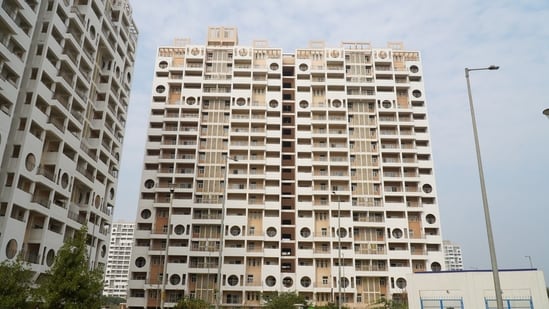
Under the revised policy, which is already in effect, flat owners will be able to install EV charging points in designated parking areas in line with the Centre’s guidelines without prior approval. They will also be allowed to add lofts, install additional PVC water tanks, construct accessibility ramps, replace or augment rooftop water storage, convert windows into cupboards under specified conditions, and create openings for exhaust fans or window air-conditioners without seeking permission.
The policy also allows temporary sloping terrace covers with lightweight roofing material and glazing through an intimation process. Rooftop solar panels for domestic use will be permitted with prior approval, subject to compliance with the unified building by-laws and the ministry of new and renewable energy guidelines.
Changes requiring approval
{{/usCountry}}Changes requiring approval
{{/usCountry}}For residents seeking more substantial alterations, the DDA has permitted interchange of kitchens, bathrooms and toilets, extension of common staircases to terrace level with a mumty, and reconstruction of certain single-storey and duplex flats after obtaining approval and meeting structural safety requirements. Several such proposals will also require consent from residents of the concerned vertical block or applications routed through resident welfare associations, where applicable.
The authority has also laid down provisions for additional permanent construction. Courtyards can be covered up to the first-floor level after approval, while owners of upper-floor flats will be allowed to construct over terraces created due to courtyard coverage below, subject to approved layout plans, structural safeguards and compliance with prescribed regulations. Construction of bathrooms and toilets in rear courtyards has also been permitted under specified conditions.
Regularisation of existing alterations
The policy simultaneously introduces a mechanism for regularising existing unauthorised additions and alterations if they conform to the prescribed norms.
“The existing additional covered area and addition(s)/alteration(s) can also be get regularised by the owner(s) of DDA flats if the same are within the prescribed norms following the same procedure,” the document states.
A DDA official said all cases will be processed as per the revised policy from now on. “All cases henceforth will be processed in accordance with the revised policy as mentioned in the circular. Also, implementation will be done by DDA/ MCD as per notified/ denotified area,” said the official.
Also read: Delhi Development Authority’s ageing complexes: Homes crumbling under weight of dreams
Safety norms and approval process
To ensure safety, the revised policy mandates certification by a registered architect and structural engineer for proposals requiring approval. For certain alterations in buildings constructed before March 21, 2001, owners will also have to conduct structural audits in accordance with the Delhi government’s seismic safety notification. The policy stipulates that there should be no encroachment on public land, infringement of the rights of other residents or obstruction of common areas and essential services.
An official familiar with the revision said the policy was intended to simplify procedures while maintaining safety and planning norms.
“The revised policy provides greater clarity by categorising permissible works and introducing a defined procedure for permissions and regularisation. It also incorporates newer requirements such as EV charging infrastructure and rooftop solar installations while ensuring structural safety through certification by qualified professionals,” the official said.
The document also prescribes a timebound approval process. The sanctioning authority must communicate its decision within 30 days of receiving an application. Owners will have to intimate the authority after completion of the work, while permissions will lapse if completion is not reported within three years. Authorities have also retained the power to conduct test checks and revoke approvals if construction is found to violate building byelaws or policy provisions.
Stay updated with all top Cities including, Bengaluru, Delhi, Mumbai and more across India. Stay informed on the latest happenings in World News along with Delhi Election 2025 and Delhi Election Result 2025 Live, New Delhi Election Result Live, Kalkaji Election Result Live at Hindustan Times.
Stay updated with all top Cities including, Bengaluru, Delhi, Mumbai and more across India. Stay informed on the latest happenings in World News along with Delhi Election 2025 and Delhi Election Result 2025 Live, New Delhi Election Result Live, Kalkaji Election Result Live at Hindustan Times.