
 E-Paper



Delhi food safety dept to ensure quality food in hospitals
The department looks at the quality of food, conditions in which it is prepared, utensils and water used before conducting an independent audit and awarding a certificate from FSSAI

 Prefer HTon Google


Delhi’s food safety department is working to get large kitchens in hospitals, temples, and Tihar Jail certified. The department looks at the quality of food, conditions in which it is prepared, utensils used, water used before conducting an independent audit and awarding a certificate from the Food Safety and Standards Authority of India (FSSAI).
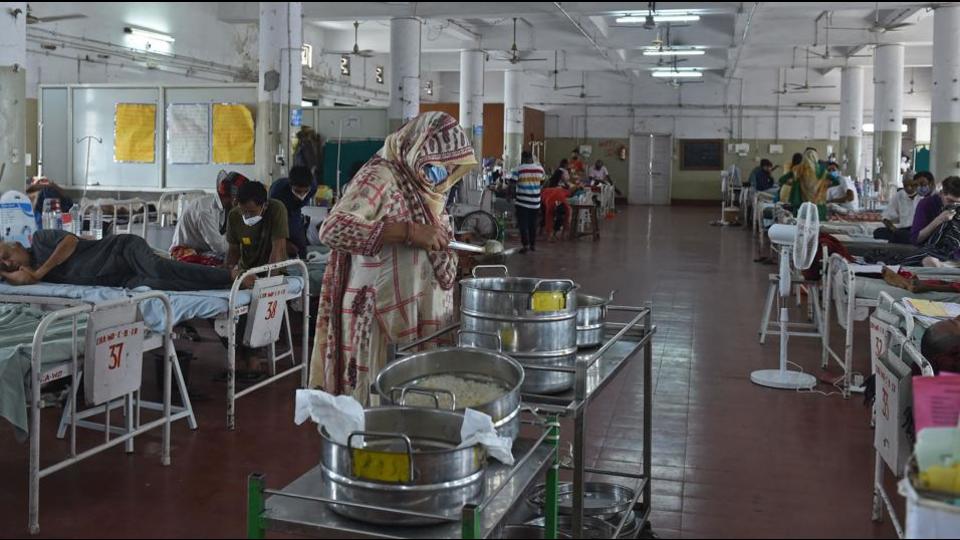
So far, Max Hospital, Saket, has been awarded the Eat Right certificate. The processes are underway at Max Hospital, Patparganj, Indraprastha Apollo Hospital, and Sri Action Balaji Hospital, according to officials.
“Since people are thronging the hospitals, the department wanted to ensure that all the food available to the patients as well as their relatives was hygienically prepared. The certificate will let people know that,” said Ranjeet Singh, nodal officer for the programme from Delhi’s food safety department. The department is headed by food commissioner Neha Bansal.
Also Read | India reports 41,383 new Covid-19 cases, 507 more deaths
The department plans to certify 11 big hospitals and temples, one from each district, by the end of the month.
As for temples, Akshardham and Shri Sai Mandir, Najafgarh, have been certified.
This action was taken after the department received complaints of Kalkaji temple reusing prasad. “We received complaints that beggars outside the temple were collecting the boondi from those visiting the temples and reselling it to the vendor. That’s when the department decided to certify temples serving food to large number of people,” said Singh.
The department will conduct a similar inspection and certify Tihar Jail as well.
The food safety officers have to inspect the kitchens, pantry, the area where food is served, the vendors used, and any outsources catering establishments. They look at whether the raw materials are properly stored, whether vegetarian and non-vegetarian food is separately stored and cooked, whether the drainage system is proper, whether the utensils used are made of food grade metal, whether RO water is used for cooking.
“The law does not allow for cooking in ground water. RO water has to be used; even then the water needs to be tested twice a year at designated labs. In addition, we also look at whether is wearing apron, mask, hair net, have clean nails etc,” said Singh.


