
 E-Paper



Delhi gets first scientific blueprint to restore forests, but proposed cure raises concerns
The Forest Research Institute (FRI), Dehradun, has prepared a ten-year working plan for Delhi’s forest department.

 Prefer HTon Google


New Delhi: Nearly four in every ten trees in Delhi’s forests are species that don’t belong there — invasive plants that have steadily choked out native growth, degraded soil and driven out wildlife. For the first time, the Capital has a scientific plan to fix that.
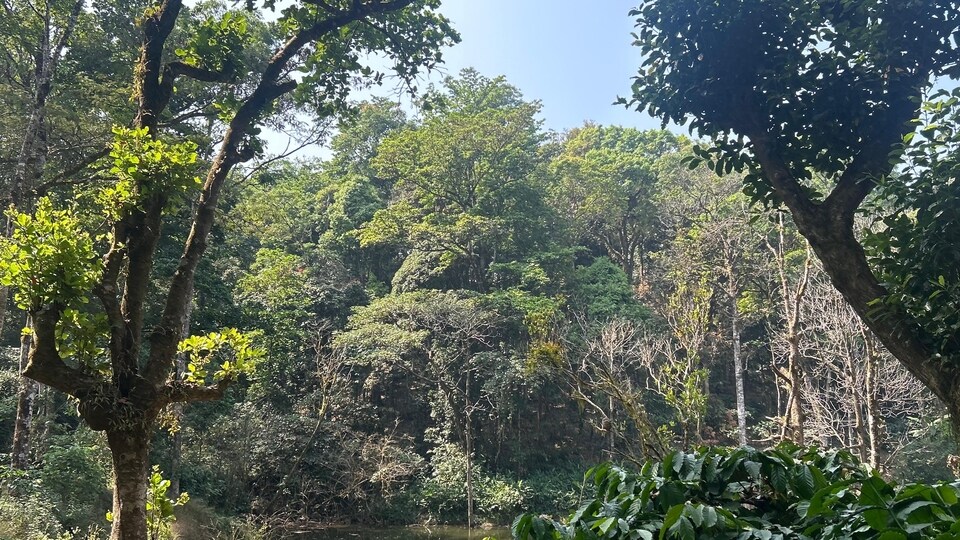
The Forest Research Institute (FRI), Dehradun, has prepared a ten-year working plan for Delhi’s forest department that maps out how the city intends to restore its green estate — the Aravalli ridge, the Yamuna floodplain, and dozens of protected and unprotected patches across the capital — by 2036-37. The goal is to replace what has become a collection of degraded, invasive-dominated stands with functioning native forest.
The plan’s central task is the removal of three invasive species — Prosopis juliflora (vilayati kikar), eucalyptus and Leucaena leucocephala (subabul) — which together account for nearly 40% of Delhi’s forest growing stock. They will be cleared in phases over ten years and replaced with native flora. But the plan also proposes a more contentious route: deploying biological controls — seed-feeding beetles, fungal pathogens and bacteria — to weaken invasive populations. The science behind this remains unsettled, and experts have already raised concerns.
Both beetle species proposed — Algarobius prosopis and Algarobius bottimeri — are native to North America, meaning the method effectively proposes introducing one set of exotic organisms to control another, and there is inadequate evidence on whether other species will be affected.
Also Read | 10-yr-plan suggests multilayered approach for Delhi forests
Faiyaz Khudsar, scientist in-charge at DDA’s Biodiversity Parks Programme, said the use of biocontrol agents has long been contested, particularly when they are not native to India. “We don’t know the impact it will have on our ecosystem and the native species here. The beetles may become invasive. Similarly, pathogens will require close attention. The ideal solution remains canopy clearing in a systematic manner while introducing our native saplings,” he said.
The beetles evolved targeting Prosopis seed pods specifically — raising what experts said is the question of whether they can reliably distinguish vilayati kikar from khejri, or Prosopis cineraria, a native Indian species in the same genus. The plan mentions that such biological controls — seed-eating beetles, bacteria and fungal pathogens — have been tested in other regions but does not detail which regions and what the scientific consensus has been.
The plan itself acknowledges the scale of the challenge. Regeneration — the ability of a forest to replace ageing or felled trees naturally through seedlings, without human intervention — is the most basic measure of whether an ecosystem is self-sustaining.
Also Read | Delhi realigns forest divisions after creation of two new districts to protect Ridge areas
Not a single forest range in Delhi currently shows good regeneration of native species. Only two — the Central Forest Range and Asola Bhatti Forest Range — show even fair regeneration, and that too limited to Morus alba (white mulberry, a fast-spreading naturalised species) and Wrightia tinctoria (sweet indrajao, a native ridge tree). Most areas show poor regeneration, improving only in protected patches. “The presence or absence of regeneration serves as a key indicator of a forest ecosystem’s health. If a forest shows poor or inadequate regeneration, it suggests underlying health issues,” the plan states.
The scale of vilayati kikar’s takeover is striking. Forest surveyors use a scoring system to measure how thoroughly a species dominates its surroundings — accounting for how many trees there are, how densely they grow, and how much canopy they cover. Vilayati kikar scores 175 on this scale. Blue gum eucalyptus, the second most common species, scores just 53. Everything else is further behind still. By a separate measure of biodiversity (the Shannon Diversity Index), the southern ridge is Delhi’s most species-rich forest; the northern ridge its most depleted.
Removal will be gradual by design — no more than a fifth of any forest section cleared in a single year, so that each patch takes five years to fully treat without stripping canopy all at once. The plan specifies that Prosopis juliflora will be removed using the cut-rootstock method, while eucalyptus and Leucaena will be cleared by felling — manually or mechanically depending on site conditions. Cleared sections will be replanted with fast-growing native species at a density of roughly 2,500 plants per hectare. To be sure, the plan does not mention which native species will be used for replanting.
Crucially, the plan emphasises improving the quality of green cover rather than simply increasing tree numbers, with a focus on biodiversity-rich forests capable of sustaining wildlife and maintaining ecological balance. It also calls for strengthening soil and water conservation, restoring degraded forest land, and promoting mixed forests with trees, shrubs and grasses to create stable ecosystems that support birds, mammals, reptiles and pollinators.
Beyond the invasive species question, the plan proposes large-scale ecological restoration of the Aravalli ridge and Yamuna floodplain forests. Measures include planting typha and bamboo along the Yamuna, building silt retention dams, ponds and water bodies, and creating layered plantations to reduce pollution and improve habitat quality. The plan also calls for ecological corridors, fruit-bearing plantations, waterholes, rescue centres and biodiversity monitoring — the aim being to make Delhi’s forests function as interconnected ecosystems rather than isolated patches.
“Work on the plan is set to commence soon,” a forest department official said.


Stay updated with all top Cities including, Bengaluru, Delhi, Mumbai and more across India. Stay informed on the latest happenings in World News along with Delhi Election 2025 and Delhi Election Result 2025 Live, New Delhi Election Result Live, Kalkaji Election Result Live at Hindustan Times.


