
 E-Paper



Delhi govt unveils 14-point plan to tackle summer air pollution
Pollution generally starts to peak in April and can continue till June, with dust and PM10 being the primary pollutants.

 Prefer HTon Google


Chief minister Arvind Kejriwal on Monday launched the Delhi government’s 14-point Summer Action Plan against air pollution and said the plan, in effect from now, comprises short-term, medium-term and long-term measures to tackle issues such as dust pollution, industrial pollution, open burning and solid waste management.
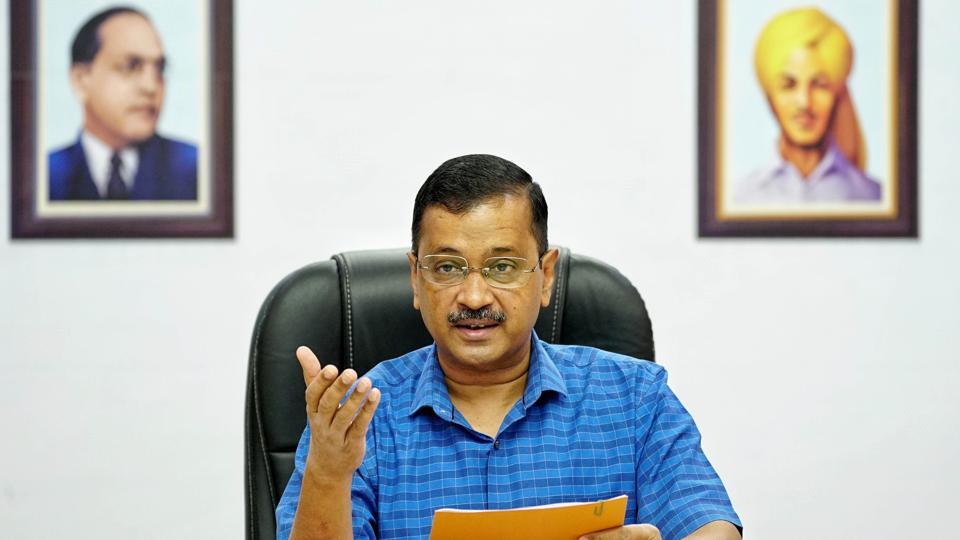
He said as part of the plan, the government will deploy 84 mechanised road sweepers, 609 water sprinklers, 185 anti-smog guns, along with patrolling teams—both during the day and at night—to keep a tab on pollution sources. The chief minister also said the efforts of the Delhi government were resulting in the reduction of pollution levels by around 30% in 2022 compared to 2016.
“In 2016, there were 26 days when the Air Quality Index (AQI) was in the ‘severe’ category, but in 2022 there were only six such days. The year 2016 also recorded 124 days in the ‘very poor’ to ‘severe’ range, but last year, the figure came down to 72 days. Overall, there has been a 30% reduction in pollution during this period,” he said on Monday.
Also Read: What has led to an early and warm summer this year in Delhi?
Listing dust pollution as one of the main causes of pollution during the summer, Kejriwal said the action plan will involve the sprinkling of water across the city via mechanised sweepers, with smaller colony lanes under the Municipal Corporation of Delhi (MCD) to also be sprinkled with water one or two times every day.
“Besides this, 225 teams will be constituted to patrol the city during the day and 159 such teams to patrol the streets of Delhi at night. They will be in charge of identifying violations and sources of pollution in the Capital,” he said, adding the government was already in the process of acquiring 70 more mechanised road sweepers and 250 water sprinklers.
Further, to tackle dust pollution, the chief minister said construction sites larger than 500sqm have to register with the Delhi government—an exercise started last year, with 750 sites already registered.
The 14-point action plan includes controlling dust pollution, stopping open burning (including landfill fires), industrial pollution, managing solid waste, utilising the real-time source apportionment study, increasing green cover, transplanting trees, developing city forests, urban farming, developing lakes and water bodies, developing parks, creating an e-waste eco park, using eco clubs in schools and colleges to create awareness and carrying out dialogues with neighbouring states over common issues.
Kejriwal said the government will also be implementing a standard operating procedure (SOP) to prevent landfill fires.
On the industrial pollution front, Kejriwal said 33 teams comprising officials of the Delhi Pollution Control Committee (DPCC) and Delhi State Industrial and Infrastructure Development Corporation (DSIIDC) had been formed to keep a tab on industries not using clean fuel. He also said the Aam Aadmi Party (AAP) government, now in power in MCD too, was formulating a policy for improved solid waste management in Delhi. Kejriwal said the government had already begun utilising data from the real-time source apportionment study of Delhi, with mobile vans to be deployed across the Capital’s pollution hot spots for further data collection.
Greening is another key part of the plan, with the government targeting the plantation of 5.2 million saplings this year. “We will also be creating seven city forests, which will include facilities such as cycle tracks and canopy walks. We will work with MCD and the New Delhi Municipal Council (NDMC) to beautify parks. Around 3,500 parks, larger than 0.5 acres have already been identified for beautification, for which a deadline of December 2023 has been set.”
Kejriwal added the government was reviving dried-up lakes across the city to help recharge the groundwater table. He also said the government is working on creating an e-waste eco park, for which a 20-acre site has been identified in Holambi Kalan. “We have also listed eco clubs in the plan, with 2,000 such clubs already existing in schools and colleges in Delhi. Environment-friendly activities are promoted there. Lastly, we will work with neighbouring states to curb air pollution,” he said.
Pollution in sumer generally starts to peak in April and can continue till June, with dust and PM10 being the primary pollutants, until Delhi experiences pre-monsoon and monsoon showers. While pollution levels in winter are generally the highest in the Capital, owing to adverse weather conditions such as low temperatures and calm winds—both of which do not allow pollutants to disperse, summer pollution levels are not much better, with Delhi’s air deteriorating to the “poor” and “very poor” categories on certain days. This, despite meteorological conditions being much better in summer months.
Central Pollution Control Board (CPCB) data shows Delhi’s average Air Quality Index (AQI) reading in April 2022 was 255, 30 points higher than February 2022 when it was 225. In January 2022, the average AQI reading was 279. In May last year, the average AQI was 212 and in June, it was 190.
Reacting to the government’s plan, Delhi Bharatiya Janata Party (BJP) president Virendra Sachdeva on Monday asked the CM to put out a technical report in the public domain to justify the claim of reduction in pollution in Delhi between 2016 and 2022. “It is shocking to see the CM admitting that he will now cooperate with MCD as his party is in power, which clearly shows his government did not cooperate with the BJP-run MCD in last eight years.”
Meanwhile, experts say while the plan has some promising approaches, excluding action on vehicles is a big miss.
“On-road emissions from vehicles are among the key contributors to particulate and gaseous emissions. Addressing traffic intensity is needed in view of the frequent breaching of ozone standards during summer months. The plan also needed to be more cohesive to include construction and demolition waste from buildings and infrastructure as well as the household use of solid fuels,” Anumita Roychowdhury, executive director, research and advocacy at the Centre for Science for Environment (CSE) said .



