
 E-Paper



Delhi maps 62 congestion hot spots; multi-agency plan to ease traffic, cut pollution
Environment minister Manjinder Singh Sirsa said on Friday that short-term interventions have already begun at several sites, with medium- and long-term structural upgrades to follow

 Prefer HTon Google


The Delhi government has identified 62 traffic congestion hot spots across the Capital – choke points that officials said are adding a “measurable layer” to the city’s pollution load – after drawing up a citywide, multi-agency decongestion blueprint, officials said on Friday.
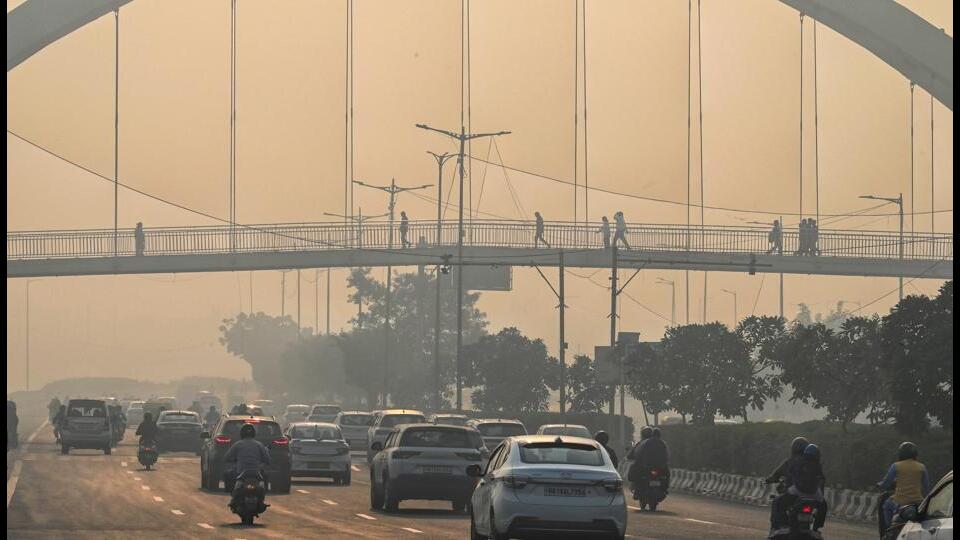
An internal presentation, accessed by HT, shows these bottlenecks stretch across nearly every district: from the chronically clogged Bhavbhuti Marg outside New Delhi Railway Station to Madhuban Chowk in northwest Delhi, Mayur Vihar Phase III in the east, South Extension in the south, Punjabi Bagh in the west, and the dense transit corridors around Kashmere Gate and Anand Vihar.
More than half of the 62 sites see severe jams during morning and evening rush hours, it showed. Prominent among those are Safdarjung Hospital, Ajmeri Gate, the road outside Max Hospital in Saket and the Punjabi Bagh roundabout on Ring Road. Another 11 locations, such as Chelmsford Road near New Delhi Railway Station and Purana Quila Road adjacent to Patiala House Court, experience intense evening load. Six areas such as South Extension Part I, Majnu Ka Tila and Mayur Vihar Ph-3 – were found to be choked on weekends or “market days”.
Environment minister Manjinder Singh Sirsa said on Friday that short-term interventions have already begun at several sites, with medium- and long-term structural upgrades to follow. “We have already begun work on the short-term measures, and the medium-term measures will kick in soon. In a few months, there will be considerable difference at these points,” Sirsa told HT, adding that congestion-specific action plans were being integrated into the city’s broader pollution control strategy.
The list of hot spots – jointly compiled by Delhi Traffic Police and corroborated by the PWD, Municipal Corporation of Delhi, Delhi Metro Rail Corporation and the transport department – reveals recurring structural failings: narrow carriageways, broken medians, illegal parking, encroachments, poorly designed intersections and long-running civil works.
At several locations, the triggers are hyperlocal. At Boulevard Road near Tis Hazari, advocates’ cars routinely occupy both carriageways and obstruct two DTC bus stands, causing hours-long snarls on working days. At Majnu Ka Tila, ongoing work on a foot overbridge, narrow lanes, unregulated parking and weekend rush to the Tibetan market create gridlock. In Burari, dug-up Delhi Jal Board stretches, broken dividers and heavy school-hour traffic slow movement daily.
Only two locations – Guru Ravidas Marg and Najafgarh Road – were flagged as remaining heavily choked almost throughout the day.
Short-term measures include deploying additional personnel during peak hours, acting against illegal parking and wrong-side driving, clearing hawker encroachments and quick engineering fixes such as repainting lanes, stop lines and zebra crossings. “Pothole repair has been prioritised, especially on high-stress corridors such as Burari Main Road, ISBT Kashmere Gate, Khanpur and Jaitpur More,” an official said. Traffic police have also been directed to work with bus operators to prevent clustering at bus stops – another major cause of bottlenecks. Officials expect visible improvement in some pockets within 30 days.
The medium-term 30–90 day plan focuses on junction redesign, new traffic islands, optimised signal cycles, relocation of bus stops and auto stands, removal of permanent encroachments and improved signage, blinkers and reflectors in areas with poor visibility or heavy pedestrian movement. For East Azad Nagar and Krishna Nagar market, pedestrian channelisation, reallocation of auto stands and tighter e-rickshaw regulation have been proposed. At South Extension, agencies plan to reorganise pedestrian flows and review the placement of bus stops. In west Delhi, redesign proposals for Rajouri Garden, Naraina and Rohtak Road aim to accommodate intense vehicular load and market-led crowding.
The long-term plan, with timelines of 90 days and beyond, includes widening roads where feasible, building permanent service lanes, constructing foot overbridges and underpasses, and installing smart traffic systems such as adaptive signals and dedicated bus lanes. It also calls for landscaped barricading to prevent jaywalking, identified as a major cause of intermittent traffic stoppages on arterial roads.
Among the toughest stretches is the Kalindi Kunj merge point, where six lanes from Noida funnel into three lanes inside Delhi, overwhelming capacity at peak hours. At Sarai Kale Khan, where Barapullah, Ring Road and Mathura Road converge at a junction already burdened by ISBT, RRTS and railway station traffic, suggested fixes include redesigned merge lanes, grade separators and separate bays for buses and autos.
“The decongestion plan hinges on strict coordination across agencies,” a senior official said. PWD must execute widening and structural repairs; MCD must remove encroachments and regulate weekly markets; DMRC must expedite pending civil works near Metro stations; NHAI will be responsible for highway stretches; and the transport department will need to regulate autos, e-rickshaws and bus operations, including rerouting where necessary. A joint task force will monitor progress through weekly reviews supported by photo and video documentation. A dashboard to track congestion levels at each hot spot in real time is also being explored.
Sunil Dahiya, founder of the environmental think-tank Envirocatalysts, welcomed the city’s renewed focus on congestion as a pollution-control measure but said that long-term improvement required shifting people out of cars. “The ultimate solution lies in robust public transport, safe cycling lanes and walkable pathways. Without real investment in these, we are merely managing congestion, not eliminating it,” he said.
Experts note that congestion spikes not only PM2.5 but also nitrogen dioxide (NO₂) levels, which worsen asthma and respiratory infections. As HT reported on November 8, monitors near high-traffic intersections such as Vikas Marg at ITO and the Mahipalpur flyover have recorded exceptionally high NO₂ concentrations. Between November 1-7, hourly NO2 levels peaked at 240µg/m³ at IGI Airport (T3), followed by 221µg/m³ at ITO and 210µg/m³ at North Campus — far above the national standard of 80µg/m³ and the WHO limit of 25µg/m³.



Stay updated with all top Cities including, Bengaluru, Delhi, Mumbai and more across India. Stay informed on the latest happenings in World News along with Delhi Election 2025 and Delhi Election Result 2025 Live, New Delhi Election Result Live, Kalkaji Election Result Live at Hindustan Times.


