E-Paper



With QR-code tickets, Delhi Metro takes step towards going tokenless
The Metro has already introduced QR-code-based paper tickets until the transition is made to mobile-based QR tickets, said officials

 Prefer HTon Google


Delhi Metro commuters will soon be able to use QR codes on their mobile phones to enter and exit stations, officials aware of the development said, adding that as a prelude, QR code-based paper tickets were introduced across all Metro lines on Monday.
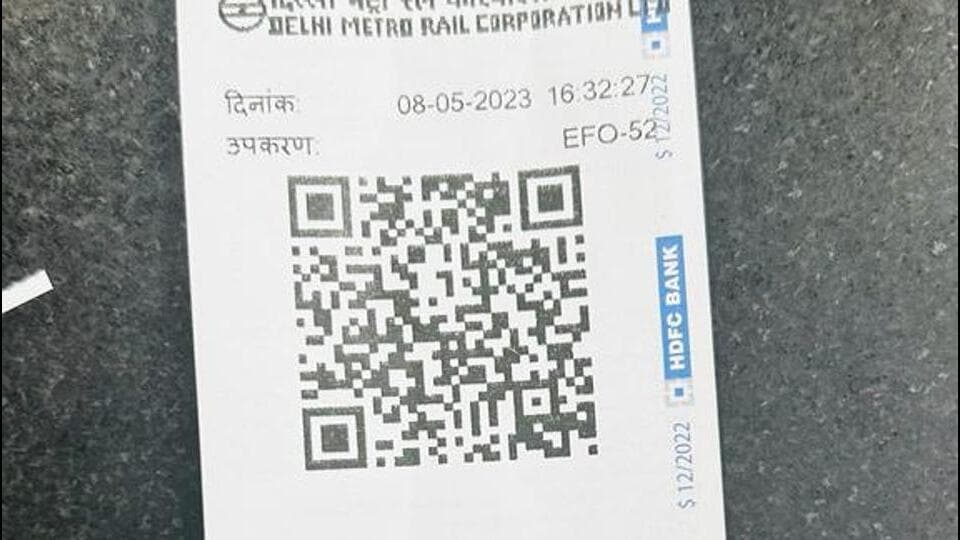
Also read: Delhi government unveils new scheme for app-based premium buses
These steps, the officials said, are part of a long-term plan of the Delhi Metro Rail Corporation (DMRC) to go tokenless, with commuters being granted access to its stations only through paper- and mobile-based QR code tickets, along with smart cards.
“Starting today, the DMRC has implemented QR code-based paper tickets on all its lines and upgraded at least two entry and exit Automatic Fare Collection (AFC) gates at all Metro stations to read QR codes. By the end of this month, we will introduce mobile-based QR tickets, which will eliminate the need for physically purchasing tickets at stations and counters,” said Anuj Dayal, principal executive director of corporate communications at DMRC on Monday.
He added, “DMRC will upgrade all AFC gates across the network to QR code compliance by the end of June this year and upgrade ticket vending machines (TVMs) to issue such paper tickets. DMRC has conducted QR ticket trials on all its lines in a phased manner. With introducing these more transparent and human intervention-free cashless mechanisms, the concept of issuing tokens will be gradually phased out.”
According to a Metro official familiar with the development, a commuter can use the Delhi Metro app on their mobile phone to purchase an e-ticket, and a QR code will be generated after payment, for which multiple options will be available. “A commuter will then simply have to hold their smartphone in front of the QR code scanner on the AFC gate, which will grant them access to the Metro station,” said the official, who asked not to be named.
“While tokens will be phased out gradually, both paper-based and mobile-based QR code tickets will continue alongside smart cards,” the official said.
To be sure, QR-based paper tickets are not a new system in the Delhi Metro, as the Airport Express Line has had it since September 2018.
DMRC officials said that the new paper tickets introduced on Monday are non-refundable, and entry from stations other than the issuing station will not be permitted. However, in the event of any Metro network operational failures, a refund may be granted.
“Passengers must enter within 60 minutes of receiving their QR-based paper ticket. If a passenger fails to enter within this time, the ticket becomes invalid, and neither the passenger will be able to gain entry nor any refund will be granted,” Dayal said.
“Any photograph of the ticket, or a copy of a QR-based paper ticket, will be deemed invalid, and action will be taken against the passenger,” Dayal said.
DMRC officials said that if a passenger wishes to exit from any intermediate station before the destination station for which the ticket was purchased, the AFC gates will not open using the ticket, and a separate, free exit ticket will be issued to the passenger. Similarly, if a passenger travels to a station beyond the destination station, the AFC gates will not open. In that case, a new exit ticket will be issued, with the additional amount collected first.
Also read: Cops to patrol Delhi Metro, check ‘objectionable’ behaviour
More than 75% of commuters on the Metro currently use smart cards to travel in the Delhi Metro, according to data shared by DMRC. This figure reached 78% in May 2022, up from 70% before the Covid-19 pandemic.
DMRC currently averages 5.5-6 million daily journeys — approximately 90% of its pre-pandemic ridership — said officials familiar with the data.