
 E-Paper



Delhi: Pigeon faeces poses health risk; MCD calls for checks
Senior MCD officials said that the practice of feeding pigeons in public spaces has led to uncontrolled breeding

 Prefer HTon Google


Once welcomed as symbols of peace and spiritual offerings, pigeons in Delhi have now turned into an urban menace. A surge in their population—fuelled by unchecked public feeding and grain vendors around traffic islands—is prompting civic authorities to sound the alarm, citing serious health and environmental risks posed by their droppings.
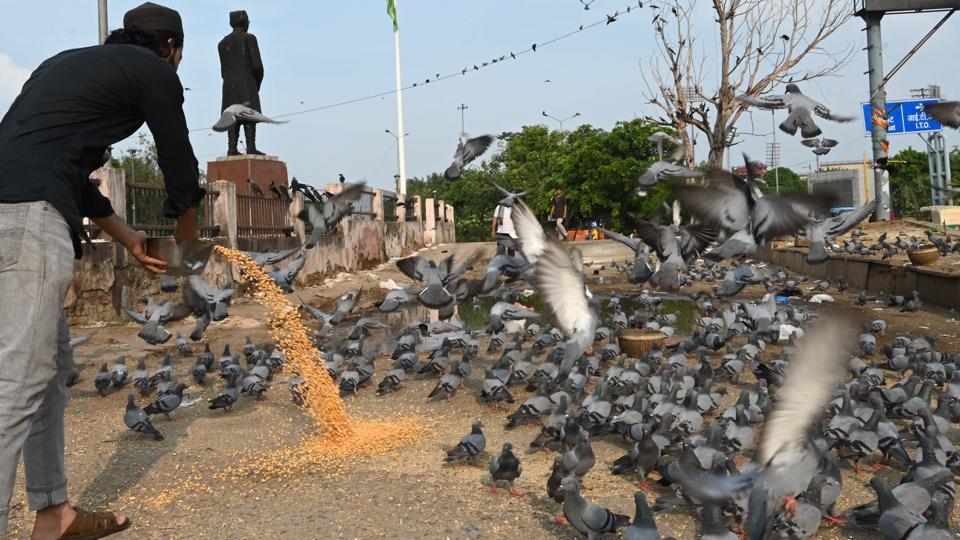
In a letter dated July 8, the public health department of the Municipal Corporation of Delhi (MCD) urged the veterinary department to step in and help curb the unchecked pigeon boom. The communication, written by the additional municipal health officer, follows concerns raised during the MCD standing committee meeting on June 27 over the growing nuisance and potential disease threats posed by bird droppings.
“It is pertinent to mention that there is no data available to quantify disease due to pigeons in Delhi, however due to increased pigeon population and also squatters and hawkers selling food grains to the public to feed pigeons, the activity has to be regulated,” the letter states. It called on the veterinary department to examine the matter and explore options to manage both the pigeon population and the mushrooming of feeding spots across the city.
Committee chairperson and former East Delhi mayor Satya Sharma told HT that directions have been issued to maintain cleanliness and look into a possible framework to regulate the activity. “Several intersections are littered with bird feed and droppings. These are not only unsightly but also a potential health hazard. Officials have been asked to find a mechanism to deal with this recurring problem,” she said.
Senior MCD officials said that the practice of feeding pigeons in public spaces—such as pavements, roundabouts, and traffic islands—has led to uncontrolled breeding. “Unlimited access to food, sold freely at traffic junctions, is causing the population to rise exponentially,” said an official with the public health department.
Rock pigeons, the most common species found in the city, are known to be prolific breeders, capable of hatching chicks up to six times a year. Adults are greyish with a metallic purple-green sheen on the neck and a distinctive black terminal band on their grey tails. And where they gather, the droppings follow—copiously. A single pigeon produces around 11.5kg of excreta annually. “This is not just a cleanliness issue—pigeon droppings are known to carry pathogens like salmonella, E. coli, and even the influenza virus,” the official said.
(Veterinary dept quote here )
The risk is far from cosmetic. Exposure to bird droppings has been linked to serious respiratory illnesses such as psittacosis, ornithosis, cryptococcosis, and hypersensitivity pneumonitis—a lung condition that can cause scarring and long-term breathing difficulties. The acidic nature of the droppings also corrodes buildings, heritage structures, and public infrastructure.
Highlighting the scale of the problem, the National Green Tribunal (NGT) last month issued notices to the Delhi government and civic bodies following a plea filed by a school student. The petition flagged the growing environmental and health hazards caused by pigeon droppings in public areas and raised concern over hypersensitivity pneumonitis as a key public health risk.
Faiyaz Khudsar, scientist-in-charge of the Biodiversity Parks programme, pointed to a broader ecological imbalance. “There are now so many artificial foraging points that pigeons are thriving despite limited natural food sources. This affects the availability of space and food for other birds, especially smaller species like sparrows,” he said. Khudsar also warned that people frequently near pigeon congregation points may be exposed to diseases not just through droppings, but also feathers and ectoparasites such as bed bugs and yellow mealworms, which pigeons are known to carry.

Stay updated with all top Cities including, Bengaluru, Delhi, Mumbai and more across India. Stay informed on the latest happenings in World News along with Delhi Election 2025 and Delhi Election Result 2025 Live, New Delhi Election Result Live, Kalkaji Election Result Live at Hindustan Times.


