
 E-Paper



NCR greets SC Diwali firecracker ban with a bang; PM2.5 up 31 times over limit
DPCC data showed the hourly PM 2.5 concentration was at 1,856 micrograms per cubic metre at east Delhi’s Patparganj

 Prefer HTon Google


Delhi’s air quality stayed in the ‘poor’ category on Monday, the morning after firecrackers were burst on Diwali around the national capital despite a complete ban and stern words from the Supreme Court. The PM 2.5 levels shot up to around 30 times the permissible hourly standards for the ultrafine particle, with the spike in its concentration – between midnight and 2 am – expected to gradually push Delhi’s average air quality index (AQI) to the ‘very poor’ category later in the day.
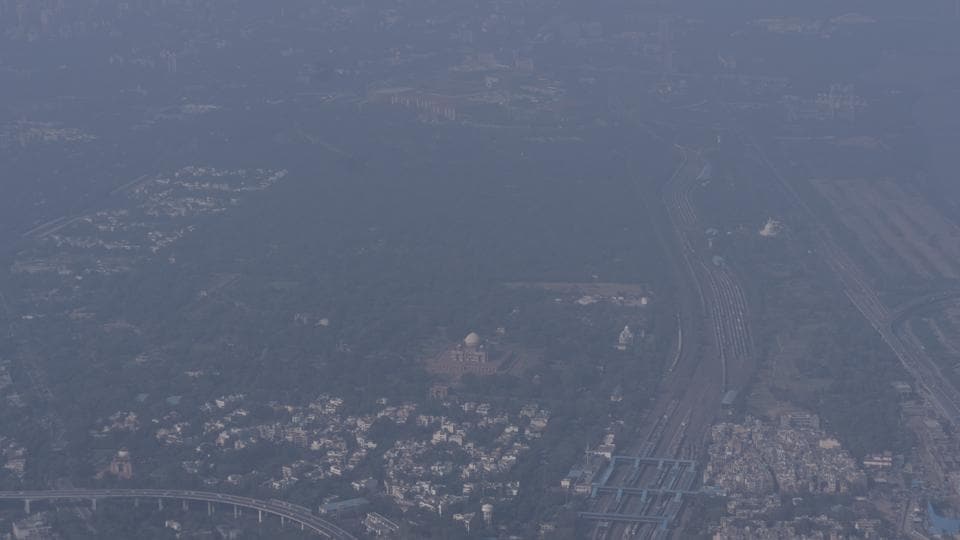
Delhi’s 24-hour average AQI was recorded at 275 (poor) at 7 am this morning – a rise from Sunday’s 4 pm average reading of 218 (poor). The AQI has gradually been increasing since Sunday evening after firecracker emissions began rising. The 24-hour rolling average was 225 (poor) at 9 pm; 240 (poor) at midnight and 261 (poor) at 5 am.
Delhi Pollution Control Committee (DPCC) data showed the city’s hourly PM 2.5 concentration was recorded as high as 1,856 micrograms per cubic metre at east Delhi’s Patparganj – around 31 times the national 24-hour PM 2.5 standard of 60 micrograms per cubic metre. This was followed by an hourly peak of 1,792 micrograms per cubic metre at Jahangirpuri (11 pm) and 1,785 micrograms per cubic metre at Nehru Nagar.
Data showed most stations recorded their peak PM 2.5 levels around 1 am, with levels gradually dipping 2 am onwards.
Forecasts by the India Meteorological Department (IMD) state that winds were predominantly calm in the early hours of Monday, which is likely to keep pollutants trapped in the atmosphere till around noon, when winds of 4-6 km/hr are recorded – gradually helping pollutants disperse. Wind speeds had touched up to 10 km/hr on Diwali during the day and up to 18 km/hr on Saturday – a day after Delhi recorded light showers. This was largely the reason behind Delhi’s low base pollution levels leading up to Diwali.
Last year, Delhi recorded an average AQI of 302 (very poor) on November 5 — the day after Diwali, which was the lowest AQI for Delhi post the festival in the last seven years. The average AQI on Diwali day, however, was 312 (very poor), with Delhi largely being helped by strong winds, which helped disperse firecracker smoke.
“Winds are expected to be around 4-6 km/hr during the day on both Monday and Tuesday. The wind direction is expected to be northwesterly during this period,” said an IMD official.
Delhi also recorded a dip in mercury on Sunday, with the minimum temperature recorded at 12.4 degrees Celsius – a degree below normal and the lowest so far this season. The minimum is expected to be hover around 13 degrees Celsius today and tomorrow.


