
 E-Paper



Delhi pollution: AAP govt to decide today on odd-even exemptions
In the previous versions of the rule, exempted categories included two-wheelers, EVs, vehicles with women passengers, children aged up to 12 years, among others


The Delhi government will hold a meeting on Tuesday to decide on the exemptions for the odd-even scheme that is to be implemented for a week from November 13-20. Delhi environment minister Gopal Rai had on Monday announced that the Aam Aadmi Party government was bringing the vehicle rationing scheme back since pollution is expected to spike once again after Diwali on November 12.
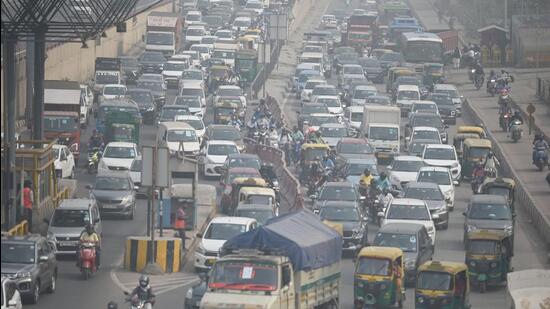
“The decision to impose odd-even has been taken as after Diwali, pollution may rise further. Odd-even will come into effect a day after Diwali, for a week’s time, so from November 13 till November 20. After that, based on the pollution levels prevailing in Delhi, further decisions can be taken,” Rai said after the meeting.
“Other details on how to implement the scheme at the department level and what the exemptions are will be decided in another meeting that will be held on Tuesday,” Rai added on Monday.
In the previous versions of the rule, exempted categories included two-wheelers, EVs, vehicles with women passengers, children aged up to 12 years, taxis, physically disabled people, VIPs, and emergency and defence vehicles, among others. The government, ahead of the 2017 odd-even, had argued that two-wheelers need not be exempted, as they pollute more than four-wheelers, but Supreme Court had stayed this decision.
Delhi has seen three previous rounds of the odd-even scheme – in 2016, 2017 and 2019. In the first stint, it had been implemented in two phases – first from January 1-15, followed by the second phase from April 16-30. The scheme was reintroduced in 2017 for a week, and then for 12 days in 2019.
While appreciating the move, experts have called for narrowing down the exempted categories to make it more effective.
Amit Bhatt, International Council on Clean Transportation managing director (India), said, that odd even traffic rule is a step in the right direction, but the number of exemptions need to be minimised.
“Given the ongoing air quality emergency, it is imperative that we take immediate measures to reduce pollution. The implementation of the odd-even traffic rule is a positive step in this direction. To maximise the benefits of the scheme, we need to minimise the number of exemptions granted. It is crucial to recognise that emissions from transportation remain a persistent issue throughout the year. Hence, it is high time for Delhi to transition into a low-emission zone ensuring clean air year-round,” he said.
S Velmurugan, chief scientist and head of traffic engineering and safety division of Central Road Research Institute (CRRI), said the scheme is a good move to control pollution in a short window.
“The contribution of vehicular pollution will go down as the previous experiences show but the quantum of the decrease has not been studied exhaustively. After Diwali, for a few days the traffic count is lower which may prove to be a blessing in disguise and allow the scheme to settle in,” he said.
Velmurugan said that this time, the government should also undertake exhaustive study of the experiment and the number of exemption categories should be narrowed down. “They may still need to exempt the two wheelers due to lack of public transport capacity and economic factors but rest of the exempted categories like women, VIPs should not be there. The government should mandate work from home in certain sectors to reduce vehicle load on roads,” he added.

Stay updated with all top Cities including, Bengaluru, Delhi, Mumbai and more across India. Stay informed on the latest happenings in World News along with Delhi Election 2025 and Delhi Election Result 2025 Live, New Delhi Election Result Live, Kalkaji Election Result Live at Hindustan Times.


