
 E-Paper



Delhi records worst Diwali since 2016, air quality jumps above 450
The national capital recorded its worst Diwali since 2016 with the overall Air Quality Index (AQI) spiking to a reading of 462 (severe) on Friday, according to the Central Pollution Control Board’s (CPCB) daily 4 pm bulletin – a sharp spike from a reading of 382 (very poor) on Diwali day

 Prefer HTon Google


The national capital recorded its worst Diwali since 2016 with the overall Air Quality Index (AQI) spiking to a reading of 462 (severe) on Friday, according to the Central Pollution Control Board’s (CPCB) daily 4 pm bulletin – a sharp spike from a reading of 382 (very poor) on Diwali day. The last time Delhi had a higher AQI the day-after Diwali was in 2016 when it touched 445 (severe) the very next day.
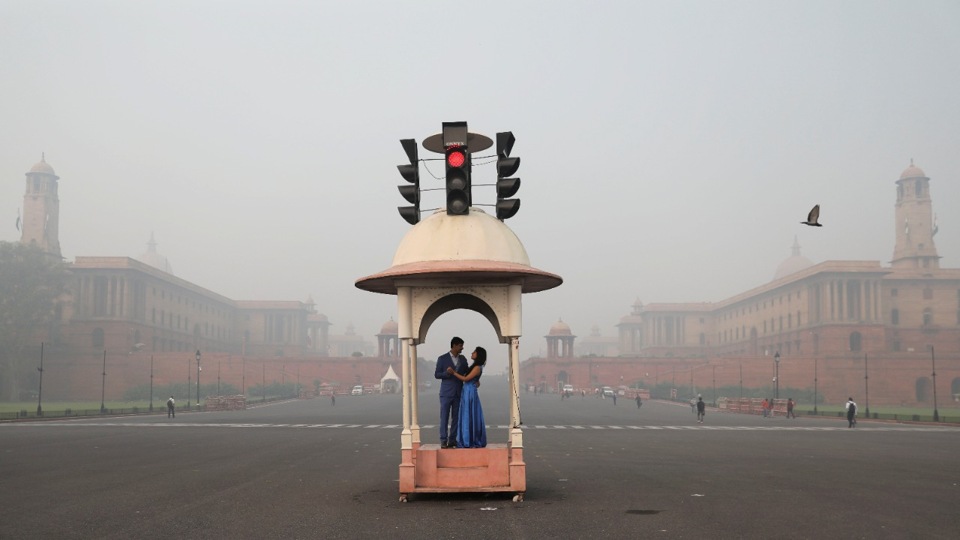
CPCB data shows last year, despite the ban on firecrackers being violated, Delhi’s AQI touched a high of 414 (severe), while it touched 390 (very poor) the day after Diwali in 2018. Experts say firecrackers are not the only contributing factor at the moment as meteorological conditions and a spike in farm fires have played a key role.
Professor Sachchida N Tripathi from the civil engineering department at IIT Kanpur, who is also a member of the steering committee for the National Clean Air Programme (NCAP), says the average PM 2.5 concentration began rising in the last week of October and has shown a steady increase, owing to an increase in farm fires. This, aided by low temperatures, helped trap pollutants over Delhi. “The AQI was already on the rise and if you combine a day of farm fires and firecrackers, there is bound to be a sharp increase in pollution levels,” said Tripathi, stating wind speed is low at the moment, which is keeping ‘haze’ intact.
According to the CPCB, an AQI between 101 and 200 is considered ‘moderate’, between 201 and 300 is ‘poor’, between 301 and 400 is ‘very poor’ and beyond 400 is ‘severe’, with the index capping off at an upper limit of 500.
In 2016, Delhi did not have a firecracker ban in place, however, Diwali occurred on October 30, nearly a week earlier. Anumita Roy Chowdhury, executive director, research and advocacy says late rains have played a key role this year, pushing the stubble burning period to a short window in November.
CPCB data shows this October, with an average AQI of just 173, is the cleanest in the last seven years.
“October saw late rains and a late withdrawal of monsoon. Farmers were unable to burn stubble residue then and now you are suddenly seeing a spike in farm fire events. This has coincided with Diwali, creating this season’s first smog event,” said Chowdhury.


