
 E-Paper



Delhi signs up for IIT-Madras study on ‘smog-eating’ surfaces
Delhi government partners with IIT Madras for a study on "smog-eating" surfaces using titanium dioxide to reduce air pollution in the capital.


New Delhi
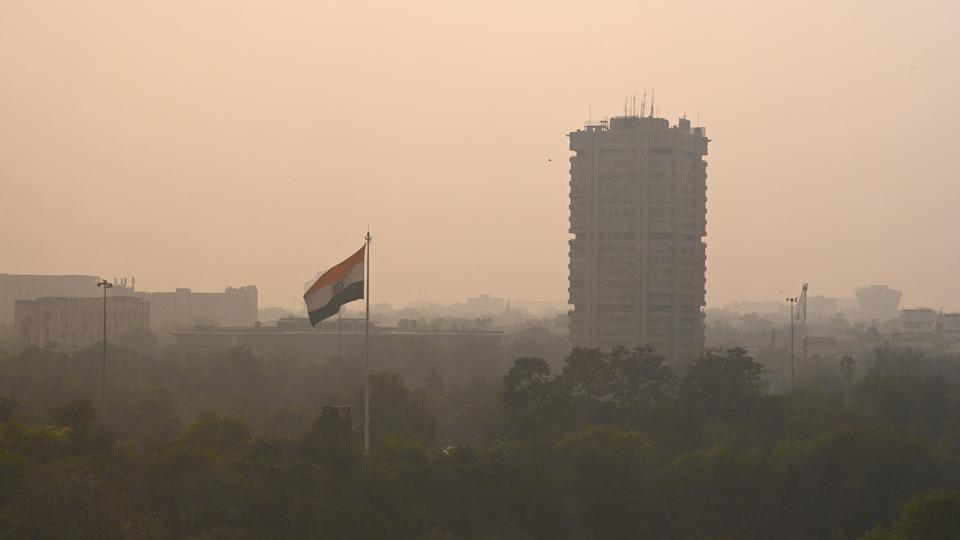
The Delhi government on Friday signed a memorandum of understanding (MoU) with the Indian Institute of Technology (IIT), Madras, to conduct a pilot study on photocatalytic “smog-eating” surfaces that could help reduce air pollutants in the Capital.
This will effectively entail coating sun-exposed surfaces with titanium dioxide (TiO2) to trigger chemical reactions to break down pollutants, such as nitrogen dioxide (NO2) and volatile organic compounds (VOCs), both of which contribute to urban smog. The project, titled “Comprehensive Study on the Effectiveness of Photocatalytic Smog-Eating Surfaces, Specifically Utilizing Titanium Dioxide (TiO2) or Similar Safe Photocatalysts for Abatement of Air Pollution in Delhi,” will be led by IIT Madras.
Environment minister Manjinder Singh Sirsa said the collaboration aims to evaluate whether such coatings can provide a practical solution to reduce pollution in the city.
“Through this IIT Madras study, we aim to find the best, long-lasting and affordable ways to put ‘smog-eating’ coatings on roads, buildings and city surfaces. It can work in our favour if the study can provide evidence-based findings that such coatings or materials can cut NO2 and other pollutants,” he said.
For residents, the technology essentially means that common urban surfaces, such as roads, pavements, buildings or specially installed panels, could be treated with materials that receive sunlight to break down certain air pollutants.
According to officials, the six-month study will begin with controlled laboratory experiments in a smog chamber at IIT Madras.
Professor Somnath C Roy of IIT Madras’s physics department said, “The study will begin with lab testing in a smog chamber at IIT Madras to precisely measure pollutant abatement. Following this, our team will conduct real-time field assessments in Delhi’s urban environment on surfaces like concrete, asphalt, metal panels, glass and roads to evaluate durability and efficiency under actual conditions.”
Officials said the study will explore the use of photocatalytic materials mixed with construction materials, such as concrete and asphalt, or applied as surface coatings to buildings, pavements and other infrastructure.
The research will also examine the feasibility of installing photocatalytic panels made with titanium dioxide-based materials on rooftops or streetlight poles to break down pollutants in their vicinity.
The MoU was signed in the presence of environment minister Sirsa and professor Roy, who will serve as the principal investigator. Officials from the environment department and the Delhi Pollution Control Committee (DPCC) were also present.


Stay updated with all top Cities including, Bengaluru, Delhi, Mumbai and more across India. Stay informed on the latest happenings in World News along with Delhi Election 2025 and Delhi Election Result 2025 Live, New Delhi Election Result Live, Kalkaji Election Result Live at Hindustan Times.


