
 E-Paper



Delhi to get 13 new AQI monitoring stations, locations finalised | See full list
Delhi government plans to install 13 new air quality stations, enhancing coverage in outer areas to improve data on pollution levels by November.

 Prefer HTon Google


The Delhi government has finalised a list of locations for installing 13 new continuous ambient air quality stations (CAAQMS) in the Capital, with a major emphasis on covering locations near Delhi’s peripheries to ensure at least one station within a 5X5 square-kilometre grid, environment minister Manjinder Singh Sirsa said on Sunday.
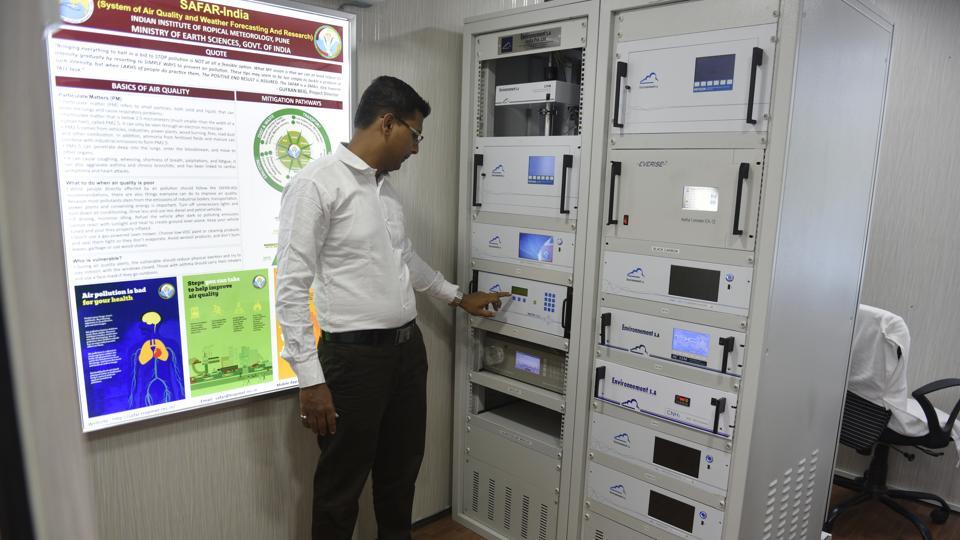
The stations will be set up at Vikaspuri, Narela, Burari, Shastri Park and Badarpur, among other localities, officials said. Of the 13 stations, 10 are being installed by the Delhi Pollution Control Committee (DPCC) and three by the Indian Institute of Tropical Meteorology (IITM), Pune.
“A tender for these 10 stations under DPCC has already been floated. The tentative locations have already been finalised and a contract will be awarded soon. It is expected that work will be completed by November, which includes calibration, so we will have fresh data in the winter from new stations,” Sirsa said.
While Delhi currently has 47 operational systems, the addition of these 13 new stations, planned by November, will take the total to 60.
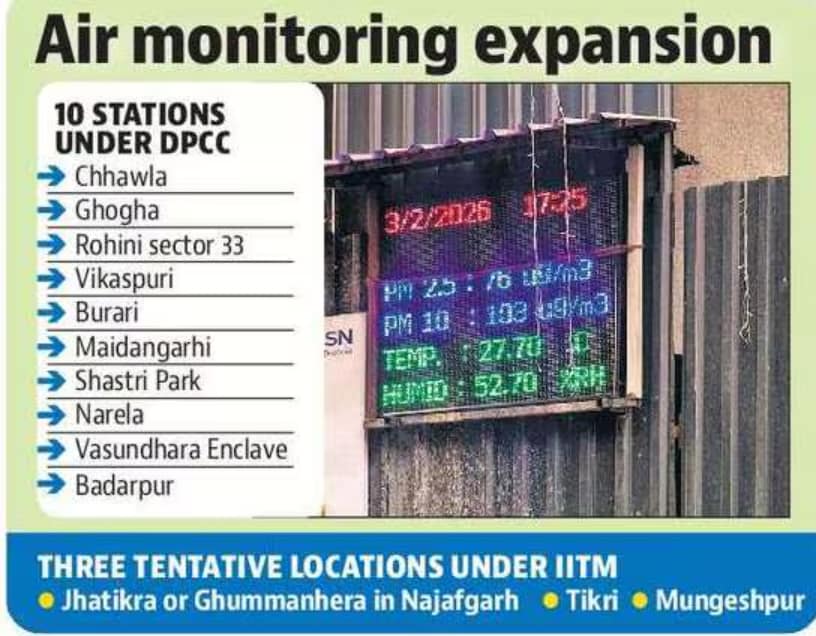
The comprehensive list of locations, finalised in consultation with the Commission for Air Quality Management (CAQM) in NCR, where the 10 DPCC stations will come up includes Chhawla in southwest Delhi, Ghogha in north Delhi, Rohini sector 33/Karala village in northwest Delhi, Vikaspuri in west Delhi, Burari in north Delhi, Maidangarhi in south Delhi, Shastri Park in northeast Delhi, Narela in north Delhi, Vasundhara Enclave (two possible spots) in east Delhi and Badarpur in southeast Delhi.
Also read: IMD issues yellow heat alert as max temp rises in Delhi
The tentative list of locations for stations which will come under the IITM includes Jhatikra or Ghummanhera in Najafgarh, northwest Delhi’s Mungeshpur and two spots in west Delhi’s Tikri.
“These will essentially cover the outer portions of Delhi, which previously had poor to no coverage. This will help us provide fresh data and possibly identify new hot spots,” Sirsa said.
An official said two other optional locations, selected as backups, include Jharoda Kalan in southwest Delhi and Nangloi in the northwest.
In February, the Delhi government had inaugurated six CAAQMS in the city, and announced plans to install additional stations to take the total to 60 stations in the coming financial year.
Experts said the new stations allow more granular data to be generated, essentially at the neighbourhood level. “This allows for hyperlocal action and for localised sources to be identify in areas that were not covered earlier. It is important that the government also defines how this data will be used for future action,” said Anumita Roy Chowdhury, executive director, research and advocacy at the Centre for Science and Environment.


Stay updated with all top Cities including, Bengaluru, Delhi, Mumbai and more across India. Stay informed on the latest happenings in World News along with Delhi Election 2025 and Delhi Election Result 2025 Live, New Delhi Election Result Live, Kalkaji Election Result Live at Hindustan Times.


