
 E-Paper



Second cleanest start to years since 2016 in Delhi: CAQM
Till May this year, the average concentration levels of PM 2.5 was 101 micrograms per cubic metre and it was 86 micrograms per cubic metre for the corresponding period in 2020

 Prefer HTon Google


Concentration levels of particulate matter in Delhi’s air so far has been the second lowest in the last eight years after 2020 which was impacted by the coronavirus-induced lockdown, data shared by the Commission for Air Quality Management (CAQM) on Wednesday showed.
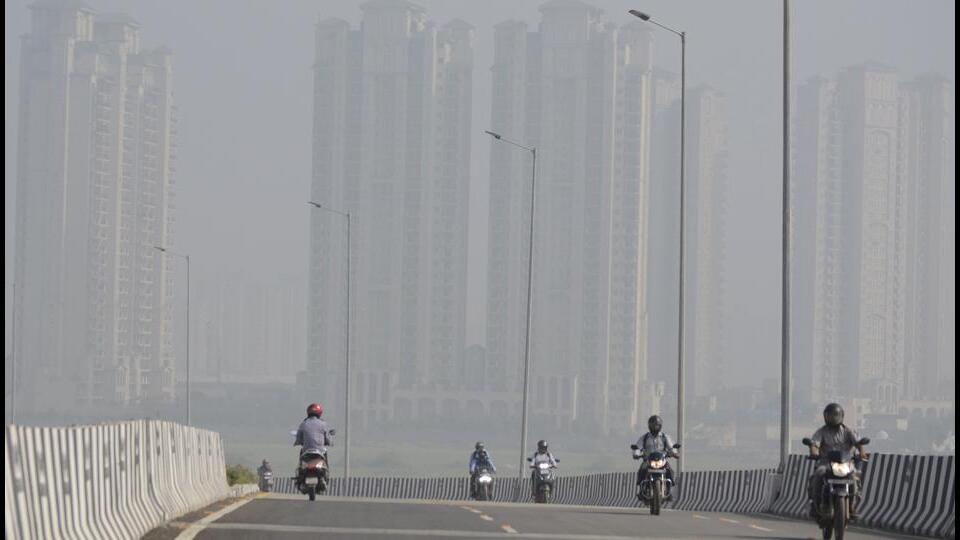
Till May this year, the average concentration levels of PM 2.5 was 101 micrograms per cubic metre and it was 86 micrograms per cubic metre for the corresponding period in 2020. It was 110 last year and 116 in May 2021.
The PM 10 concentration was, meanwhile, recorded at 215 micrograms per cubic metre this year. It was 245 last year for the same period, 239 in 2021 and 165 in 2020.
The safe standard for PM 2.5 and PM 10 is 60 and 100 micrograms per cubic metre, respectively.
Concentration levels of PM 2.5 and PM 10 were the highest in 2016, with an average concentration of 146 and 307 micrograms per cubic metre respectively.
In terms of air quality, CAQM said for the period between January and May this year, Delhi recorded an average air quality index (AQI) reading of 213, making it the second lowest for this period behind only 2020, when the average was 181. The average AQI for the same period last year was 238 and it was 236 in 2021.
The year 2016 recorded the highest average AQI at 284. Data for 2015 was not available as AQI system was launched that year.
“For the period between January – May (during the eight from 2016 to 2023), Delhi has registered its best air quality during the current year (barring the periods of very low anthropogenic, industrial and commercial activities during the year 2020 due to Covid-19 lockdown),” CAQM said in a statement.
Experts attributed the improvement to rain and strong winds. “Over the last three months, there has been excess rain. While rain can settle dust and other pollutants, strong winds can help disperse these pollutants. Meteorological conditions can both positively or negatively impact air quality,” Dipankar Saha, former head of CPCB’s air laboratory said.
Delhi received 111mm of rainfall this May — around 3.5 times the monthly average normal mark of 30.7mm. Rain was recorded on 11 days this month.
The Central Pollution Control Board classifies an AQI between 0-50 as good, between 51 and 100 as satisfactory, between 101 and 200 as moderate, between 201 and 300 as poor, between 301 and 400 as very poor and over 400 as severe. No good air day has been recorded so far this year.


