
 E-Paper



DDMA heat action plan restricts school timings, outdoor activity in Delhi
The plan, to be implemented from next summer, says schools would be shut during peak hours during a heatwave


Delhi will change school timings, run fewer buses, and restrict outdoor activity for workers during peak hours, according to the Capital’s first heat action plan (HAP) prepared by the Delhi Disaster Management Authority (DDMA).
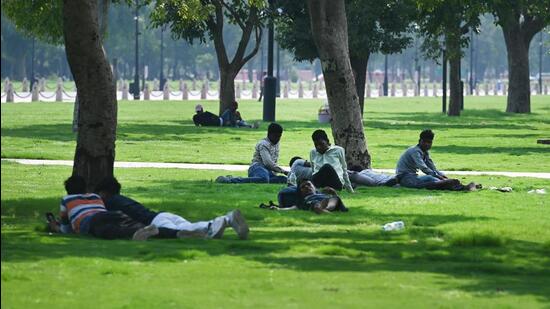
The plan has been submitted to the National Disaster Management Authority (NDMA) for approval. Once approved, it is expected to be implemented beginning next summer, DDMA officials familiar with the matter said on Thursday.
Read here: Only 2 of 18 drains in Delhi pass crucial test
“The plan took a year to develop, and we shared it with the National Institute of Disaster Management in June. They made some additional suggestions. After incorporating them, the plan was finally submitted to NDMA last month,” said a DDMA official, who asked not to be named.
The Delhi HAP will rely on seven-day forecasts from the India Meteorological Department (IMD) to issue colour-coded alerts. When the maximum (day) temperature exceeds the average temperature by six degrees Celsius (°C) or more, a “red alert” will be issued. If the maximum temperature is 4-5°C above average, an “orange alert” will be issued, while a “yellow alert” will be issued if the temperature is expected to be 0-3.9°C above the day’s normal.

The plan has also identified nine of Delhi’s most vulnerable municipal wards, which will need additional interventions and targeted actions. These include Harkesh Nagar, Khyala, Wazirpur, Bijwasan, Vishwas Nagar, Hari Nagar-A , Jahangirpuri, Delhi Gate, and Shastri Park.
The plan identifies these wards as hot spots in terms of high day temperature. Explaining the process to classify these wards, the plan said, “The city’s surface temperature maps were developed using LANDSAT 8 satellite data and superimposed on the city’s ward-boundaries map to identify city hot spot areas. Wards with temperatures above 42°C were delineated across the city. Land Surface Temperature (LST) maps were also prepared for May 30, 2019 - the day Delhi recorded a maximum air temperature of 48°C, and spatial variability of LST in different municipal zones of Delhi was analysed.” According to officials, May 30, 2019, was chosen as a point of reference for an extremely hot day to gauge the spread of LST across the city.
The DDMA official said that HAP will be implemented in three stages. During phase 1, or the pre-heat season (February and March), the emphasis will be on capacity building, developing early warning systems, and developing a communication plan for issuing alerts to the general public, health care professionals, and voluntary groups. Civic agencies will build shelters, the labour department will change outdoor workers’ shifts from peak to off-peak hours, and the transport department and Delhi Jal Board (DJB) will have to provide adequate drinking water at bus stops and other locations throughout the city, according to the plan.
In Phase 2, during March to July, the labour department will ensure outdoor staff do not work between 1pm and 5pm, non-essential use of water is suspended, and that schools do not function during peak hours (noon to 4 pm) when a heatwave is declared. “When a heatwave is declared, cooling centres such as temples, public buildings, and malls will have to be activated to provide adequate shade for people. At the same time, buses will be told to operate as little as possible during peak hours (noon to 4 pm),” the plan said.
Phase 3, which will be implemented in the “post-heat season” of July to September, will see the establishment of cool resting areas in “high-risk” places, planting of trees at heat hot spots, and a review of all activities during the previous two phases will be undertaken.High risk places will be identified by conducting a review based on factors such as above-average temperature, on-ground vulnerabilities and heat-related illnesses or mortalities, said officials.
Read here: Delhi assembly panel seeks privilege action against officials
To implement the plan, DDMA said it would appoint a nodal officer, with other agencies also required to put in place an officer to coordinate efforts. “We will soon start the process of naming an officer. We are still awaiting the final confirmation from NDMA,” the DDMA official said.
Greenpeace India campaign manager Avinash Kumar Chanchal said the HAP was required urgently but stayed pending for quite some time. “The plan comprehensively identifies the vulnerability of outdoor workers, slum dwellers, and even children. However, at the ward level, there is a greater need for assessing vulnerability and time-bound targets,” he said.

Stay updated with all top Cities including, Bengaluru, Delhi, Mumbai and more across India. Stay informed on the latest happenings in World News along with Delhi Election 2025 and Delhi Election Result 2025 Live, New Delhi Election Result Live, Kalkaji Election Result Live at Hindustan Times.


