
 E-Paper



Supreme Court questions Delhi government over gender-binary hiring policy
The top court questioned the Delhi government on how transgenders will find suitable employment if teaching vacancies follow a gender-binary model.

 Prefer HTon Google


The Supreme Court on Thursday questioned the Delhi government on how transgender persons could meaningfully access public employment when recruitment advertisements continue to classify teaching vacancies only under the binary categories of “male” and “female”, observing that merely enabling transgender candidates to register on the online application portal may not address the underlying problem.
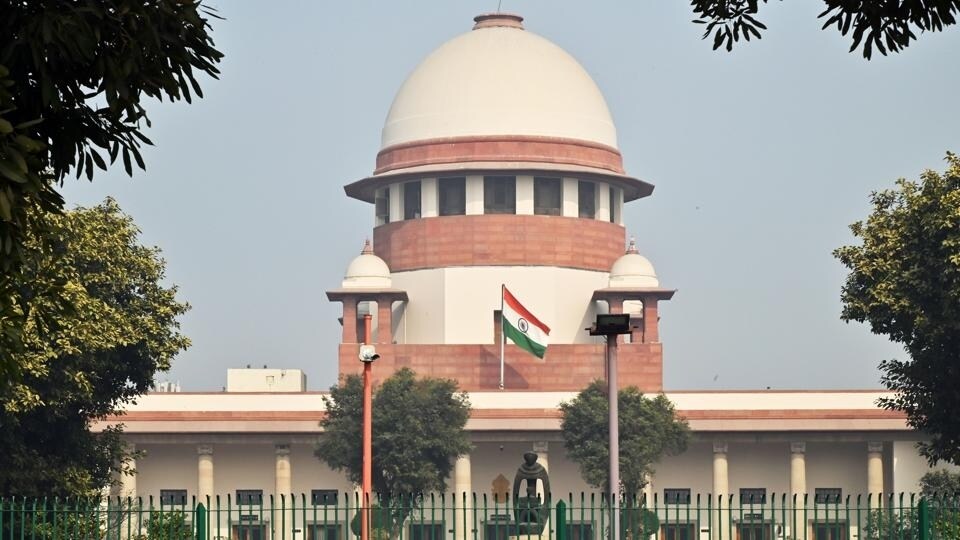
A bench of justices JB Pardiwala and K Vinod Chandran directed the Delhi government to file an affidavit clarifying how transgender candidates would be considered for appointment when vacancy notifications themselves remain gender-specific.
“We are trying our best to see that transgenders do get employment at all possible places with respect. We will consider the larger issue later,” remarked the bench during the hearing.
Also Read I Assistant prof hiring exam: UPESSC introduces negative marking
The observations came while hearing a petition by Jane Kaushik, a transgender woman, seeking separate vacancies and a comprehensive recruitment policy for transgender persons in Delhi government employment.
Solicitor general Tushar Mehta, appearing for the Delhi government, submitted that the petitioner’s immediate grievance had already been addressed by modifying the Online Application Registration System (OARS) portal to include a “third gender” option.
“The complaint was that there is only ‘M’ and ‘F’. So, she cannot log in the portal and apply. That has now been provided. Third gender is being provided. She has already applied. Now she will be considered when vacancy arises. It is not her case that there is a vacancy and that she is not being permitted,” said Mehta, adding that the petitioner’s demand for reservation could not be granted through judicial directions as it was a matter for the legislature.
The bench, however, noted that the issue extended beyond access to the online portal.
Also Read I Content, Creativity, Careers: How media education is evolving in digital era?
The counsel for Kaushik submitted that although the portal had been modified, the recruitment advertisements themselves continued to notify vacancies as “PGT Biology (Female)” or “PGT Chemistry (Male)”, leaving no category for transgender applicants.
“They are also human beings. Look at them with some compassion,” the bench remarked, adding that the real difficulty arose at the stage of appointments.
“Even if she applies, she will be considered in which category? They would say you have applied online but you don’t fulfil the classifications,” the court observed while asking the Delhi government to obtain fresh instructions.
Recording the petitioner’s apprehension, the court noted that although Kaushik had been allowed to register on the portal, she could still be excluded from recruitment because advertisements recognised only male and female candidates.
“In other words, either a male or a female candidate is considered, as the case may be. Her case is that the advertisement for recruitment should provide a separate category for transgender persons,” noted the order, granting time to the Delhi government for filing an affidavit on the issue.
The matter traces back to an interim order passed by the Supreme Court in April, when it permitted Kaushik to apply for teaching posts under the transgender category after finding that the OARS portal recognised only “male” and “female” applicants.
Kaushik’s petition raises broader issues concerning implementation of the Transgender Persons (Protection of Rights) Act, 2019. Besides seeking separate vacancies for transgender persons, it also seeks a dedicated recruitment policy and relaxation in age and qualification norms.
Also Read I ‘I stopped chasing jobs’: Indian-origin woman in the US shares how 3 lay-offs reshaped her career
The issue had earlier reached the Delhi High Court, which allowed Kaushik to apply as a transgender candidate while observing that wider questions relating to reservation and recruitment policy were already pending before the Supreme Court.
In October 2025, while separately examining implementation of the 2019 Act, the Supreme Court had described the statutory protections available to transgender persons as a “dead letter” owing to poor implementation and constituted an eight-member advisory committee headed by former Delhi High Court judge Justice Asha Menon to recommend measures for ensuring equal opportunities in employment, education and healthcare.


Stay updated with all top Cities including, Bengaluru, Delhi, Mumbai and more across India. Stay informed on the latest happenings in World News along with Delhi Election 2025 and Delhi Election Result 2025 Live, New Delhi Election Result Live, Kalkaji Election Result Live at Hindustan Times.


