
 E-Paper



Delhi’s liquor vends open with limited stocks, 126 give up licence
Excist department officials said that Liquor shops in Greater Kailash, Rohini, Shalimar Bagh, Chandni Chowk, Kasturba Nagar, Anand Vihar, Punjabi Bagh,Chittaranjan Park, Paharganj, Sarita Vihar and other areas in six liquor zones, closed down after surrendering their permits.


New Delhi: Most liquor vends and bars in the national capital reopened on Tuesday as their permits were extended for a month, but 126 stores out of 468 downed shutters permanently at a time when the future of the liquor business is uncertain with the excise policy 2021-22 embroiled in controversy.
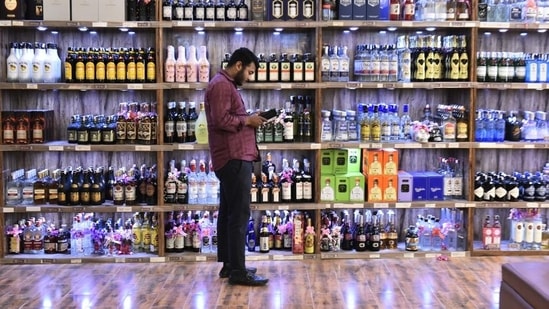
Excist department officials said that Liquor shops in Greater Kailash, Rohini, Shalimar Bagh, Chandni Chowk, Kasturba Nagar, Anand Vihar, Punjabi Bagh,Chittaranjan Park, Paharganj, Sarita Vihar and other areas in six liquor zones, closed down after surrendering their permits.
From September 1, the existing liquor policy will expire, and Delhi will revert to old regime under which the government agencies ran 60% of the retail stores until a new policy is drafted
The expiry of the liquor policy also led to the closure of pubs, and restaurants were unable to serve alcohol on Monday because their licences expired on July 31, and needed to be renewed.
Also read: Delhi: These 3 private hospitals to reserve beds for monkeypox cases
The new excise policy of 2021-22 aimed to open 849 liquor shops in the Capital, but only 468 vends were operational on July 31. The excise department in an order issued on Monday night extended liquor licences under various categories, including retail and wholesale, under the excise policy till August 31.
Despite the extension, most traders were reluctant to place bulk orders with wholesalers because they have limited time to clear inventory.
A liquor trader, who runs multiple liquor stores in west and east Delhi, said his company will only place limited orders based on demand. “Delhi is already facing a shortage of premium brands because traders were uncertain about the extension of the policy and did not order large stocks,” he said, seeking anonymity. “The Capital may witness a shortage of non-premium brands as well due to limited stocks purchase.”
Another trader, who runs multiple stores in south Delhi, said the shortage may become acute towards the end of the month. “The shortage will be a result of a chain reaction,” he said, also declining to be named. “Since the licences of the wholesalers have also been extended till August 31 only, wholesalers will purchase limited stocks from manufacturers.”
Discounts on bottles might also go as there is already a shortage of liquor in the market, the second trader said.
Meanwhile, the excise department issued an order to seal the stocks available at the liquor stores that have shut down. “The sealing is done because their licences have expired and no one can store liquor in large amount without license. If no trader is ready to buy the stock, then the excise department will destroy the stock.” an official said on the condition of anonymity.
Also read: Delhi govt re-enters business, scouting space for shops
It was not immediately known how much inventory was left with the 126 stores.
Thin crowds were seen in the afternoon outside liquor stores on Tuesday. “Generally, business is slow in the morning and afternoon, but the crowd increases by the evening. Since the shops are opening after a day, we were expecting a bigger crowd today,” said a person running a liquor store in Patparganj.
At a shop in Laxmi Nagar, a couple of buyers were seen and the shelves were half empty. “Fresh stocks have not been purchased because there was no clarity on whether the permits will be extended or not. The order for fresh stocks will be placed now,” said the store manager.
Traders wanting to replenish stocks have to place orders on the portal of the excise department. It then takes 24-48 hours to get the supplies. In Delhi, the government does not currently sell liquor but controls sale and purchase of stocks.
The excise department issued an order on Tuesday starting the process of granting licence for the wholesale sale of liquor from September 1, and said application forms can be obtained through the department. Officials said the move was made to ensure that there is no shortage of wholesale liquor supply when the old policy comes into effect from September 1.
Four agencies of the government — Delhi State Industrial and Infrastructure Development Corporation, Delhi Tourism and Transportation Development Corporation, Delhi Consumer’s Cooperative Wholesale Store and Delhi State Civil Supplies Corporation Limited – have started preparations to ensure that they have their stores ready before September 1 so that the switch in the excise regime is smooth and there is no major liquor crisis when the currently operating private liquor stores close down on September 1.
These agencies are looking for properties where the stores can be set up and will also apply for licences as soon as the excise department starts accepting applications.
“The bars were closed on Monday because their permit to serve liquor expired on July 31 and the Delhi government did not extend the permits in advance. The permits were extended for a month by Monday night and the bars reopened from Tuesday. There was usual crowd in the bars on Tuesday. Most of the bars opened at 11:30am-12pm after paying licence renewal fee to the excise department. There was a message from excise department to the bar owners to pay one-month license renewal fee before serving liquor in the bars,” said Manpreet Singh, a restaurateur and treasurer of National Restaurants Association of India.
There are around 700-odd bars located inside restaurants in Delhi.
According to excise department order issued on Monday night the licenses given for hotels, clubs and restaurants, country liquor, beer and wine in departmental store, etc. would be deemed to have been given with effect from September 1 under the old excise policy when it is implemented.
Also read: Delhi reports 1,506 new Covid cases, 3 deaths; positivity rate at 10.63%
The lack of stability in Delhi’s liquor policy may have a significant effect on availability, said Vinod Giri, director general of the Confederation of Indian Alcoholic Beverage Companies, an industry group.
“The start-stop-start mode, or short-term extensions like a month disrupt the supply chain as trade moves to minimum stock holding and just in time purchases. Slow moving, premium and niche brands are the most affected,” giri said. “On top of that, some retailers with low or no leftover stock may prefer to opt out, thus shrinking the outlet base further. This may have significant effect on liquor availability in Delhi.”
This will result in losses to all stakeholders, including the government, manufacturers, traders and consumers, he said. “We hope that the government works out a permanent solution soon, for the rest of year and for years ahead, which instils sense of stability, predictability, and tranquillity so vital for vibrant trade and industry,” said Giri.

Stay updated with all top Cities including, Bengaluru, Delhi, Mumbai and more across India. Stay informed on the latest happenings in World News along with Delhi Election 2025 and Delhi Election Result 2025 Live, New Delhi Election Result Live, Kalkaji Election Result Live at Hindustan Times.


