
 E-Paper



Delhiwale: The world inside a home
Zafrul and Jamshed, freelance jewellery makers in a cramped Delhi apartment, share their journey from Bihar and daily struggles in Chandni Mahal.


The residence consists of two moderately sized rooms. The first is the workshop, albeit its one side is dedicated to a cooking counter with a gas range. The other is the windowless bedroom, crammed with clothes, and linen, and many, many small plastic bags—this musty smelling room is too hot in the summer, but stays snugly warm in the winter.
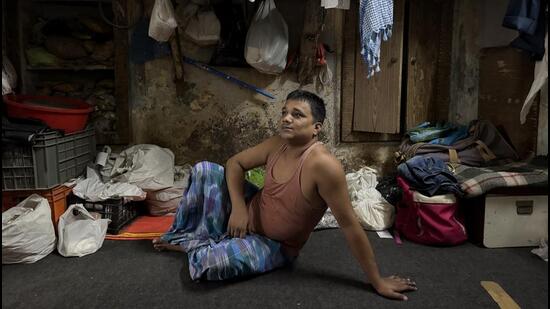
Zafrul lives in the rented apartment with Jamshed, who is much older than him. Both men describe themselves as freelance “artificial jewellery karigar.” They work as a team. Their house forms a small part of the surviving portions of an old haveli, here in Purani Dilli’’s Chandni Mahal street.
The haveli’s stately gateway opens into a courtyard. The courtyard is ringed by a storeyed structure. This building is arrayed out into separate living arrangements. Most residents practice the same profession as Zafrul and Jamshed.
The younger Zafrul has been living in Delhi since 2000. The elder Jamshed moved to the capital in 1985. The former is extremely hospitable—he remains restless until he finally succeeds in persuading an unannounced visitor to accept a cup of chai. The latter is more reserved, taking time to open up to a visitor he has never met before. Additionally, he has a way of speaking in which humour is mixed with mild sarcasm, making it difficult to gauge the frankness of his feeling. This humid noon, the men are dressed in baniyan and lungi.
Zafrul says: “We both are from the same district in Bihar. Our families live back home in the village. The village fields get flooded every monsoon.”
Jamshed says: “We have no fields of our own. Our forefathers worked as hired labourers in other people’s fields.”
Zafrul says: “Until our fathers’ generation, the men in our families would spend their entire life in the village. The thought of leaving the village to find better-paying work in big cities never crossed their mind.”
Jamshed says: “That has changed. My two sons work as labourers in the sariya line in Poona.”
Each day, the two men go to Chandni Chowk to receive assignments from their contractor. Jamshed says: “We go walking to Chandni Chowk, despite the long distance.” Zafrul says: “Because the rickshaw wale charge 60 rupees for Chandni Chowk.”
The two men cook at home, often getting rotis from a neighbourhood bakery.
Zafrul says: “Otherwise we hardly step out of our kamra.”
Jamshed says: “We are always working.”
The two men work throughout the afternoon, all through the evening, getting up only for dinner, after which they continue to work until three in the morning. Then, they go to sleep. They wake up at 11 in the morning. The breakfast is always chai and paape.
Jamshed being shy around the camera, Zafrul graciously agrees to pose alone for a portrait.

Stay updated with all top Cities including, Bengaluru, Delhi, Mumbai and more across India. Stay informed on the latest happenings in World News along with Delhi Election 2025 and Delhi Election Result 2025 Live, New Delhi Election Result Live, Kalkaji Election Result Live at Hindustan Times.


