
 E-Paper



Delhiwale: This death anniversary, prowling for graves
Today is Thursday, known for its celebrated evening qawwali at Hazrat Nizamuddin Dargah

 Prefer HTon Google


Today is Thursday, known for its celebrated evening qawwali at Hazrat Nizamuddin Dargah. This week, a truly long night of qawwali will be hosted there tomorrow, Friday, marking the 723rd Urs, or death anniversary, of Hazrat Nizamuddin Auliya, the 14th-century Sufi saint. In Sufism, death is interpreted as union with God, turning a passing into celebration.
Each year, attention during the Urs turns to the qawwali. This time, after having your fill of the impassioned qawwal singers, look around the historic shrine. While the dargah draws its identity from the grave of Hazrat Nizamuddin, the focus of pilgrimage here, the place is full of other graves, some in unexpected corners.
The first is near the entrance, beside the place where visitors have to leave their shoes, it is almost hidden from view until you look for it. Another is hidden behind a stone jaali in a courtyard. Evening sunlight falls on this marble grave, making poetic patterns. Five graves lie on a stone plinth. Along a narrow alley, towards the shrine’s big courtyard where qawwalis are held, lie two or three more graves.
There is a reason why so many stone graves fill the shrine. The Sufi saint commanded such reverence that both kings and fakirs longed to be buried close to him. You see, the close proximity of the UNESCO World Heritage site of Emperor Humayun’s tomb to Hazrat Nizamuddin’s much older tomb is not by chance! The VIPs of the time easily (of course!) secured places close to the revered saint for their posthumous life. Poet Amir Khusrau’s grave is the most prominent. Then there is the marble enclosure of Jahanara, Emperor Shahjahan’s daughter and one of the most powerful women in the India of that time. Muhammad Shah Rangeela, a lesser-known Mughal emperor, rests in the adjacent enclosure. Another marble enclosure holds the grave of Mirza Jahangir, the younger brother of the last Mughal emperor, Bahadur Shah Zafar. Chronicler Ziauddin Barani’s grave faces poet Khusrau’s tomb.
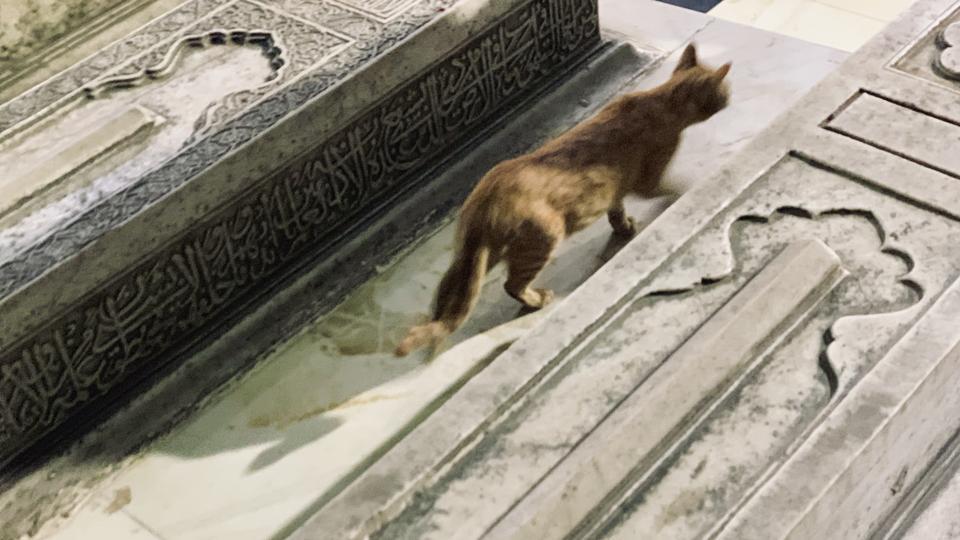
Most other graves lie in anonymity, with the dargah’s many cats prowling beside them (see photo). The graves occupy corners, passages and the hujras, the small chambers used by the dargah’s hereditary custodians. One chamber contains the grave of Abu Bakr Musallahdar, immortalised for carrying Hazrat Nizamuddin’s prayer mat.
It is difficult to give an exact number of graves in the shrine. A count made one long-ago night reached 65, then 70, then some more. Actually, once you start looking for the graves, you find them everywhere, from overlooked corridors to overlooked alcoves. Some graves are so tiny that they seem to belong to babies.
Tomorrow, Friday, the Urs-special qawwali session will last from 11 at night to two in the morning, says dargah custodian Altamash Nizami. The music and singing will fill the shrine’s big courtyard, spreading to the many dozens of graves tucked away from view.

Stay updated with all top Cities including, Bengaluru, Delhi, Mumbai and more across India. Stay informed on the latest happenings in World News along with Delhi Election 2025 and Delhi Election Result 2025 Live, New Delhi Election Result Live, Kalkaji Election Result Live at Hindustan Times.


