
 E-Paper



Delhiwale: Is that a peepal or pilkhan
A landmark Delhi book clocks an anniversary yearA book on Delhi need not always have a monument on every other page

 Prefer HTon Google


A landmark Delhi book clocks an anniversary year
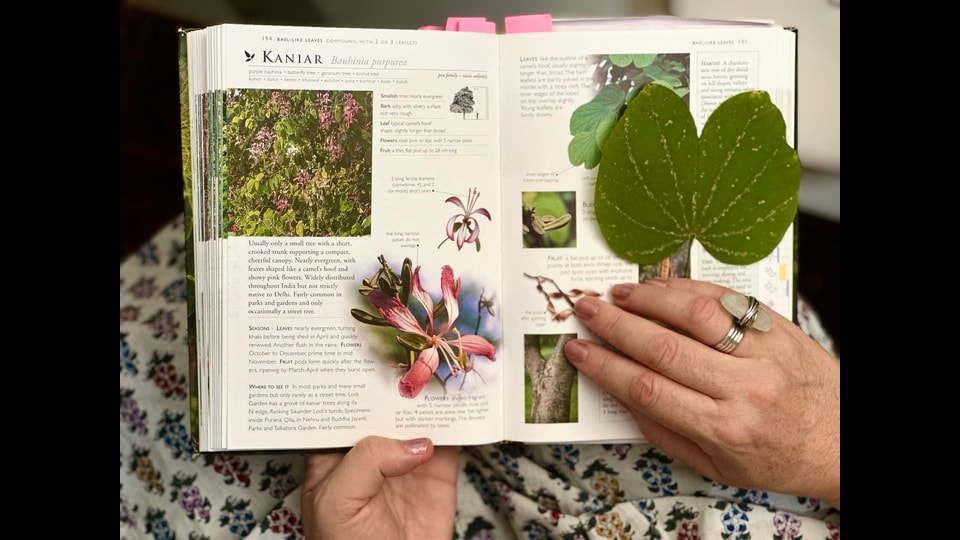
A book on Delhi need not always have a monument on every other page. Or paya-nihari, or chhole bhathure, for that matter. A book might also have a leaf. Pradip Krishen’s Trees of Delhi turns twenty this year.
First published in 2006, this definitive field guide covers 252 species, helping the Delhiwale recognise trees they might have been passing for years without knowing what they were. Each entry is filled with photos and gives the tree’s scientific, common and desi names, its flowering seasons, and details of its leaves and fruit. There are also where-to-see directions: the Ridge for bistendu, Jahanpanah City Forest for kareel.
A quick flip of the book from cover to cover sends the city trees passing beneath the reader’s fingers. A canopy fills a photo on one page, followed by close-ups of a bark, a flower, a fruit. The text alongside explains what to look for. Kosam, reettha, and imli follow one another as the pages turn.
Some entries concern trees that are not at all associated with Delhi. The olive, for instance. Page 177 however cautions the reader against expecting the immensely gnarled, single-trunked olive trees in Mediterranean tourist brochures. The book locates Delhi’s oldest olive specimen at Lal Bahadur Shastri’s samadhi sthal in Vijay Ghat, with others at the Italian embassy (of course!) and the Vatican embassy.
Since the book’s “Where to see it” directions for each tree species are two decades old, looking for them might hold a little suspense, though most are likely still there. The amaltas entry recommends heading to Amrita Shergil Marg, Shanti Path, Akbar Road and Shakti Sthal. It also warns that amaltas might one day become so common in Delhi that people cease to notice it. (But its summertime yellow flowers are too eye catching!)
The book now has company in guides to the trees of other cities and regions,m. Among those published since are Fruiting Trees of Delhi, A Naturalist’s Guide to the Trees & Shrubs of India, Trees of Mumbai and Trees of South India. In 2013, Pradip Krishen himself ventured beyond Delhi with Jungle Trees of Central India. Here it ought to be pointed out that the first Delhi book of this kind arrived far back in the 1960s, Flora of Delhi by J K Maheshwari.
Now the existential question. Twenty years from now, will someone still carry this book out to look for a tree? A mobile phone can already help identify one from a photograph.
Meanwhile, this evening, in her Vasant Vihar drawing room, Lithuanian ambassador Diana Mickevičienė’s much-used copy of Trees of Delhi lies open at the kaniar entry, on pages 194 and 195. Pink slips protrude from the book, probably marking entries for trees that interest her. A real green leaf rests beside the printed leaves of kaniar. The ambassador’s ringed hand is steadying the page, see photo.


Stay updated with all top Cities including, Bengaluru, Delhi, Mumbai and more across India. Stay informed on the latest happenings in World News along with Delhi Election 2025 and Delhi Election Result 2025 Live, New Delhi Election Result Live, Kalkaji Election Result Live at Hindustan Times.


