E-Paper



DPCC to monitor Yamuna pollution in real time
Officials said a tender has been floated on Thursday to operationalise stations that will monitor a minimum of five different pollutants, including biological oxygen demand and total suspended solids. The real-time data will provide the body with a better understanding of the areas where certain pollutants are high and accordingly, assess the source of pollution

 Prefer HTon Google


Twenty-two online monitoring stations (OLMS) are likely to be installed along the Yamuna by the year-end, allowing the Delhi Pollution Control Committee (DPCC) to get real-time data on water quality of the river, officials of the pollution watchdog said.
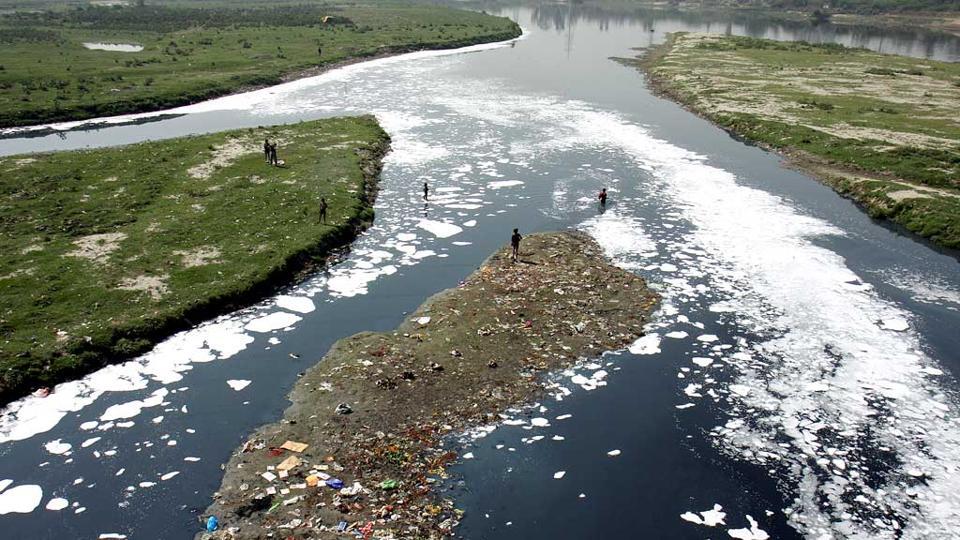
Officials said a tender has been floated on Thursday to operationalise stations that will monitor a minimum of five different pollutants, including biological oxygen demand (BOD) and total suspended solids (TSS). The tender will be awarded next month and stations made operational in six months, they said.
Officials said the real-time data will provide the body with a better understanding of the areas where certain pollutants are high and accordingly, assess the source of pollution. “A total of 22 such stations will be installed along the length of the river, which will provide us with real-time data. This will not eliminate manual monitoring, as the stations will still have to be calibrated from time to time to ensure accuracy, but it will increase the amount of data that we have, compared to earlier,” a senior DPCC official, on condition of anonymity, said.
At present, Delhi collects water samples from the Yamuna manually once a month, from seven to eight locations, analysis of which is published by the Delhi Pollution Control Committee (DPCC) in a monthly report. The locations are Palla, where the river enters Delhi, Wazirabad, ISBT Kashmere Gate, ITO Bridge, Nizamuddin Bridge, Okhla Barrage, Agra Canal and Asgarpur, after which the river exits Delhi.
DPCC, in a board meeting last October, approved plans to set up such stations, also approving the plan to procure a water lab for on-spot testing of water samples from any given point in the river’s course.
A copy of the tender, seen by HT, said the stations should be able to measure water flow into the Yamuna, calculate pH and temperature, and assess conductivity, besides measuring pollutants, including BOD, chemical oxygen demand (COD), TSS, total nitrogen (as nitrates and nitrites), total phosphorus, ammonia (NH3) and dissolved oxygen (DO).
“The specification of the controllers, probes or sensors, the server for centralized data connectivity for the OLMS and calibration shall strictly be in compliance with the latest ‘Guidelines for Online Continuous Effluent Monitoring Systems (OLMS)’ and ’latest S.O.P. Version’, issued by the Central Pollution Control Board (CPCB),” the tender said.
A monitoring committee appointed by the National Green Tribunal (NGT) found that a 22-km stretch of the Yamuna, falling in Delhi, contributes to around 76% of the water’s total pollution.
The latest monthly water data from February 2024 showed that of the eight spots from where samples were collected, only one spot — Palla — was meeting the BOD standard of 3 mg/l.
BOD shows the amount of oxygen required by aquatic life and organisms in the river to survive. The higher the value, the greater this demand, which means aquatic life is unlikely to survive in the water’s present condition.
The BOD readings ranged from 1.3mg/l at Palla to 54mg/l at Asgarpur.
Bhim Singh Rawat, a Yamuna activist, and member of the South Asia Network on Dams, Rivers and People (SANDRP) said the effectiveness of the DPCC’s plans can only be gauged when it is operational. “The idea is good, but now, we need to ensure it is operationalised soon and more importantly, that the data is made public. A website or a section on DPCC website needs to be maintained where such data is updated in real time,” he said.