E-Paper



Economic survey: Delhi green cover up to 342sqkm from 324 sqkm in 2019
According to the outcome budget, also released on Friday, 70% of performance indicators in the environment and forest sector were “on track” across 15 programmes and schemes until December 2021.

 Prefer HTon Google


The push towards large-scale plantation of saplings across Delhi has taken the total green cover in the national capital to 342 square kilometres (sqkm) — 23.06% of the total geographical area — from 324 sqkm in 2019, the Economic Survey 2021-22, released on Friday, has said.
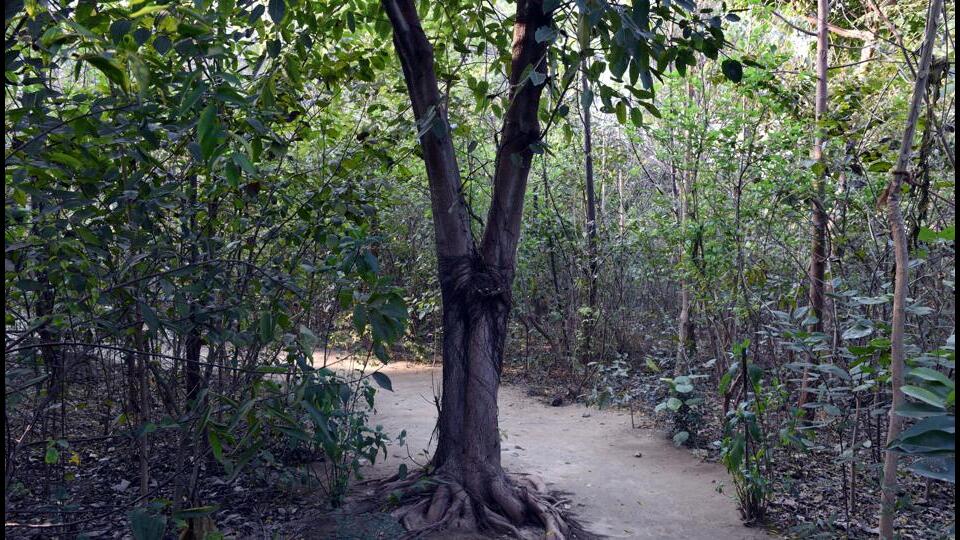
But despite that increase, there was a slight decline in Delhi’s forest cover, which now stands at 194.24 sqkm, as opposed to 195.44 sqkm in 2019. But even with that slight decline, Delhi still has the highest forest cover among the seven mega cities in the country, ahead of Mumbai and Bengaluru, the report showed.
In terms of tree cover, Delhi now has 147 sqkm of its total area under tree cover as opposed to 129 sqkm in 2019, making it the state with the second highest tree cover (9.91% of the total geographical area), behind only Chandigarh (13.16%), the report said.
According to the outcome budget, also released on Friday, 70% of performance indicators in the environment and forest sector were “on track” across 15 programmes and schemes until December 2021. All 26 of Delhi’s ambient air quality monitoring stations under the Delhi Pollution Control Committee (DPCC) were functional throughout the year, with 90% data being uploaded to the servers, it said.
In terms of the ambient air quality, the economic survey report showed that Delhi has been recording a drop in the annual average PM (particulate matter) 2.5 and PM10 levels since 2015. In 2021, the annual average of PM 2.5 was 113 micrograms per cubic metre (µg/m3), while the annual average PM10 was 221µg/m3.
These readings, however, are higher than those of 2020, a lockdown year, when the annual average PM2.5 level was 101µg/m3 and PM10 level was 187µg/m3. In 2015, the annual average PM2.5 level was 133µg/m3 and PM10 level was 295 µg/m3.
In the agricultural sector, Delhi’s gross cropped area increased to 43,569 hectares in 2020-21, which was 35,178 hectares in the fiscal 2012-13. It is estimated to further increase to 47,850 hectares in 2021-22.
The survey further said Delhi has strengthened its existing noise monitoring network by adding 26 more stations to take the total to 31 stations.
In terms of tracking progress made on past announcements as per the outcome budget – used to indicate how successful the government was in meeting its targets — of 63 key performance indicators, 35 were ”on track” while 15 were ”not on track”. The remaining 13 could not be classified under either category.
The outcome budget also showed that Delhi was able to create five new city forests as opposed to a target of six for fiscal 2021-22. A total of 4.2 lakh (420,000) free saplings were distributed as opposed to a target of 4 lakh (400,000) saplings.
Delhi also added 493 hectares of green cover in the fiscal as opposed to a target of 600 hectares, while 2.11 lakh (211,000) saplings were planted outside Asola Bhatti sanctuary alone as opposed to a target of 2 lakh (200,000). Of the 14,980 complaints registered on the Green Delhi app, 93% of complaints were resolved, it added.