
 E-Paper



Farm fires in Punjab pick up as harvest winds up
Farm fires are expected to get more intense now with the farmers wrapping up harvest late this year due to heavy rains in September. The late surge, however, provided the much needed relief to Delhi-NCR where air quality on Diwali remained relatively cleaner both because of amenable weather conditions as well as lower contribution of farm fires to air pollution

 Prefer HTon Google


Patiala: Crop stubble fires in Punjab have started rising with nearly 60% of the harvest being completed across the state, officials aware of the matter said on Wednesday, and added that 55% of the total 7,036 fire incidents so far were reported in the last five days.
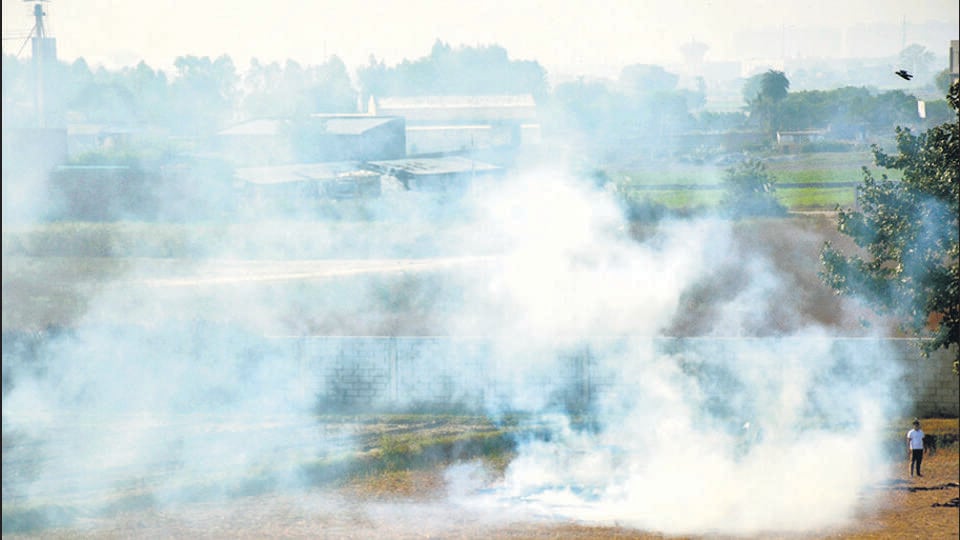
According to satellite data from Punjab Remote Sensing Centre, 1,238 incidents were recorded in the state on Wednesday.
Farm fires are expected to get more intense now with the farmers wrapping up harvest late this year due to heavy rains in September. The late surge, however, provided the much needed relief to Delhi-NCR where air quality on Diwali remained relatively cleaner both because of amenable weather conditions as well as lower contribution of farm fires to air pollution.
According to state government officials, farm fires have started rising in the Malwa belt after peaking in the Majha region. On Wednesday, Tarn Taran recorded the maximum number of stubble burning incidents at 210. This was followed by 183 fires in Patiala, 126 in Sangrur and 116 in Ferozepur.
The Majha region consists of Tarn Taran, Gurdaspur and Faridkot districts while Ludhiana, Rupnagar, Patiala, Sangrur, Bathinda, and Firozpur districts come under the Malwa region.
“Of the targeted 18 million metric tonnes of paddy, the state government has purchased 8 million tonnes so far. We are way behind schedule for paddy harvest. Still, we are hopeful that paddy straw burning cases will decrease, as the Punjab government has launched a massive campaign to encourage farmers to use other methods to dispose of stubble,” said a state agriculture department official who asked not to be named.
Farm fires in Punjab and Haryana after paddy harvest is among the major contributors of air pollution in Delhi NCR in the winter months.
The Punjab Pollution Control Board, however, said that the next two weeks are crucial. “The state government has already asked the staff deployed on the ground to proactively engage with the farmers, encouraging them to use ex-situ and in-situ methods of disposing the straw. Several farmers are now selling the straw for use in the power plants. Also, there is an increase in the use of super seeder machines for direct sowing of wheat,” said a pollution control board official, asking to remain anonymous.
A super seeder machine is capable of navigating a farm full of stubble to sow the winter (rabi) crop, in most cases wheat. The in-situ management of paddy straw involves mixing it with soil, while ex-situ measures include removing the stubble and selling it for making pellets that are used in the power plants.


