
 E-Paper



Frame common issues in services law case: SC to Delhi govt, Centre
Chief Justice of India (CJI) Dhananjaya Y Chandrachud, who heads the Constitution bench in the matter, asked the counsel for the two sides to prepare a list of common issues


The Supreme Court on Wednesday asked the Centre and the Delhi government to consensually frame the issues for the Constitution bench to test the validity of the new Delhi services law, which gave the Union government control of the national capital’s bureaucratic set-up.
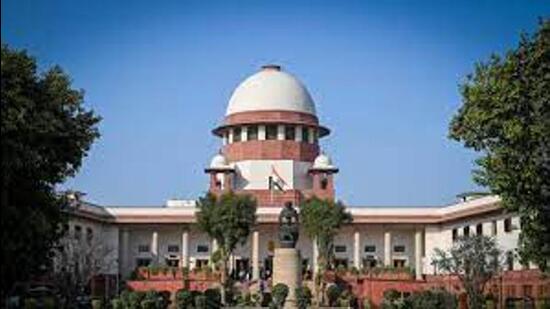
Chief Justice of India (CJI) Dhananjaya Y Chandrachud, who heads the Constitution bench in the matter, asked the counsel for the two sides to prepare a list of common issues along with a compilation of judgments and documents within four weeks.
The Delhi services ordinance, promulgated on May 19, was replaced by a bill which was passed by Parliament on August 8. Four days later, changes to the Government of National Capital Territory of Delhi (GNCTD) Act were codified into law, putting the control of the city’s administration in the hands of the Centre after the President accorded her assent to the law.
A week after a Supreme Court Constitution bench ruled that the Delhi government has control over bureaucrats assigned to departments under its purview, the Union government, on May 19, issued the ordinance restoring to itself the power over “services” by way of making a raft of major amendments in the Government of National Capital Territory of Delhi (GNCTD) Act, 1991. The ordinance also strengthened the position of the Lieutenant Governor, making him the final authority who can act in his “sole discretion” in deciding the matters relating to transfer and posting of bureaucrats.
In the move, perceived as nullifying the constitution bench judgment on May 11, the Centre introduced a whole new chapter in the GNCTD Act, Part IVA, to create a National Capital Civil Service Authority (NCCSA) and a public service commission for transfers and postings of the officers serving in the affairs of the Delhi government. Delhi, so far, did not have a service commission of its own.
All transfers and postings of officers, as per the new law, has to be done by NCCSA, which is chaired by chief minister Arvind Kejriwal and has two senior Delhi government bureaucrats as members; the authority takes decisions by majority, but the final decision will rest with the Lieutenant Governor.
In its May 11 judgment, the five-judge bench led by CJI Chandrachud had held that “a constitutionally entrenched and democratically elected government needs to have control over its administration,”.
The ordinance was challenged before the top court by the Delhi government on June 30, complaining it allows the Union government to take over the governance of the Capital while eroding not only the premise of democratic governance but also the regional will of Delhi’s electorate. The AAP government also demanded a stay on the ordinance, arguing that it was issued with the purpose of negating the two Constitution bench decisions of May 11 and July 2018, both of which were in favour of the elected government.
On July 20, the legal challenge to the ordinance was referred to a Constitution bench of five judges. In the reference order, the apex court noted that the power of Parliament to enact a law granting the Centre executive power over services is not in contention. “However, this court while deciding the constitutional validity of the 2023 Ordinance must decide if the exercise of such a power is valid,” said the order.
The bench in the reference order alluded to Article 239-AA(7) which was resorted to by the Centre in taking away “services” from the elected government, but the previous two Constitution bench judgments had no occasion to deal with it. Article 239-AA(7) empowers Parliament to make laws for giving effect to or supplementing the provisions contained in Article 239AA — the provision that guides the administration of Delhi.
“The disposal of the writ petition requires this court to answer a substantial question of law as to the interpretation of the Constitution,” held the bench, as it framed two issues in its reference order: First, what are the contours of the power of Parliament to enact a law under Article 239-AA(7); and second, whether Parliament in the exercise of its power under Article 239-AA(7) can abrogate the constitutional principles of governance for Delhi.
On August 25, the court permitted the Delhi government to amend its petition since the ordinance had been replaced by the GNCTD Act.
As reported by HT on July 31, the bill replacing the ordinance contained at least three crucial changes, including the removing of a crucial section that was apparently meant to undo the effect of a Supreme Court ruling in May, 2023, that had tilted the balance of power in favour of the elected Delhi government.
The bill also proposed to change the manner in which tribunals’ heads are to be appointed in the national capital --- assigning some prerogatives to the lieutenant governor now, as opposed to the Ordinance’s approach of the final signatory being the President of India.
Appointments in all boards, commissions, and statutory bodies established under Acts passed by Parliament will be done by the central government while the proposals for appointments in boards, commissions, and statutory bodies established by Acts passed by the Delhi assembly will have to be routed through the NCCSA.
The bill also removed the requirement of NCCSA furnishing an annual report on its functioning to the Centre and the Delhi government, which was a requirement under the ordinance.
The control of bureaucrats has been at the core of the Centre and Delhi government’s battles in courts as well as outside since 2015 when AAP stormed to power. The May 11 Supreme Court judgement placed the control of services in the hands of the elected government. On May 19, the ordinance by the Union government snatched back control.
On Wednesday, the CJI told senior lawyers Abhishek Manu Singhvi and Sanjay Jain, who appeared for the Delhi government and the Lieutenant Governor respectively: “Let a common compilation be prepared and then you can mention it before us for a date.”
The directive came after Singhvi mentioned the matter for assignment of a date of hearing of the Aam Aadmi Party (AAP) government’s petition challenging the validity of the GNCTD (Amendment) Act, 2023 that was initially introduced as an ordinance by the Centre on May 19 and subsequently passed by Parliament.
“There is an extraordinary urgency and agony...The civil servants are not following the orders of the elected government,” Singhvi complained.
Responding, the CJI pointed out that there are older seven-judge and five-judge Constitution bench cases that he has listed for hearing. “These cases have remained pending for years now. We have now prioritised their disposal,” justice Chandarchud told Singhvi, who made a request if the Delhi services case could also be accommodated in the list of other Constitution bench cases.
To this, the CJI asked Singhvi and Jain to first complete the procedural requirements of preparing a common list of issues and other documents so that the matter is ready for hearing. “Please, follow the protocol for the Constitution bench cases so that when they are listed, the bench does not have to adjourn them for complying with the procedural directions” justice Chandrachud told the lawyers.
The CJI also appointed advocates Shadan Farasat and Padmesh Mishra as nodal counsel in the case to prepare a common compilation of submission and judgments and collaborate with all the lawyers in the matter to facilitate the proceedings.

Stay updated with all top Cities including, Bengaluru, Delhi, Mumbai and more across India. Stay informed on the latest happenings in World News along with Delhi Election 2025 and Delhi Election Result 2025 Live, New Delhi Election Result Live, Kalkaji Election Result Live at Hindustan Times.


