
 E-Paper



HC slams Delhi govt for failing to curb Yamuna pollution
A bench of justices Prathiba M Singh and Manmeet PS Arora directed the chief secretary to take comprehensive measures

 Prefer HTon Google


The Delhi High Court on Thursday expressed concern over the Delhi government’s failure to prevent treated water from mixing with contaminated wastewater before entering the Yamuna River, despite significant public expenditure on the issue. The court said this practice undermined the very purpose of sewage treatment plants (STPs) and common effluent treatment plants (CETPs).
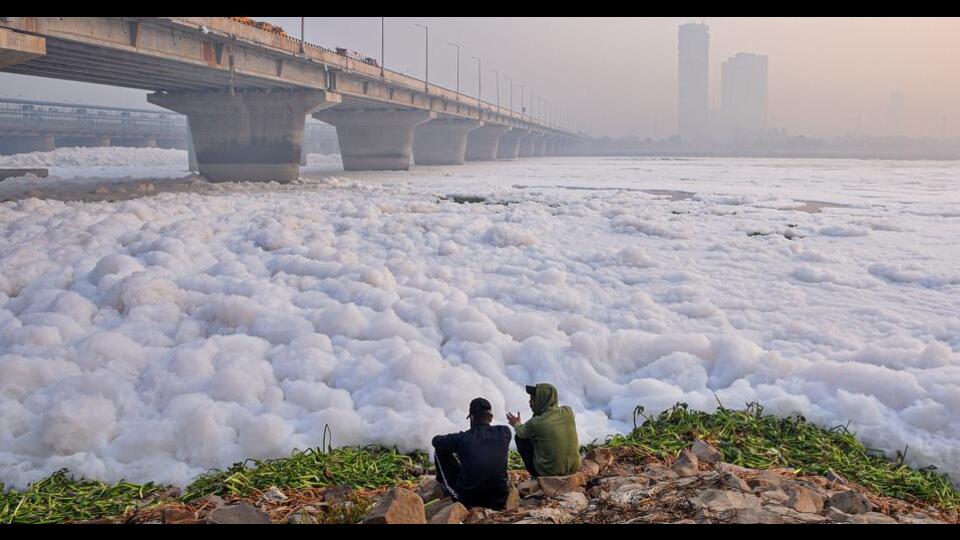
A bench of justices Prathiba M Singh and Manmeet PS Arora directed the chief secretary to take comprehensive measures to tackle the pollution problem, including mapping Delhi’s existing stormwater and sewage drainage systems. The court called for expert analysis to understand how these networks run parallel, connect to the main drain after treatment, and require upgrades, if necessary, as part of a drainage master plan.
This followed the court’s review of “contrasting reports” submitted by a special committee it had constituted to inspect all STPs and CETPs, and the Delhi government’s own report on the functioning of these treatment plants.
The special committee, which included advocate Vrinda Bhandari and Vivek Tandon, exposed critical flaws in the STPs and CETPs. It found that treated water was mixing with untreated wastewater before entering the Yamuna, defeating the purpose of treatment. The report also highlighted the mixing of industrial and domestic waste, under-utilisation of CETPs, outdated infrastructure, corroded pipelines, and the absence of live monitoring systems, including non-functional electric, inlet, and outlet meters.
In contrast, the Delhi government’s report claimed that the treatment plants were functioning satisfactorily.
“The entire purpose of STPs is destroyed if we have the drain water mixed with that treated water… If the drain is still flowing into Yamuna, the entire purpose is finished… Why are we awarding these works without knowing what is happening on the ground? Look at the crores being spent—it’s just not making sense. The situation demands going back to the drawing board for the whole of Delhi: mapping stormwater and sewage drains properly,” the bench remarked.
The court stressed that, without assigning blame at this stage, a comprehensive effort is needed to curb Yamuna pollution. This includes creating a detailed map of existing stormwater and sewage drains, and expert assessment of how the networks run in parallel and connect to the main drain after treatment.
Additionally, the bench directed the Delhi Pollution Control Committee (DPCC) to prepare a detailed chart of all industrial areas, specifying the regular monitoring measures, factories with their own treatment plants, and the effectiveness of waste treatment being provided.
Stay updated with all top Cities including, Bengaluru, Delhi, Mumbai and more across India. Stay informed on the latest happenings in World News along with Delhi Election 2025 and Delhi Election Result 2025 Live, New Delhi Election Result Live, Kalkaji Election Result Live at Hindustan Times.


