
 E-Paper



Late monsoon pushes kharif area sown up by 1%
Cultivators have planted a range of kharif crops — which account for nearly half of India’s annual food supply — in 109.7 million hectare overall, compared to a normal area of 108.4 million hectare. In 2021-22, the total summer acreage was 111 million hectare.

 Prefer HTon Google


A late surge in the monsoon has pushed up total kharif or summer-sown area by 1% compared to the normal level, which is a five-year average, data from the farm ministry on Friday showed.
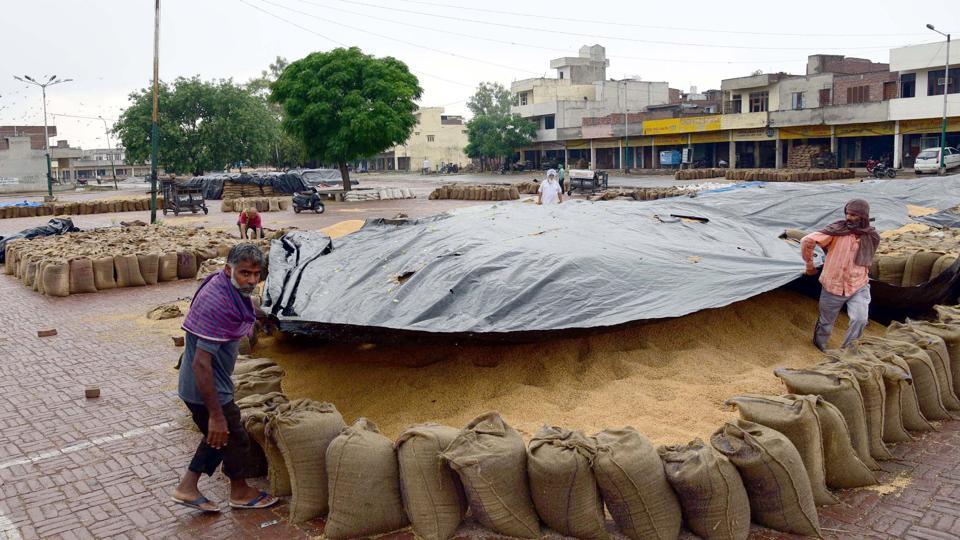
Farmers have brought large tracts under paddy, the season’s main staple, whose sowing had been lagging.
Cultivators have planted a range of kharif crops — which account for nearly half of India’s annual food supply — in 109.7 million hectare overall, compared to a normal area of 108.4 million hectare. In 2021-22, the total summer acreage was 111 million hectare.
At 40.1 million hectares, the area under rice is now 1% above the normal area of 39 million hectares, but 5% below last year’s acreage. “Transplanting of paddy is still going on in states like Karnataka, Telangana, Tamil Nadu and Odisha. In these states, some more area coverage under paddy is expected to be captured due to good rainfall,” a farm ministry report on Friday said.
The area under pulses, which India imports to meet domestic demand, still lags 7% compared to the average area usually sown, the data showed.
Cultivators have sown more coarse cereals, or millets, this year at 18.1 million hectare, up from last year’s 17.4 million hectare. The area under oilseeds, used for making cooking oils, stands at 19 million hectare, the same as last year.
The June-September monsoon has been erratic this year. In many states, heavy showers caused flooding, while in others, falls had been scanty, such as rice-growing Uttar Pradesh, West Bengal, Bihar and Jharkhand.
Sufficient farm output is critical this year as the world battles a food crisis and high commodity prices. In May, a heatwave pummeled India’s wheat crop and then an uneven monsoon hampered paddy sowing. This prompted a ban on wheat export in May. Early this month, the country also curbed overseas rice shipments, anticipating tighter supplies.
Widespread rainfall since September first week, especially in states where the monsoon had been poor, has helped bridge large deficits in sowing of many crops. The unseasonal rains are not a blessing for all states, especially where paddy and other crops are ready for harvesting. Reaping activities have come to a halt in states such as Haryana, Punjab and Madhya Pradesh due to heavy rains. Among cash crops, the country is also likely to see robust sugarcane and cotton output, whose acreage stood at 5.5 million hectares and 12.7 million hectare.


