
 E-Paper



LG launches property tax amnesty scheme in authorised, regularised colonies
The Strengthening and Augmentation of Municipal Revenue for Infrastructure Development in Delhi (SAMRIDDHI) scheme, to be operational between October 26 this year and March 31, 2023, aims at solving thousands of pending court cases since the unit area method for property tax calculation came into existence from 2004, officials aware of the matter said.


New Delhi Lieutenant governor Vinai Kumar Saxena on Tuesday initiated a property tax amnesty scheme to waive off tax arrears for properties in authorised and regularised areas in case the taxpayer clears dues pending for six years including the current financial year in case of residential units, and seven years including the current financial year for non-residential units.
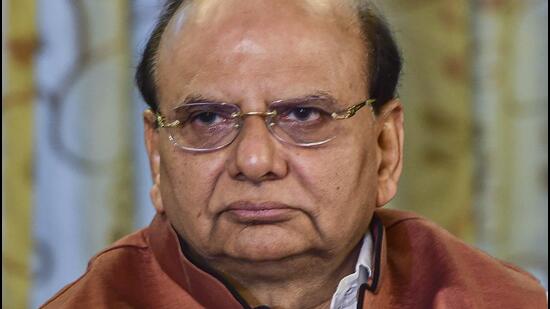
The Strengthening and Augmentation of Municipal Revenue for Infrastructure Development in Delhi (SAMRIDDHI) scheme, to be operational between October 26 this year and March 31, 2023, aims at solving thousands of pending court cases since the unit area method for property tax calculation came into existence from 2004, officials aware of the matter said.
Saxena said that the scheme will benefit both the Municipal Corporation of Delhi (MCD) and the city’s residents. “MCD always used to talk about tax collection from 2004, but under this scheme, the residential properties will have to pay tax for 1+5 years (the ongoing financial year and last five years), while the commercial properties will be able to pay taxes for 1+6 years (current year + last 6 years). After this payment, there will be no liability of the tax payer. This payment can be scrutinised for one year, after which the matter will be settled. The tax will be used for developing roads, parks and schools,” he said.
For the financially-stressed MCD, property tax remains one of the main sources of revenue. Non-payment of property taxes in such areas remains a key hurdle in expanding the tax net by the cash-strapped civic body.
The total property tax collection for 2021-22 in MCD was ₹2,032 crore, and MCD data shows that around 1.15 million properties paid tax in 2021-22 -- only around 35% of the properties in the city.
Those who opt to participate in the SAMRIDDHI scheme will have to pay only the principal amounts for the current financial year, and 2017-18 to 2021-22 (residential units) or 2016-17 to 2021-22 (commercial units), following which 100% of the interest and penalty on the outstanding tax amount will be exempted and all dues prior to 2016-17 will be waived off, an MCD spokesperson said.
The amnesty scheme will also cover cases involving dishonoured cheque, including cases where the bank account and property has been attached, as well as those cases pending under litigation in courts. The MCD clarified that cases where the principal, interest and penalty has already been paid before the launch of the scheme will not be reassessed and reopened.
“Coercive measures to collect the tax dues will be launched against such defaulters from April 1, 2023,” the corporation said in a statement.
An official from the property tax department said the scrutiny of tax payment under the scheme will be done strictly within one year from the date of tax payment. “During the scrutiny, if it is found that the taxpayer has not deposited the right amount of tax by wilful suppression or misrepresentation of fact, the benefits extended will be withdrawn. These discrepancies can be raised only within a period of one year from the receipt of the application,” he said.
Delhi’s property tax net remains limited at 35% coverage, despite such amnesty schemes being offered every year. On September14, the MCD had announced an amnesty scheme for properties in unauthorised colonies, unauthorised regularized colonies, Lal Dora, Extended Lal Dora and Extended Abadis of villages. Under the scheme for these unplanned areas, taxpayers of residential properties in these colonies can pay the principal amount of property tax dues for the financial years 2021-22 and 2022-23. Following which all outstanding property tax dues prior to 2021-22 would be waived off.
Atul Goyal, president of the United Residents Joint Action, an RWA body, said the unequal treatment between authorised and unauthorised areas is problematic. “Those who are regular tax payers are getting punished while defaulters are getting rewarded with more relaxations. Planned areas carry the entire burden of property tax and they should also be provided the same two-year window. Policy cannot be discriminatory in terms of paying capacity of the citizen,” he said.
Nitin Gupta, president of the Kamala Nagar Traders Association, said that considering the latest amnesty scheme, “it seems the honest tax payer is always treated as fools by the municipal corporation”.
Stay updated with all top Cities including, Bengaluru, Delhi, Mumbai and more across India. Stay informed on the latest happenings in World News along with Delhi Election 2025 and Delhi Election Result 2025 Live, New Delhi Election Result Live, Kalkaji Election Result Live at Hindustan Times.


