
 E-Paper



Missing in Delhi's urban local bodies: Empowerment at the zonal level
Experts and former civic functionaries bat for greater decision-making abilities for local committees. This will ensure democratic decentralisation at every rung of governance for all three Delhi urban local bodies


New Delhi: A lack of financial resources and a tussle between the state government and three urban local bodies of Delhi have been cited by the central government as the key reasons behind the failure of the decade-long trifurcation experiment in the city.
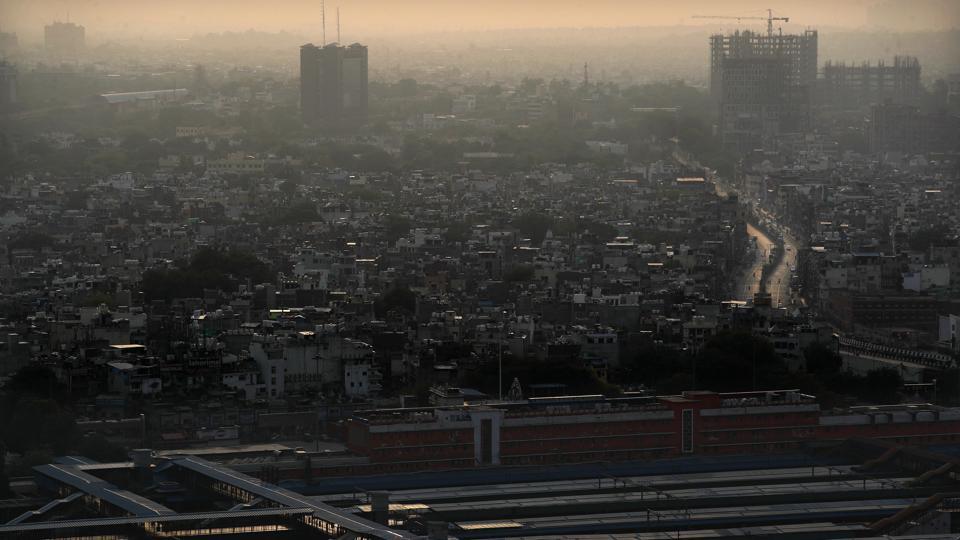
Contrary to the global trends on the decentralisation of power in urban local governance, Delhi is now once again moving towards pre-2012 centralised municipal administration with a single urban local body managing the affairs of more than 20 million people. The original idea, pushed by the Sheila Dikshit government, was the 2011-12 trifurcation, which was more decentralised and had better access to service delivery. The idea of smaller civic bodies was backed by exhaustive committee reports including the Balakrishnan Committee (1989) and the Virendra Prakash Committee (2001).
Experts and former senior Municipal Corporation of Delhi (MCD) functionaries argue that while unification makes sense to bring parity at the economic level, the zonal administrations and wards committees will have to be further empowered to govern a megacity like Delhi, on the lines of other global megacities. Under both the trifurcated as well as unified corporation, the decentralisation of power at the wards committee level has been found severely lacking, stakeholders say.
Delhi's 1397 sqm area under MCD is divided into 12 administrative zones: Centre, South, West, Najafgarh, Rohini, Civil Lines, Karol Bagh, SP-City, Keshavpuram, Narela, Shahdara North, and Shahdara South.
Experts have argued that besides financial sustainability, urban agglomeration of Delhi's size also needs democratic decentralisation in the governance system with issues having bearing on a ward, zone or region being taken at that level instead of reaching the municipal headquarter Civic Center.
Empowerment at the zonal level
Dr Debolina Kundu, a professor at the National Institute of Urban Affairs said that the merger of the three corporations brings equity in terms of money coming to a common kitty and balanced economic development. However, she states that zonal level and ward level planning needs to be carried out at the local level. “If we look at the governance structure, decentralisation is necessary. The JNNURM urban renewal mission had pushed for mandatory 'area sabhas' for local governance. RWA working in various areas need to be linked to ward level or at least zonal level decision-making bodies,” Kundu said.
Srikanth, the chief executive officer (CEO) of the Janagraha Centre for Citizenship and Democracy said that India needs a paradigm of “metropolitan government”, which is present in various global cities such as London and New York, and the unified MCD provides an opportunity in this regard, but there should be clearly defined roles and responsibilities starting from mohalla level, ward level, and zonal level. "London has a good decentralised system at the borough level, but the greater London authority acts as the municipal government on larger issues such as transportation and inviting investments. We find this concept of metropolitan authority missing and a unified MCD can play this role," he said.
Srikanth argued that in terms of decentralisation, even the ward committees are too big and the structure should be at the mohalla or ward level. "Activity mapping needs to be carried out with clearly defined roles at every level. It is not enough to devolve power, but also to define roles and responsibilities clearly. Such framework was present in community participation law under JNNURM. But without financial empowerment, it will amount to nothing. Money has to be there," he added.
The size of Delhi's local body is often compared with Tokyo metropolitan area —the most populous metropolitan area in the world. The Tokyo metropolitan government oversees 62 municipalities — 23 special wards, 26 sub-cities, 5 towns and 8 villages. While the metropolitan government handles larger administrative work, local municipalities, each headed by a mayor-like figure, are responsible for local services.
MCD governance structure
After the trifurcation in 2012, the MCD was divided into East, North and South Delhi Municipal Corporation — a process that has been essentially reversed on May 22, 2022. Along with the much smaller Delhi cantonment board and the New Delhi Municipal Council, the three bodies are now responsible for maintaining the civic services in India's Capital.
The MCD jurisdiction area is divided into 12 administrative zones and the corporation governing them consists of two major wings — the deliberative wing of elected councillors, and the executive wing made of civic bureaucracy.
The deliberative wing, headed by a mayor and comprising several subject-specific committees, takes policy decisions, which are then executed by the municipal employees along with performing obligatory functions mentioned in the Delhi Municipal Corporation Act (DMC), 1957. At the municipal headquarters, the standing committee is a major power centre as it is the second most powerful deliberative body after the house of councillors. Proposals and policy documents are deliberated here before being forwarded to the house for final approval. The commissioner is assisted by several additional commissioners, deputy commissioners, and additional deputy commissioners in municipal functions. The additional commissioner looks after important departments such as the department of environment management services or DEMS (sanitation), revenue, education and so on from the headquarters level, while a deputy commissioner heads the corporation bureaucracy in each of the 12 zones.
As a result of the 1993 amendment of the DMC Act, decentralised administration wards committees were created at zonal levels for each of the 12 zones, but these committees remain powerless with no financial or administrative capability.
Stakeholders and past experiences
A large number of senior councillors — who have served in ward committees, headquarter-level standing committees, and the house of councillors over the last decade — have been raising the issue of local regional committees being toothless bodies.
Jogi Ram Jain, former standing committee chairman of north MCD — who was also three-time head of Keshavpuram's Wards committee — said that local issues need not go to the headquarter level for resolution and the new administration should empower zonal administration to save both time and make governance effective. "This will reduce the load on standing committee and headquarter. Area councillors know more about the localised problems and they should be allowed to take binding decisions for their areas. Empower the deputy commissioners and wards committee," Jain argued.
Rajpal, former central zone chairman and deputy standing committee chair in South MCD, said that while shaping the new unified MCD, there is an urgent need to increase the powers of zonal headquarters. "90% of service-related problems of citizens are related to zone. Unless the headquarter shares more power with the zones, unification or trifurcation will mean little. Having one commissioner for Delhi will reduce expenses and bring policy uniformity, but zone-level committees have to be empowered to make decisions on road construction, sanitation, and local issues," Rajpal said. He added that under the current setup, decisions and resolutions passed by the wards committee were not binding on the executive wing.
While introducing the MCD amendment bill 2022, the central government has stated that the principal objective of efficient delivery of civic services through three municipal entities was not achieved. KS Mehra, former commissioner of unified MCD when it was split, said that decentralisation essentially means that the grievances should be addressed at the local level.
"Deputy Commissioners have delegated powers of commissioners so they should look into the civic issues from the sweeping of roads to the delivery of services. Such things should not reach the headquarters. The issues which have sanction amount up to ₹5 crore can be handled by the commissioner, while larger issues are sent to a standing committee and the house for approval," he said. Mehra said that the administration can think about whether smaller projects such as local road construction can be handled locally. Mehra added that anything that needs the sanction of funds has to go to the standing committee.
Councillors unheard
Over the last five years, the standing committee and house meeting have witnessed complaints from councillors that their local issues are not being addressed at the zonal level, which forces them to raise such smaller issues on drains, roads, and sanitation at the higher policymaking forums.
Across the eastern part of Delhi, the two zones — Shahadra North and South — are much more densely populated with the largest number of wards under them. Pramod Gupta, a two-time head of the Shahadra North wards committee, said that the zone had 34 wards under it compared to 15-20 wards in North Delhi areas and is one of the most challenging underdeveloped zones.
"Based on our experience, we would want a system in which the headquarters only deals with policy- and budget-related issues, and it should be zones that run the corporation. Through a local headquarters at Patparganj, people were facilitated in their grievance handling but with headquarters now moving much farther away, the zones will become even more critical and the powers of wards committee need to be increased," he added. Multiple veteran corporation functionaries have reiterated that issues which have bearing on a locality need to be taken at the zonal level.
Subhash Arya, former mayor and veteran municipal councillor from the Bharatiya Janata Party (BJP), who has worked with MCD for over 25 years, said that he is 100% in favour of a more empowered zonal administration.
"More powers have to be relegated to the deputy commissioner level officers. It will drastically reduce the time taken to decisions and movement of files. For instance, a file on de-sealing need not travel from the junior engineer to the additional commissioner or commissioner at headquarters and then travel along the chain from the headquarters to the deputy commissioner, executive engineer, assistant engineer, and junior engineer. Empower the officer at the zone to take a call on such matters," he added.
However, some former civic functionaries have stated that active councillors can function even in the current setup. Abhishek Dutt, former councillor from Andrewsganj and Delhi Congress vice-president, said the underlying issue behind the problems of the three corporations was financial, and even after the merger, financial issues have not been sorted out.
"We have seen former standing committee heads and former mayors complaining in the house meeting that their work is taking place. It just shows they have no coordination. I have not had problems. It is as much a corruption problem rather than a governance issue. However, there should be an oversight mechanism involving citizens and Resident Welfare Associations to improve the functioning of zones," he added.

Stay updated with all top Cities including, Bengaluru, Delhi, Mumbai and more across India. Stay informed on the latest happenings in World News along with Delhi Election 2025 and Delhi Election Result 2025 Live, New Delhi Election Result Live, Kalkaji Election Result Live at Hindustan Times.


