E-Paper



Munak canal breaches; teams rushed to repair critical source of water to Delhi
A section of the Munak Canal also breached in June last year and impacted the water supply to parts of the national Capital for two days

 Prefer HTon Google


A sub-branch of the Munak Canal, which provides Delhi with around 36.7% of water (719 cusecs), breached in the early hours of Thursday near Bawana’s Hanuman Mandir and inundated areas around it. Delhi Jal Board (DJB) officials said teams have rushed to repair the critical source of water for treatment plants at Delhi’s Haiderpur, Bawana, Nangloi, and Dwarka.
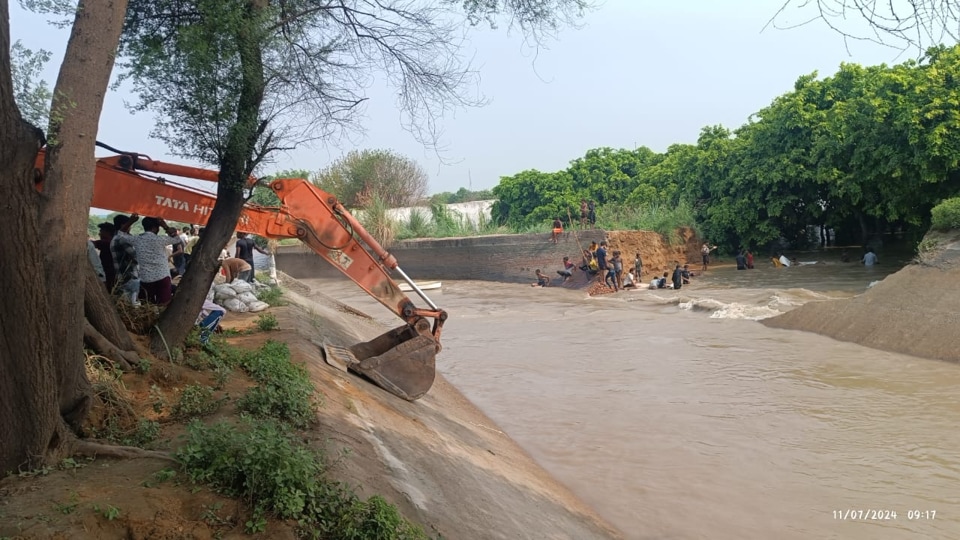
A section of the canal, which also breached in June last year and impacted the water supply to parts of Delhi for two days, was constructed between 2003 and 2012. The army took control of the canal to restore the water supply after it was breached during the Jat reservation agitation in February 2016.
A DJB official said the Haryana irrigation department, which maintains the Munak Canal, has been informed and asked to stop the flow of water. “The assessment of deficit in the city’s water supply will only be possible later in the day,” said the official, who did not want to be named.
DJB was yet to find the reason behind the breach in the 102-kilometre-long aqueduct, which is part of the Western Yamuna Canal in Haryana and Delhi. The canal carries water from the Yamuna at Munak regulator in Haryana’s Karnal. It spans up to Haiderpur via Khubru and Mandora barrages.
In a post on X, Delhi’s water minister Atishi said DJB was working in close coordination with the Haryana irrigation department following the breach in one of its sub-branches on Thursday morning. “Water has been diverted to the other sub-branch of the canal. Repair work has already started and will be completed by [Thursday] afternoon. The breached canal will be functional from tomorrow [Friday].”
Apart from the Munak canal, the Capital gets 17.8% (330 cusecs) of water from the Delhi sub-branch and 6.6% (120 cusecs) from the Yamuna river. As much as 25.4% is supplied from the Ganga (200 cusecs) and Sonia Vihar (270 cusecs) water treatment plants. The remaining water comes from the ground through wells and tube wells installed in the Yamuna flood plains.