
 E-Paper



NCAP: Delhi cuts PM10 by 17% in 7 years, but NCR still worst
Ghaziabad recorded the highest annual PM10 level at 215 µg/m³ – more than three times the national permissible limit of 60 µg/m³ – followed by Delhi at 201 µg/m³ and Noida at 195 µg/m³.

 Prefer HTon Google


Delhi has recorded a 17% reduction in PM10 levels from its 2017-18 baseline, but air quality across the National Capital Region (NCR) remained the worst in the country, an analysis by the Centre for Research on Energy and Clean Air (CREA) seven years into the National Clean Air Programme (NCAP) has found.
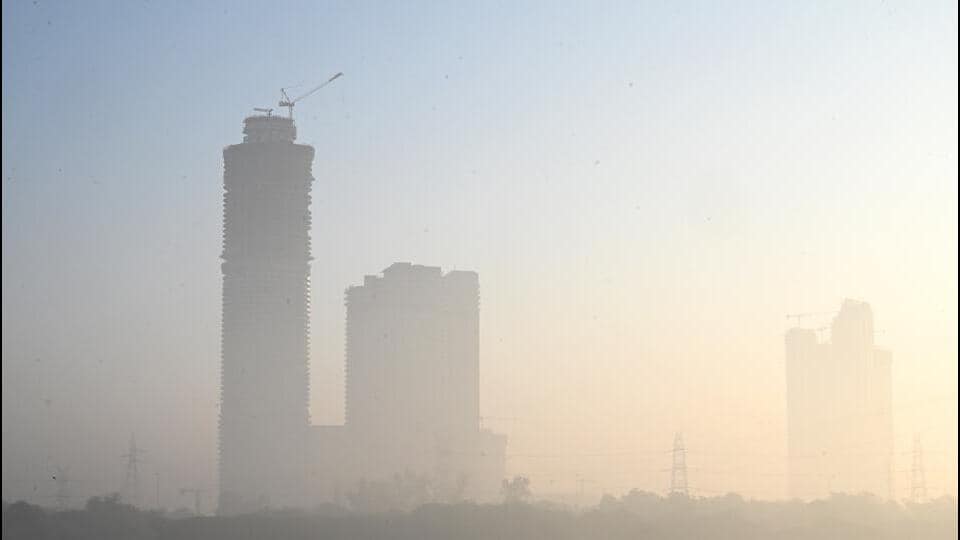
The analysis, based on data from 2025-26 from continuous ambient air quality monitoring stations across the country, shows that despite some improvement, pollution levels in NCR cities remained well above national standards.
Ghaziabad recorded the highest annual PM10 level at 215 µg/m³ – more than three times the national permissible limit of 60 µg/m³ – followed by Delhi at 201 µg/m³ and Noida at 195 µg/m³. The distant fourth spot was also occupied by an NCR city – Meerut – with an annual PM10 level of 158 µg/m³.
PM10 are tiny airborne particles such as dust, soot and smoke that can be inhaled into the respiratory system. Generated largely from sources like construction activity, road dust and vehicle emissions, these particles can aggravate respiratory illnesses.
Delhi’s PM10 levels declined from 241µg/m³ in 2017-18 to 201µg/m³ in 2025-26, including a marginal 2% drop from the previous year.
Ghaziabad, has shown a sharper 24% reduction from the 2017-18 baseline of 285µg/m³, while Noida has shown a 15% reduction, dipping from 229µg/m³ in 2017-18 to 195µg/m³ in 2025-26.
Across India, the analysis showed a mixed trend. PM10 levels decreased in 60 cities compared to FY 2024-25, but increased in 30 and remained unchanged in three. Compared to the baseline year, 14 cities saw an increase in pollution levels, while three showed no change.
A closer look at the distribution of improvements showed that only a limited number of cities achieved deep reductions in PM10.
Only 27 cities recorded reductions of over 40% – led by Dehradun in Uttarakhand at 75% – while others saw modest declines of under 20%. Visakhapatnam in Andhra Pradesh recorded the highest increase at 73%.
CREA study said compliance remained a challenge. As many as 89 of 96 cities with adequate data continued to exceed the national PM10 standard in FY 2025-26, underscoring the limited impact of current interventions.
Meanwhile, another NCR city, Gurugram, ranked as the most polluted city in India in March, recording a monthly average PM2.5 concentration of 116 µg/m³, with 12 days in the “very poor” category, 13 days in “poor,” five days in “moderate,” and one day in “satisfactory.”
Experts said Delhi’s air pollution cannot be addressed in isolation, given the regional nature of emission sources such as vehicular pollution, construction dust, industrial activity and seasonal stubble burning.
“Even after winter, NCR cities continue to exceed daily PM2.5 standards in March, highlighting the need to complement particulate controls with action on gaseous pollutants that contribute to particulate matter formation and ozone, which becomes more prominent during the summer months,” said Manoj Kumar, coordinator at CREA.


Stay updated with all top Cities including, Bengaluru, Delhi, Mumbai and more across India. Stay informed on the latest happenings in World News along with Delhi Election 2025 and Delhi Election Result 2025 Live, New Delhi Election Result Live, Kalkaji Election Result Live at Hindustan Times.


