
 E-Paper



New Delhi Municipal Council approves new waste rules with higher charges
The new byelaws also introduce community patrollers and cleanliness committees, with the rules awaiting final notification by the Union home ministry.

 Prefer HTon Google


The New Delhi Municipal Council (NDMC) has framed new waste management byelaws for Lutyens’ Delhi, mandating four-way segregation of waste at source, increasing monthly user charges and steepening fines for sanitation violations, senior civic officials said on Tuesday.
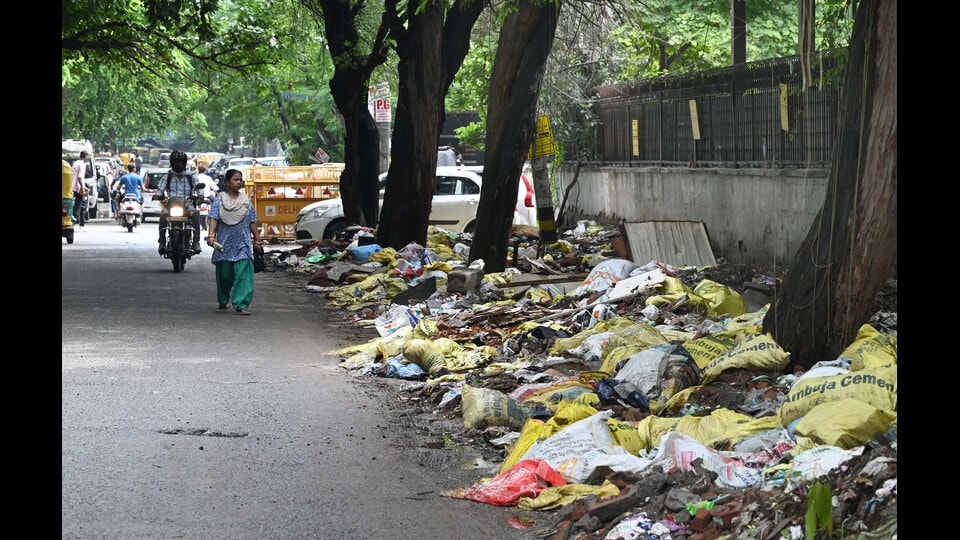
The regulations also provide for community patrollers and cleanliness committees to monitor compliance across the NDMC area. The council has approved the byelaws, which will now be sent to the Union home ministry for final notification.
Four-compartment vehicles planned for collection
“Auto-tippers engaged in door-to-door collection have been provided with four separate compartments, with one helper deployed with each vehicle to facilitate segregation during collection. The new rules also define primary collection as collection of segregated waste directly from households and other generators to secondary storage/transfer points,” a senior NDMC functionary said.
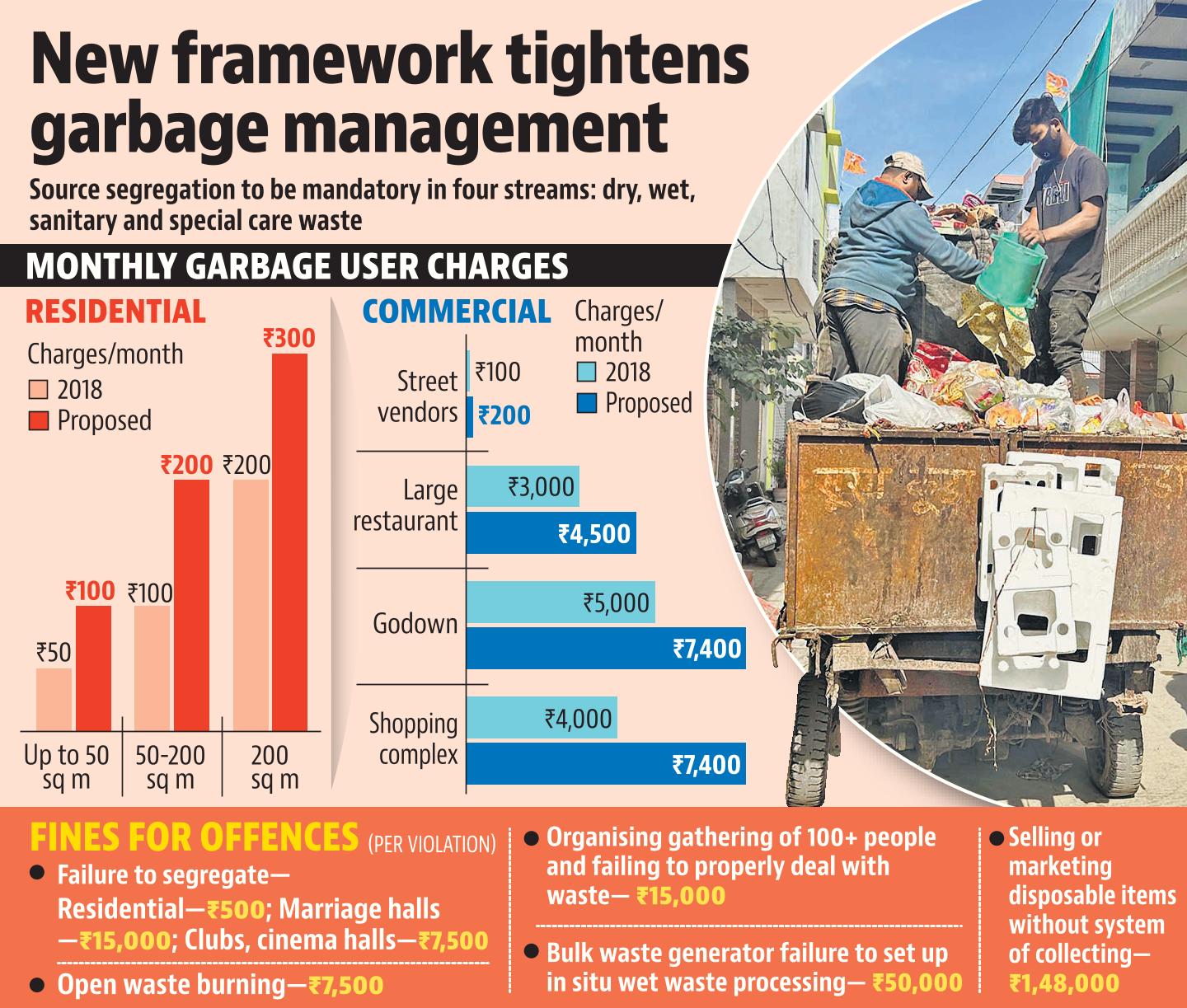
The byelaws also propose higher monthly user charges compared with the corresponding notification issued in 2018.
Also read: NDMC approves new waste rules, fixes monthly charges and spot fines
Residential charges double for smaller units
For residential units up to 50 square metres, the monthly charge will increase from ₹50 to ₹100. For plots measuring 50-200 sqm, it will rise from ₹100 to ₹200, while units above 200 sqm will pay ₹300 instead of ₹200.
For street vendors, the proposed charge is ₹200 a month, up from ₹100 in 2018. For guest houses and dharmashalas, it will increase from ₹2,000 to ₹3,000.
Restaurants with up to 50 seats will pay ₹3,000, compared with ₹2,000 earlier, while those with higher seating capacity will pay ₹4,500, up from ₹3,000.
Also read: Garbage crisis in Delhi as overflowing dhalaos trigger jams, attract strays
NDMC links fees to waste-generator category
“The principle is that the user fee reflects the category of the waste generator and the services provided, rather than imposing a single rate across all users,” an NDMC official said.
Similarly, fines and penalties have also been hiked. Non-segregation will attract a fine of ₹500 for households, ₹7,500 for commercial establishments such as clubs and cinema halls, and ₹15,000 for marriage and banquet halls. The corresponding fines under the earlier regime were ₹200, ₹5,000 and ₹10,000.
Also read: Delhi civic body plans complete overhaul of waste management system
Open burning to draw ₹7,500 penalty
Open burning of waste will attract a ₹7,500 fine, up from ₹5,000, while vendors failing to dispose of waste properly will face a ₹500 fine instead of ₹200.
Higher penalties will apply to bulk waste generators. RWAs can be fined ₹15,000, market associations ₹30,000 and hotels ₹74,000 for non-compliance. These are proposed to increase from ₹10,000, ₹20,000 and ₹50,000, respectively.
The NDMC functionary said the new framework seeks to shift the focus from collection and disposal towards segregation, recovery, recycling and decentralised processing.
“The objective is to recover maximum value from waste and ensure that only the unavoidable residual fraction requires final disposal,” the official said.


Stay updated with all top Cities including, Bengaluru, Delhi, Mumbai and more across India. Stay informed on the latest happenings in World News along with Delhi Election 2025 and Delhi Election Result 2025 Live, New Delhi Election Result Live, Kalkaji Election Result Live at Hindustan Times.


