
 E-Paper



No scientific backing behind ELV ban, Delhi govt tells SC
The government’s application, likely to be heard by a three-judge bench headed by Chief Justice Bhushan R Gavai on Monday, seeks recall of the court’s October 29, 2018 order that upheld the National Green Tribunal’s initial directive

 Prefer HTon Google


The Delhi government on Friday moved the Supreme Court challenging the blanket ban on diesel vehicles older than 10 years and petrol vehicles older than 15 years, arguing the restrictions lack scientific backing
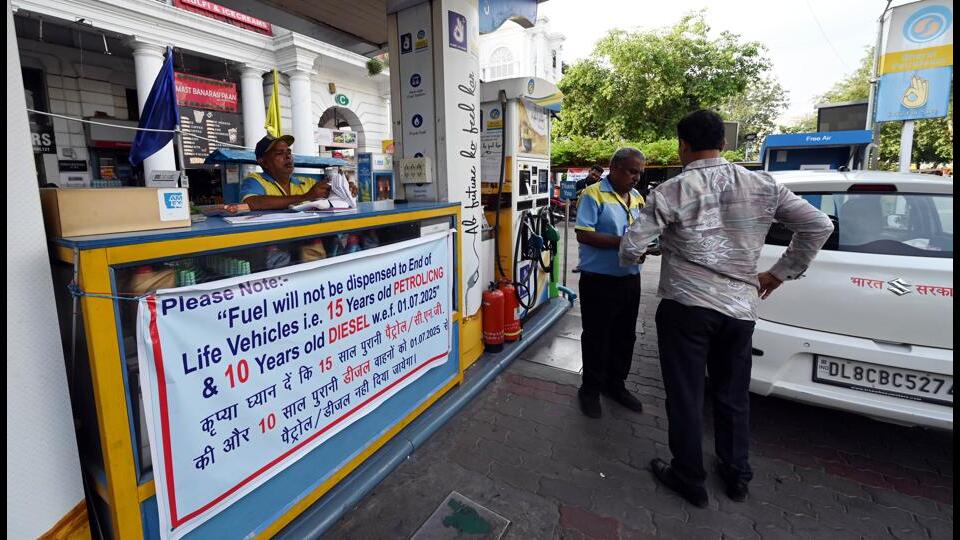
The application, likely to be heard by a three-judge bench headed by Chief Justice Bhushan R Gavai on Monday, seeks recall of the court’s October 29, 2018 order that upheld the National Green Tribunal’s initial directive.
The challenge comes after the Bharatiya Janata Party-led Delhi government faced widespread criticism earlier this month for implementing a Commission for Air Quality Management (CAQM) directive denying fuel to end-of-life vehicles from July 1. The controversial measure was subsequently put on hold following public backlash.
The government’s fresh application centres on significant technological advances since 2018, particularly the mandatory implementation of Bharat Stage VI (BS-VI) emission standards in April 2020 and what it said was stricter pollution control certificate (PUC) checks.
“To tackle pollution in the NCR region, a comprehensive policy is required which gives vehicle fitness based on actual emission levels of individual vehicles as per scientific methods rather than implementing a blanket ban based solely on age,” the application states.
The government contended that BS-VI engines emit 80% less particulate matter and 70% less nitrogen oxides compared to BS-IV vehicles that were standard when the original order was passed.
“If the order of this court dated October 29, 2018 continues to operate, it will result in road worthy, non-polluting BS-VI vehicles also going off the roads in a matter of a few years without a scientific basis for the same…there does not appear to be a scientific basis for mandating that even BS-IV vehicles which meet PUC norms should be taken off the roads in Delhi NCR. These are serious issues which may require a fresh scientific evaluation,” the application said.
The administration also raised concerns about the policy’s disproportionate impact on middle-class families, arguing that well-maintained vehicles with lower annual mileage contribute negligibly to overall emissions.
“The directive to off-road vehicles purely on age basis disproportionately affects middle-class citizens whose vehicles are less used, well-maintained, and compliant to fuel norms,” the application argues.
The government also highlighted the policy’s negative effect on the second-hand car market, which provides affordable transport options for lower-income families.
The plea seeks a comprehensive study by the Centre and CAQM to assess the actual environmental benefits of age-based restrictions versus emission-based criteria.
“No data-based evidence currently exists to establish that all diesel vehicles older than 10 years or petrol vehicles older than 15 years are uniformly polluting,” the government argued, adding that no impact analysis or cost-benefit study has demonstrated significant air quality improvements from the blanket ban.
The application also notes other pollution control measures implemented since 2018, including increased challans for pollution certificate violations, expanded public transport, electric vehicle introduction, and the extended Delhi Metro network.
The court will also hear separate applications by Delhi-NCR Transport Ekta Manch and private citizen Arun Kumar Singh challenging the overage vehicle ban.
Environment minister Manjinder Singh Sirsa said the government has urged the top court to reconsider its 2018 order “as the situation is different in 2025.”
“Our goal is to protect public health while also respecting the rights of responsible vehicle owners,” Sirsa said.
The controversy extends beyond Delhi’s territorial limits to the broader National Capital Region, encompassing districts in Uttar Pradesh, Haryana and Rajasthan, where similar restrictions apply.

Stay updated with all top Cities including, Bengaluru, Delhi, Mumbai and more across India. Stay informed on the latest happenings in World News along with Delhi Election 2025 and Delhi Election Result 2025 Live, New Delhi Election Result Live, Kalkaji Election Result Live at Hindustan Times.


