
 E-Paper



One year after ban, Delhi poor in junking single-use plastic: Survey
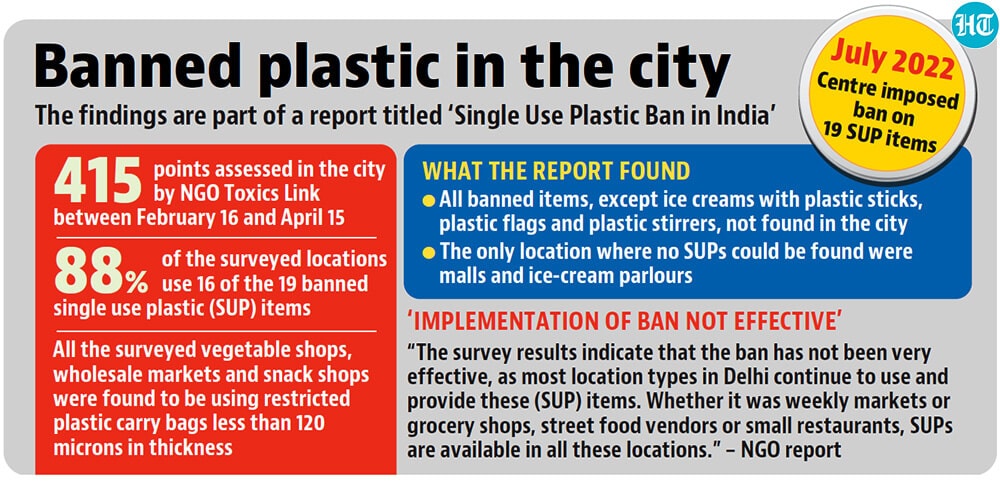
The findings, part of the report titled ‘Single Use Plastic Ban in India’, were carried out by a non-governmental organisation Toxics Link

 Prefer HTon Google


Around 88% of stores and markets in Delhi banned use single use plastic (SUP) items, more than a year after the prohibition came into effect, a survey of five Indian cities has found, making the national capital the worst in terms of the implementation of rules among the assessed cities.
Bengaluru, on the other hand, was the best city in terms of compliance, with banned SUPs found in only 55% of the locations surveyed. The other cities surveyed were Gwalior (84%), Mumbai (71%) and Guwahati (77%).
The findings, part of the report titled ‘Single Use Plastic Ban in India’, were carried out by a non-governmental organisation Toxics Link, and released on Tuesday.
Also read: ‘Why extra expensive’: Sweden to abolish tax on plastic bags in 2024
On July 1, 2022, the Centre banned use of 19 SUPs across all Indian states and Union territories owing to the adverse environmental impact of such items. The banned SUP items include ear buds with plastic sticks, plastic sticks for balloons, plastic flags, candy sticks, ice cream sticks made of plastic, thermocol, plastic cutlery, plastic cigarette packs, plastic stirrers and PVC banners less than 100 microns in thickness. Other banned items also include plastic films around invitation cards and plastic- wrapping or packing films around sweet boxes and plastic bags that are less than 120 microns in thickness.
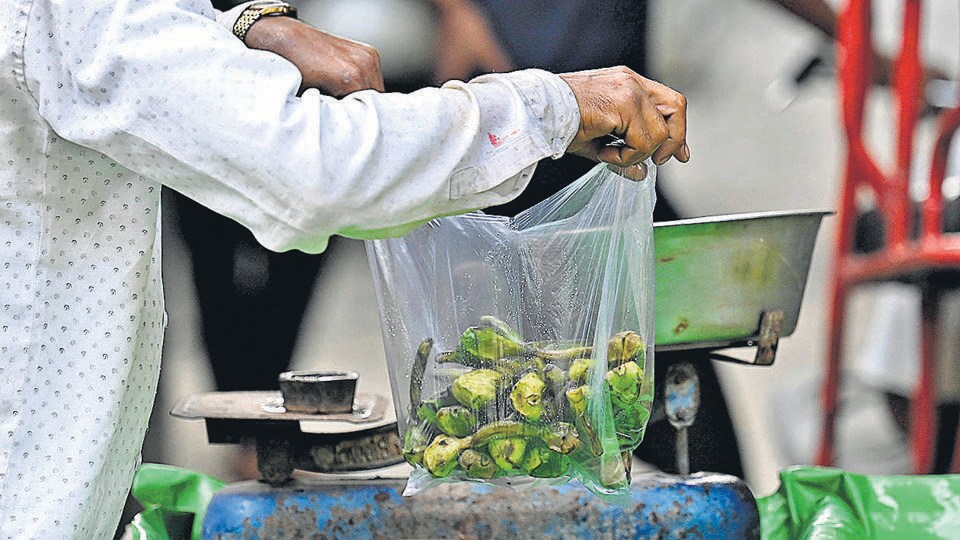
The assessment of the prevalence and use of the banned SUP items found that more than 50% of the location surveyed in Delhi were using plastic cups and cutlery. Meanwhile, 100% of the surveyed vegetable shops, wholesale markets and snack shops were found to be using restricted plastic carry bags (less than 120 microns).
The report also found that out of the 19 banned items, 16 were found across the capital. The only banned SUP items not found were ice creams with plastic sticks, plastic flags and plastic stirrers.
For the study, carried out between February 16 and April 15 this year, a total of 415 different survey points were covered, including vegetable shops, markets, grocery shops, malls, tourist spots, roadside joints, sweet shops, ice cream parlours and party decoration shops.
“The survey results indicate that the ban has not been very effective, as most location types in Delhi continue to use and provide these items. Whether it was weekly markets or grocery shops, street food vendors or small restaurants, SUPs are available in all these locations,” said the report, stating that the fact that 100% of the surveyed vegetable shops, wholesale markets and chaat shops were still providing the banned plastic bags was worrying.
“Plastic cups, cutlery and plates are commonly available at food stalls, local markets, bus depots and most party decoration shops. The only location type where no SUPs could be observed are malls and ice-cream parlours,” the report added.
The survey across Delhi found banned plastic carry bags at 64% of the points, plastic cutlery at 45% points, plastic cups at 54%, plastic plates at 43%, plastic straws at 45%, plastic earbuds at 90%, balloons with plastic sticks at 92% and thermocol for decoration at 100% of the points. The report said over 70% of party decoration shops continue to sell plastic cutlery.
The report added that factors like better implementation of the ban, better response from the public and easier availability of alternatives are some of the main reasons that have helped Bengaluru, in comparison to the other cities.
“SUPs are the major contributor to the plastic pollution crisis, and the study results indicate huge gaps in the enforcement of the ban in India, especially in the informal economy,” said Priti Banthia Mahesh, Chief Programme Coordinator, Toxics Link, stating these banned items were also being sold openly on e-commerce sites.
Atin Biswas, programme director of the municipal solid waste sector at the Centre for Science and Environment (CSE), said that on-ground enforcement of the ban has been weak. “At the same time, the absence of alternatives is another driving factor in the availability of these banned SUP items. What we also need is a blanket ban on carry bags, as it is impossible to judge the thickness of plastic bags and how many microns they are, without having the required machines,” he said.



