
 E-Paper



Parasitic twin removed from teen’s abdomen by AIIMS in rare surgery
he patient, identified by his first name as Mohit, hails from Unnao in Uttar Pradesh and he has lived with the underdeveloped twin’s limb attached to his abdomen since birth. The limb, which included underdeveloped male genitalia, continued to grow as Mohit grew, doctors said.

 Prefer HTon Google


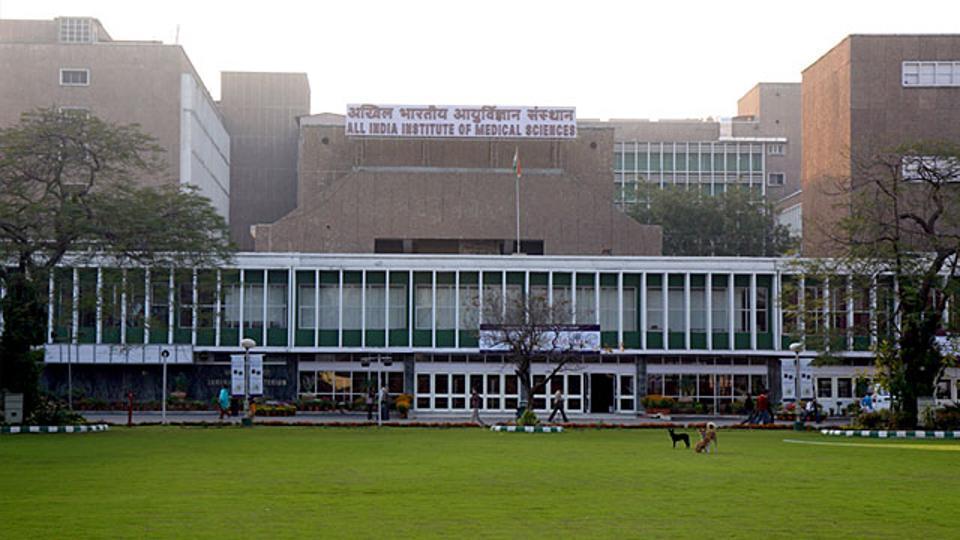
A team of around 20 doctors at the All India Institute of Medical Sciences (AIIMS) successfully removed a parasitic twin, weighing about 15-16 kilos, from the abdomen of a 17-year-old boy in what experts are calling “the country’s first reported case of an incomplete parasitic twin”, officials said on Tuesday.
The rare condition, known as heteropagus or asymmetrical twinning, occurs in approximately fewer than one in 1 million births worldwide, doctors said, adding that in this case, almost 30% of the body’s blood was redirected to the parasitic twin, prompting the urgent medical intervention.
The patient, identified by his first name as Mohit, hails from Unnao in Uttar Pradesh and he has lived with the underdeveloped twin’s limb attached to his abdomen since birth. The limb, which included underdeveloped male genitalia, continued to grow as Mohit grew, doctors said.
While he could walk and perform daily tasks with some difficulty, he and his family faced severe social exclusion in their village, leading to his withdrawal from school, they added.
‘A miracle surgery’
Dr Asuri Krishna, chief operating surgeon at AIIMS, recalled the initial shock when the teenager arrived at the hospital. “When the 17-year-old patient first arrived at the hospital, the front side of his body was covered with a large piece of cloth. It looked like he was holding a younger sibling in his arm, but when the child removed the cloth, even the doctors were left baffled, as no one had ever seen such a case in the hospital,” he said.
Doctors explained that in such cases, the more developed twin is called the autosite, while the underdeveloped twin is referred to as the parasite, as it depends on the autosite for survival. The condition is extremely rare, with only 40 documented cases in global medical literature, they added.
Mohit’s family had consulted several local doctors over the years but had been misinformed that removing the limb of the parasitic twin could be fatal, as it was believed to share a common heart with him. As a result, Mohit continued to live with the condition without proper medical intervention.
Following his admission to AIIMS in late January, doctors conducted a CT angiography, which confirmed that Mohit did not share any major organs with the parasitic twin. However, a branch of the internal mammary artery was supplying blood to the parasitic limb. “Almost 30 percent of the blood flow was going to the parasite’s body; hence, suddenly removing it was a challenge,” said Dr Krishna.
Successful surgery and recovery
On February 8, surgeons at AIIMS performed the complex operation. They first detached the parasitic limb before removing a large cystic mass from the patient’s abdomen. “Post the surgery, a mass of about 15-16 kg was removed from the patient’s body. Soon after, he started witnessing steady recovery. If the patient had not been treated in the next few years, this condition would have been life-threatening,” said Dr. VK Bansal from AIIMS.
Doctors now expect Mohit to lead a normal life. “With the parasitic twin removed, the child can now have a socially normal life as well,” Dr. Bansal added.
Post the surgery, the teen’s vital signs remained stable, and he was discharged on the fourth day.
Dr Krishna said, “While the teen has been recovering properly, as the parasite twin was attached to his body for a long time, it had led to the stretching of his abdominal area. Hence, even after the surgery, the child still felt that the parasite twin was still attached to his body. To contract that stretching, we have given him medication. Ten days after the surgery, a follow-up was done and the boy did not bring up any other issues. Now, after six months, we have again asked him to submit to a followup checkup.”

Stay updated with all top Cities including, Bengaluru, Delhi, Mumbai and more across India. Stay informed on the latest happenings in World News along with Delhi Election 2025 and Delhi Election Result 2025 Live, New Delhi Election Result Live, Kalkaji Election Result Live at Hindustan Times.


