
 E-Paper



Pre-emptive Grap measures may not be implemented in Delhi from today
Officials aware of the matter said the sub-committee of the Commission for Air Quality Management for Delhi-NCR and adjoining areas (CAQM) were reviewing the Grap measures that will be implemented in Delhi pre-emptively in the coming days

 Prefer HTon Google


A day after the air quality commission recommended pre-emptive curbs and restrictions to check pollution in Delhi under the Graded Response Action Plan (Grap) from October 15, senior officials of the Union environment ministry on Thursday said the matter was still under consideration.
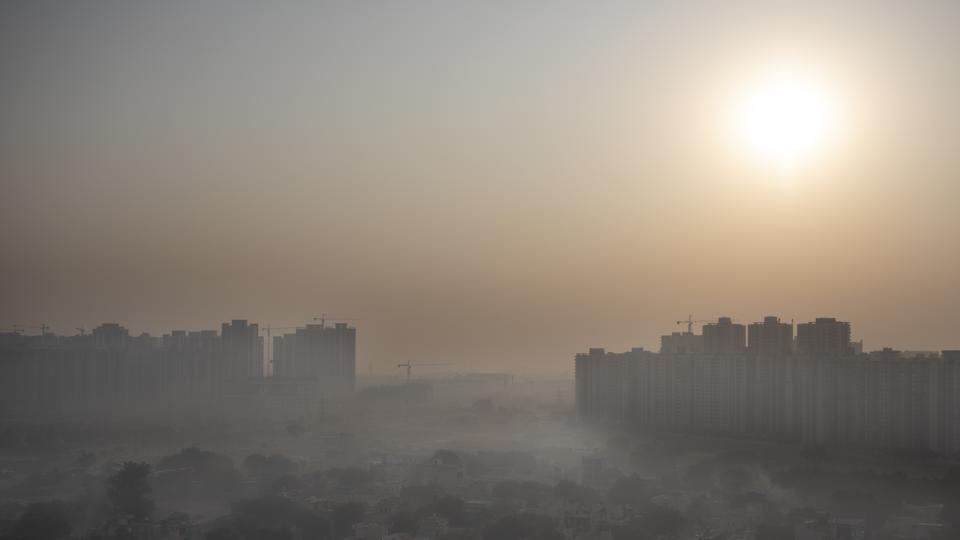
Officials aware of the matter said the sub-committee of the Commission for Air Quality Management for Delhi-NCR and adjoining areas (CAQM) were reviewing the Grap measures that will be implemented in Delhi pre-emptively in the coming days.
HT reported on Thursday that CAQM members, in a meeting on Tuesday, suggested that curbs such as ban on use of coal-fired ovens, and activities such as routine mechanised sweeping should begin in Delhi and the National Capital Region (NCR) from October 15 irrespective of the air quality at the time. They suggested that all ‘poor’ and some ‘very poor’ protocols of the Grap may be activated.
On Thursday, a senior ministry of environment, forest and climate change (MoEFCC) official who asked not to be named said, “Grap is already there, and to implement the same a sub-committee has already been formed. However, whether any modified Grap, unlike what used to be in earlier years will be there, is still under consideration.”
A CAQM member also said, “We are considering if it’s feasible, and we do want to take strong action.”
Grap is a set of emergency measures approved by the Supreme Court in 2016, to list out a set of institutionalised measures to be taken when air quality deteriorates and reaches a certain level. The emergency action plan kicks in from October 15 and continues to be in force till March 31 depending on the air quality of the region.
The Capital and its adjoining areas are plunged into a health crisis in the days leading to winter as winds bring in toxic smoke from farm fires in neighbouring Haryana and Punjab. Local pollution, such as dust and transport emissions, as well as a dip in the temperature, make the problem worse, often pushing pollution levels to alarming levels.
On Thursday, the 24-hour average air quality index (AQI) was at 182, worsening from Wednesday’s 171. An AQI between zero and 50 is considered ‘good’, 51 and 100 ‘satisfactory’, 101 and 200 ‘moderate’, 201 and 300 ‘poor’, 301 and 400 ‘very poor’, and 401 and 500 ‘severe’.
This year, Delhi recorded an AQI under ‘poor’ category last on July 2, when it was recorded at 245. On July 1 too, the AQI was 266, under the poor category. Till then, the air quality in Delhi has remained under either satisfactory or moderate categories.
In a meeting chaired by the CAQM with the government agencies in Delhi-NCR on Tuesday, the pollution monitoring body recommended that even though the updates from the India Meteorological Department (IMD) suggest that the air quality in Delhi is likely to remain in the ‘satisfactory’ to ‘moderate’ zone in the coming days because of high wind speed and a forecast of rain on October 17-18, the Grap measures listed under the ‘poor’ category and some measures under the ‘very poor’ bracket should kick in pre-emptively from October 15, to control the local pollution sources.
“The subcommittee was of the view that in addition to actions under ‘poor’ to the ‘moderate’ category, some of the actions under the ‘very poor’ category should also commence from October 15, though the air quality index (AQI) is expected to remain in the ‘satisfactory’ to the ‘moderate’ category range in the national capital,” said the CAQM recommendations.
Environment experts said while Grap lists measures that can be enforced when a city’s pollution reaches a certain level, the pollution control agencies and the CAQM has the authority to enforce these measures pre-emptively if they think that these measures can prevent deterioration of the air quality.
“Grap lists very clearly the actions that need to be taken by each agency when the air quality slips below a certain level, but the Central Pollution Control Board (CPCB) has the authority to suggest restrictions pre-emptively. So, if the CAQM also thinks that certain measures can control pollution levels in the coming months, they can recommend and enforce pre-emptive curbs,” said Rahul Choudhary, senior environment lawyer.


