
Sign in

Public vet centres lack basic supplies: Report

The audit report, conducted by volunteers part of the ‘Ahimsa’ fellowship (supported by a group of animal welfare NGOs each year), also found some facilities were lacking basic medicines and medical supplies.

Published on: Mar 8, 2022, 07:26:14 IST
By , Hindustan Times, New Delhi
Share
Share via
  • facebook
  • twitter
  • linkedin
  • whatsapp
Copy link
  • copy link

Despite over 77 government-run veterinary facilities, including hospitals, dispensaries and polyclinics, in the Capital, an audit has found that not even a single one has an in-patient department (IPD), where animals can be admitted for treatment. The audit report, conducted by volunteers part of the ‘Ahimsa’ fellowship (supported by a group of animal welfare NGOs each year), also found some facilities were lacking basic medicines and medical supplies.
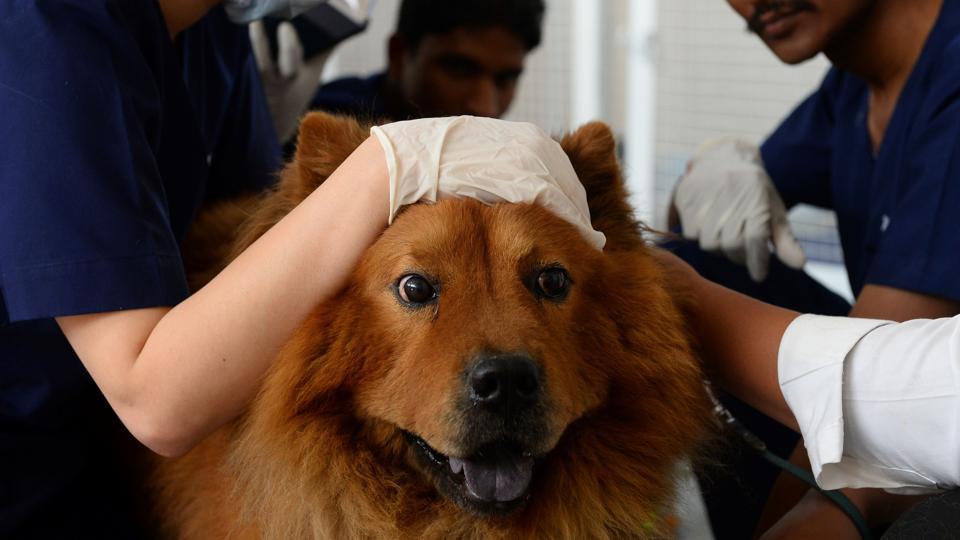
The audit also found most facilities were only open from 9am to 1pm for outpatient (OPD) services, with trained veterinary staff found missing in some facilities. (AFP file photo. Representative image)

“Delhi has 49 veterinary hospitals, 26 veterinary dispensaries, a first-aid centre and a veterinary polyclinic. Many of these institutions were found to be in poor condition, with dilapidated infrastructure, insufficient staffing and severe shortage of equipment and consumables. Out of the 77 facilities, four hospitals and six dispensaries were found to be defunct,” said the report. The report classified facilities as defunct if they were completely shut or did not have any veterinary staff.

The audit also found most facilities were only open from 9am to 1pm for outpatient (OPD) services, with trained veterinary staff found missing in some facilities. “Instead of trained professionals, sometimes, treatment was being administered by unlicensed para-vets and multi-tasking staff (MTS), including sanitation workers,” said the report.

A senior animal husbandry department official, when contacted, said, “We already know which facility requires infrastructure upgradation, which needs more equipment and which ones are short on staff. While some policies are already being implemented, others are likely to come into action soon.”

  • Jasjeev Gandhiok
    ABOUT THE AUTHOR
    Jasjeev Gandhiok

    Jasjeev Gandhiok is an Assistant Editor with Hindustan Times, where he covers environment, climate change, the clean energy transition and wildlife at the National Bureau. Gandhiok has over a decade of experience in journalism and is based in Delhi. He has reported extensively on Delhi and the National Capital Region (NCR). This includes the region's air pollution woes, a polluted Yamuna and on urban wildlife still thriving in the region. He joined HT in October 2021. Prior to that, he had five-year stint at The Times of India in Delhi, where he also covered Delhi, with a focus on environment and wildlife. Gandhiok has covered some recent events around the Capital too, ranging from the farmers' protests, the northeast Delhi riots and the CAA-NRC protests, reporting from the ground on all of these. He also travels across the country to report on how environment and climate change impact everyday life, while also writing on endangered species. His reports in 2019 on toxic leachate from Delhi's landfills led to the National Green Tribunal (NGT) taking suo motu cognisance and ultimately asking the state government to start bio-mining to flatten and remove all three landfills in the capital. He also closely tracks the implementation of government policies on climate, renewable energy and environmental protection. His focus remains on impactful, public-interest journalism which explains how environmental decisions affect people's everyday lives.Read More