
 E-Paper



Six-month extension likely for Delhi excise policy
The excise department in Delhi has proposed to extend the existing liquor policy until March 31, 2024, to ensure continuity of supply. This move is likely to delay the formation of a new policy, as the previous one was scrapped due to alleged financial irregularities. The Delhi government is expected to approve the extension, which will be the third time this year. The new policy has yet to be framed, with investigations into the scrapped policy causing delays. Experts argue that Delhi needs a new policy for stability and to encourage investment and competition in the market.


The excise department has proposed to extend the existing 2020-21 liquor policy by six months till March 31, 2024, to ensure the continuity of liquor supply in the Capital — a move that is likely to delay further the formation of a new policy since the scrapping of the controversial 2021-22 framework — officials aware of the development said on Tuesday.
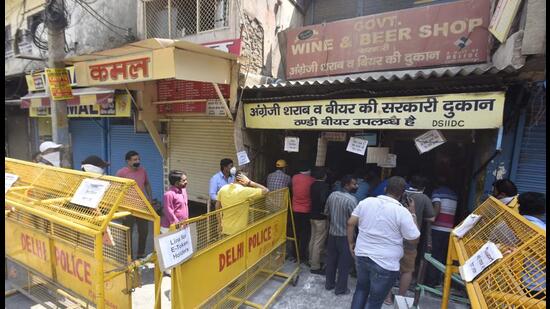
The existing excise policy expires on September 30. According to officials, the Delhi government is likely to approve the extension, which will be the third time this year. Therefore, there is unlikely to be any disruption in the supply of liquor in the Capital, both through retail vends and HCR mode, an excise official said.
After the government approves the extension, the excise department will issue a formal order in this regard. “All the licensees who want to continue their businesses further will be required to deposit a fee as per their licence to the excise department to get their licences extended. It will ensure that there is no disruption in the supply of liquor in the Capital. The policy was extended in March as well, and most of the licensees deposited proportionate licence fees and got their licences extended with the same terms and conditions,” said the above-quoted official, who did not wish to be named.
The Delhi government did not respond to HT’s queries for a comment on the matter.
The 2020-21 policy was implemented in September last year after the one for the year 2021-22 was scrapped owing to alleged financial irregularities in its formation and implementation. The current excise policy was extended in February (till March 31, 2023) and March (till September 30, 2023).
New policy yet to be framed
While the department has sought an extension, it has, like the last two times, simultaneously been directed by the government to prepare a new policy at the earliest.
A committee of senior officials for formation of the policy exists since August 1, 2022. As of September 2023, a draft policy is yet to be prepared and submitted to the government.
The panel is chaired by principal secretary, finance, and has principal secretary revenue, excise commissioner as its members, besides a domain expert. The committee was asked to submit its report within a month to the Cabinet after its formation, but officials aware of the matter say that the exercise was delayed largely due to the ongoing investigations into the now-scrapped policy.
A retired Delhi government official said the making of the new excise policy has turned out to be an uphill task not because the exercise is complex but because of the controversy surrounding the last policy and ongoing probes.
“Everyone thinks that as the existing policy is in force and the business is running as usual, except for the unreported inconveniences being caused to the consumers, the business should continue. The government is also not pushing for the new excise policy. Everyone is making an excuse of the ongoing probe and the controversy, but the probe is into the now-scrapped policy and it does not stop the government and the officers from making a new policy which will improve consumers’ experience,” said the official, asking not to be named.
Experts said Delhi needs a new excise policy because policy stability is the first requirement in the excise sector. The lack of policy stability discourages investments and ultimately affects consumer experience. At present, , there is no market competition in Delhi, as all liquor stores are government-run, and a lack of competition leads to brand pushing. Many brands are also not available in Delhi as the excise department allegedly rejected the application of French spirits company Pernod Ricard, Indospirits, and Brindco for a sale license over the ongoing investigations in the excise policy case.
Vinod Giri, director general, Confederation of Indian Alcoholic Beverage Companies (CIABC), said: “One can see that regional brands have begun occupying larger share of Delhi’s retail shelves and many well-known brands are not sufficiently available. While the overall excise revenue figures may not indicate a fall, this does affect consumer choice. It could be partly due to effort by regional players but also partly because of reducing interest of the larger pan India players in the Delhi market. That, if true, is not good for the evolution of the Delhi liquor market. It also means that some of Delhi’S business, especially in premium liquor segments, may actually be shifting to neighbouring states who have no such regulatory limitations.”
The CIABC director further said the current policy is “not designed to work for all stakeholders”. “In absence of a long-term excise policy, companies cannot make long-term plans. They need clarity on the policy front.”
Currently, Delhi does not have any private-run retail liquor stores. Delhi has 628 retail liquor stores, and 970 HCR licencees. All the retail liquor stores are run by four Delhi government corporations (Delhi State Industrial and Infrastructure Development Corporation (DSIIDC), Delhi Tourism and Transportation Development Corporation (DTTDC), Delhi Consumer’s Cooperative Wholesale Store (DCCWS), and Delhi State Civil Supplies Corporation Limited (DSCSC).
A government official said that the excise department moved the proposal for the extension of the existing policy earlier this month and a formal order for its extension is likely to be issued before the end of the month.
The existing excise policy was made in 2020. The government, at present, does not allow private players to open and run liquor vends, caps the legal drinking age at 25, and has over 21 dry days.
“Officials involved in framing the new excise policy are walking very carefully, trying to ensure that they do not land on the wrong side. No one wants to frame a new excise policy because the probe is already going on. They want to make sure that the policy is fool-proof and there are no gaps which may land them in trouble later,” said an official involved in the process, who asked not to be named.
Another official said the transition from the now-scrapped excise policy to the 2020-21 excise policy kept the excise department busy in , as it needed to open over 350 retail liquor stores in a short period of time between August to September by roping in four government agencies. It also had to register new brands under the newly implemented policy which was also a big exercise. Besides, the ongoing investigations by CBI and ED probes also kept the excise department busy, said the official.

Stay updated with all top Cities including, Bengaluru, Delhi, Mumbai and more across India. Stay informed on the latest happenings in World News along with Delhi Election 2025 and Delhi Election Result 2025 Live, New Delhi Election Result Live, Kalkaji Election Result Live at Hindustan Times.


