
 E-Paper



Stage 1 of GRAP kicks in as Delhi AQI worsens from 177 to 212 in a day
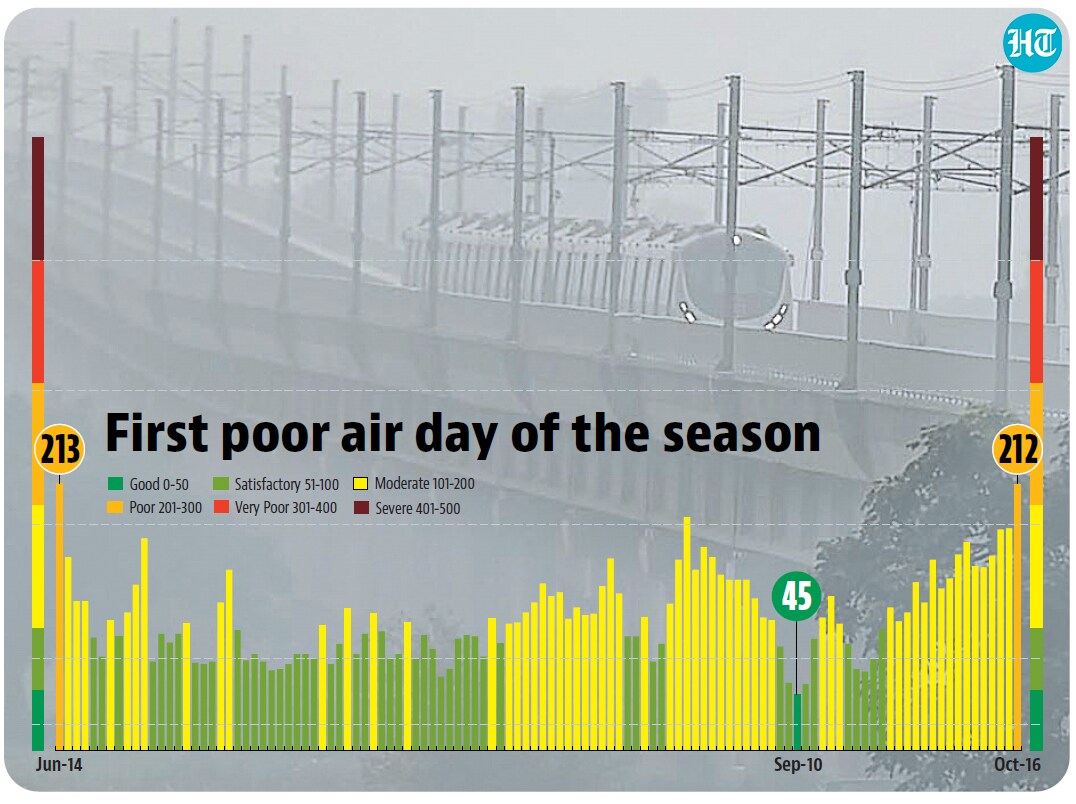
Friday was the time in 114 days – since June 14, when AQI was 213 – that the air quality was ”poor” in the city


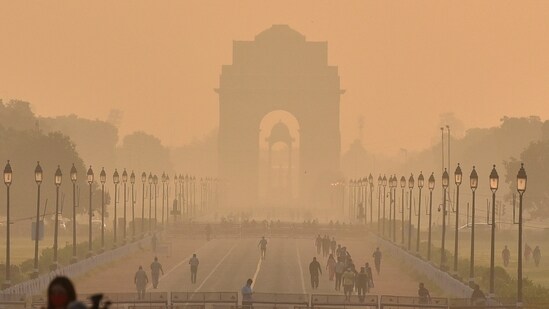
There was a sharp, but expected, deterioration in Delhi’s air quality on Friday brought about the annual factors of dip in temperatures, a drop in wind speed and increasing farm fires in neighbouring states, prompting an emergency meeting and rolling out of the initial pollution control measures to control the worsening situation.
Read here: Delhi’s AQI on rise, could touch ‘poor’ soon
The air quality index (AQI) on Friday stood at 212, a reading that means that the Capital’s air quality has become “poor”, according to the Central Pollution Control Board’s 4pm bulletin. Merely 24 hours before that, the air was far more breathable in the “moderate” category with an AQI of 177.
AQI entering the “poor” zone also means that the first stage of the government’s Graded Response Action Plan (Grap) rolls out, which means that officials can now, among other things, bar unregistered construction sites, take strict action against visibly polluting vehicles, step up PUC checks, etc.
Friday was the first time in 114 days – since June 14, when AQI was 213 – that the air quality was ”poor” in the city.
Experts warned that the situation is likely to aggravate with the onset of winter and an increase in burning of paddy in the agrarian states of Punjab and Haryana. To be sure, none of this is extraordinary for Delhi residents — the city’s air quality takes a turn for the worse each from October onwards, soon after the withdrawal of the southwest monsoon. This leads to the wind direction transitioning to northwesterly — which are cold, dry winds, and a fall in temperatures which slow down dispersion of pollutants.
In order to curb the effect, the Delhi government rolls out Grap in phases, which include ban on construction activities, plying of heavy vehicle and closure of educational institutions, among other measures, depending on the gravity of the situation.
On Friday, the stage I of Grap was enforced, that means that agencies concerned can now shut down any construction and demolition (C&D) site with an area over 500 sqms that is not registered with the government. Other measures that have come into effect include deployment of traffic police at all congestion prone intersections, asking power discoms to minimise supply interruptions and carrying out periodic mechanised sweeping and water sprinkling across Delhi’s roads.
“In wake of the overall air quality of Delhi surpassing the ‘moderate’ category (AQI above 200) and entering the ‘poor’ category ranging between 201-300, the CAQM sub-committee for Grap met today to take stock of the current air quality of Delhi-NCR. While comprehensively reviewing the air quality scenario in the region as well as the air quality forecasts made available by both IMD and the Indian Institute of Tropical Meteorology, it was noted that there has been a sudden dip in air quality in the last 24 hours,” said the CAQM sub-committee on Friday.
Forecasts show that the air quality is likely to remain “poor” over the weekend, it added. Stage I also encourages offices to start a unified commute for its employees to reduce road traffic; ensure regular lifting of C&D, municipal solid and hazardous waste; take strict action against visibly polluting vehicles; step up PUC checks and ensure only approved fuels are being used in industries.
“The dynamic model and meteorological forecasts by these agencies predict the overall AQI of Delhi will stay in the ‘poor’ category in the next few couple of days and so it is considered necessary to invoke Stage-I of GRAP with immediate effect in the entire NCR...,” CAQM said.
CAQM has further advised the public to follow the citizens’ charter, a set of guidelines to help reduce air pollution as part of Grap.This includes keeping engines properly tuned, having their PUC up to date, ensuring no idling of vehicles take place at red lights. Citizens are also encouraged to plant more trees, not to dump waste in the open and to not ply using end-of-life vehicles, it said.
VK Soni, scientist at IMD and member of the CAQM sub-committee, said, “Primary reason behind the deterioration in AQI was low night-time temperature, accompanied by slow or calm winds, which were allowing PM 2.5 to accumulate. Farm fires are beginning to appear, but the count is still fairly low and the overall contribution is negligible.” On Friday, Punjab and Haryana recorded 91 and 19 stubble burning events, respectively, data showed.
Read here: Action against violators as AQI stays poor in Greater Noida
Dipankar Saha, former head of CPCB’s air laboratory, said it is important to ensure strict implementation of Grap measures, as meteorological conditions will negatively impact Delhi’s air quality in the coming weeks.
Stay updated with all top Cities including, Bengaluru, Delhi, Mumbai and more across India. Stay informed on the latest happenings in World News along with Delhi Election 2025 and Delhi Election Result 2025 Live, New Delhi Election Result Live, Kalkaji Election Result Live at Hindustan Times.


