
 E-Paper



Still seek govt nod to probe public servants in graft cases: CBI tells SC
The bench had reserved verdict on whether the order will be implemented prospectively (to future cases) or retrospectively (to include previous cases).


The Central Bureau of Investigation (CBI) on Wednesday said that it still seeks the government’s sanction to probe corruption cases against bureaucrats despite a top court order doing away with the mandate in 2014.
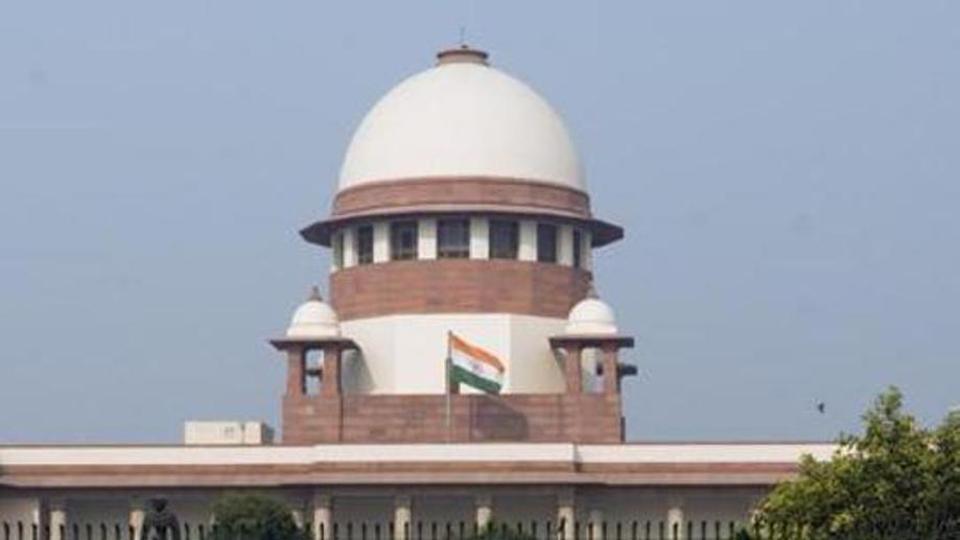
On May 6, 2014, a five-judge Constitution bench had held that Section 6A of the Delhi Special Police Establishment (DSPE) Act, which gave protection to bureaucrats from facing CBI probes in corruption cases without the government’s nod, was invalid. The DPSE Act governs the agency’s functioning.
The bench had reserved verdict on whether the order will be implemented prospectively (to future cases) or retrospectively (to include previous cases).
On Wednesday, additional solicitor general (ASG) SV Raju appeared for the agency and said that even if the judgment is held to be prospective, the protection of Section 6A will continue to be available to accused public servants under a new law introduced by Parliament in 2018 restoring the blanket protection.
He was referring to Section 17A of the Prevention of Corruption Act which holds that no enquiry or investigation can be conducted against any public servant, both serving and retired, without prior sanction of the competent authority for any acts or decisions taken during discharge of their official duty.
Also read: Those using two-finger test for rape survivors should be prosecuted: SC
The bench, comprising justices Sanjay Kishan Kaul, Sanjiv Khanna, AS Oka, Vikram Nath and JK Maheshwari, had sought the view of the CBI on how to apply the judgment after hearing arguments from accused in two cases demanding that the protection offered under Section 6A till the date of judgment not be disturbed.
“Suppose the judgment is held to be prospective, a situation can arise where evidence is yet to be collected or some evidence has already been collected. Suppose evidence is not collected and the police now want to collect evidence, there is no question of Section 6A now but they will have to get approval under Section 17A of PC Act as that would kick in for the pending cases,” said Raju. However, he clarified that in cases where a court of law has taken cognizance of the charges or the charge sheet is already filed, Section 17A will not be applicable.
Countering the CBI’s stand, the Union government told the Court that Section 6A and Section 17A are not the same. Solicitor general Tushar Mehta, appearing for Centre, said, “In case this Court observes that Section 17A is a different ‘avatar’ (version) of Section 6A, it can have an impact on pending proceedings. This provision (Section 17A) is already under challenge in a PIL filed before this Court on the ground that it is contrary to the five-judge bench decision in the Subramanian Swamy v Union of India case.”
Mehta tried to distinguish Section 6A from 17A by pointing out that while the protection of prior government sanction under Section 6A applied only to levels of joint secretary and above, Section 17A makes no such distinction. Further, the former provision placed a bar on CBI while the latter provision applies to police in general.
“Our country runs through bureaucracy. They give their ideas that lead to policy decisions. The threat always was hanging on them of a potential prosecution. This led to a policy paralysis,” Mehta said.
Justice Kaul, heading the bench, told Mehta, “There was a protection offered to officers. That continues in one form or the other. Section 6A was held to be wrong for being discriminatory. The protection was, per se, not held to be wrong. A legislation was later brought (in 2018) to cure this defect. To some extent it is political in nature. But a crucial aspect is that the new law was not a re-enactment.”
On the issue whether the judgment is to be retrospective, Mehta said, “When a court deems a law to be unconstitutional, that bench alone knows the consequences of its decision. Only that bench is to decide whether to make it prospective.” He pointed out that if a later bench holds the judgment to apply for future cases as well, it will open a floodgate of litigation knowing the ingenuity of litigants in our country, he added.
The bench told Mehta, “You are saying we should not be engaging in this exercise. But that has its own consequences. We are not privy to the cases pending at the time when Section 6A was struck down. Suppose a review or curative is later filed. In one case, the Union itself has filed a review after 19 years that we are hearing. Can we say we won’t decide it. One has to appreciate the exigencies of the institution.”
Also read: SC notice to Assam on plea against conversion of madrasas into govt schools
The CBI supplemented its argument by stating that the immunity granted under Section 6A was never absolute. ASG Raju said that even when Section 6A was in place, the bar was only against investigation but not trial. Citing earlier Supreme Court cases, Raju argued that Section 6A protection will not be available in case of a private complaint or where CBI is not the investigating agency.
The bench also heard arguments from senior advocates Arvind Datar and Amit Desai appearing for the two accused. They argued against the 2014 judgment being declared retrospective.
Datar said that considering Section 17A being in place, the protection offered by Section 6A should be read as continuous even for the period till Section 17A was brought in.
The issue had come before the five-judge bench following a reference made In March 2016.
The reference order by a two-judge bench said, “The provisions of Section 6A(1) of DSPE Act do indicate that for officers of the level of Joint Secretary and above a kind of immunity has been provided for. Whether there can be a deprivation of such immunity by a retrospective operation of a judgment of the Court, in the context of Article 20 of the Constitution of India, is the moot question that arises for determination in the present case.”

Stay updated with all top Cities including, Bengaluru, Delhi, Mumbai and more across India. Stay informed on the latest happenings in World News along with Delhi Election 2025 and Delhi Election Result 2025 Live, New Delhi Election Result Live, Kalkaji Election Result Live at Hindustan Times.


