
 E-Paper



Supreme Court to hear Delhi government’s plea challenging Ordinance on July 10
A CJI-led bench passed the order on an urgent mentioning of the petition by senior advocate Abhishek Manu Singhvi for the AAP government in Delhi

 Prefer HTon Google


The Supreme Court has agreed to hear on Monday the petition filed by the Delhi government challenging the validity of the recent Ordinance promulgated by the Centre to wrest control from the Aam Aadmi Party (AAP) government on transfers and postings of officers working in departments that come under the Arvind Kejriwal government.
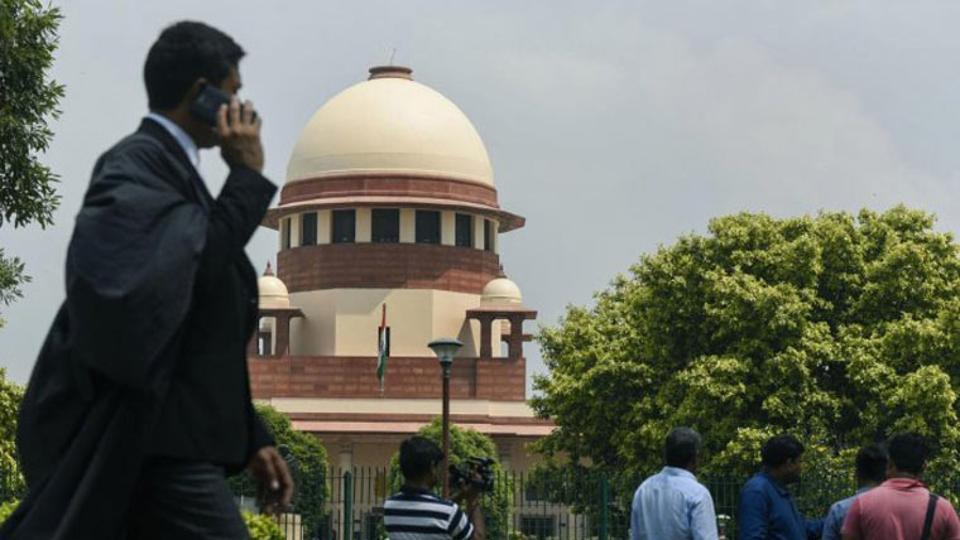
A bench of Chief Justice of India (CJI) Dhananjaya Y Chandrachud, justices PS Narasimha and Manoj Misra passed the order on an urgent mentioning of the petition by senior advocate Abhishek Manu Singhvi appearing with advocate Shadan Farasat for the AAP government.
Singhvi told the court that the petition challenges the Ordinance ‘in whole’. He informed the top court that on Tuesday, the SC had issued a notice on a petition filed by the Delhi government which challenged only a part of the Ordinance – Section 45D – as it related to the appointment of chairperson of Delhi Electricity Regulatory Commission (DERC).
The Delhi government, in that matter, had objected to the June 21 order issued by Centre appointing former Allahabad high court judge, Justice (retd) Umesh Kumar, as DERC chairperson claiming that such power to appoint lies with the Delhi government. The court had placed the matter for hearing on July 11 while recording Delhi government’s statement that it will not proceed to administer oath to the new DERC chairperson pending the court’s decision.
The Ordinance passed by the Centre on May 19 introduced a series of amendments to the Government of National Capital Territory of Delhi Act, or GNCTD Act 1991, to strengthen the position of the lieutenant governor (L-G) in being the final authority in deciding matters relating to the transfer and postings of bureaucrats. The Ordinance essentially negates the top court’s authoritative ruling by a Constitution bench on May 11 giving complete executive and legislative control over the bureaucracy to the Delhi government.
The petition challenging the constitutional validity of the Ordinance was filed on June 30 where the Delhi government has also sought a stay on its operation. The petition drafted by advocates Shadan Farasat and Hrishika Jain said that the Ordinance, in “effect and design”, shows contempt for the elected government by making a pretence of involving the chief minister as part of a new body called the National Capital Civil Service Authority (NCCSA) created under the ordinance.
It further claimed that the ordinance violates the federal, democratic governance envisaged for the Delhi government under Article 239AA of the Constitution. The May 11 judgment clearly stated that Article 239AA exempts three entries in the State List of the Constitution – namely land, public order and police – from the purview of the Delhi Assembly but on all other entries, the Delhi government will have legislative and executive control. The top court was of the view that a democratically elected government is responsible for the decisions and policies which has to be implemented through the bureaucracy and hence collective responsibility is an important component of parliamentary democracy.
The Delhi government argued in its petition that by vesting control over civil servants in the hands of the Union, and then conferring wide discretionary powers on civil servants to override the government of national capital territory of Delhi (GNCTD), “the Ordinance in effect and design allows the Union to take over the governance of Delhi.”
Also Read: AAP burns ‘effigies’ of services ordinance in Delhi
The ordinance introduces a whole new chapter – Part IVA – in the GNCTD Act to create the NCCSA and a public service commission for transfers and postings of the officers serving in Delhi government departments.
The NCCSA was to comprise the chief minister as chairperson and the chief secretary and home secretary as its other two members. This body is to recommend transfers, postings and disciplining of civil servants posted in GNCTD’s domain to the L-G.
The Delhi government ridiculed the creation of the new body where the chief minister will be in minority and can be outvoted by the two bureaucrats. “Though the ordinance feigns a degree of democratic involvement by making stray references to the chief minister, it in fact relegates the chief minister to being a minority-voice even in the authority tasked with making nonbinding recommendations,” the petition said.
The AAP government claimed that the Ordinance seeks to do exactly what the May 11 judgment had sought to undo and since the basis of judgment, i.e., the power of Delhi government under Article 239AA of Constitution, has not been amended, the Ordinance is unconstitutional and violates the SC judgment.
The May 11 judgment became necessary as the Ministry of Home Affairs had in 2015 issued a circular exempting ‘services’ and ‘public service commission’ contained in Entry 41 from the ambit of the Delhi government’s control. This circular was challenged by the Delhi government first before the Delhi high court and then in the Supreme Court which led to the May 11 decision.


