
 E-Paper



Why Supreme Court’s dog order is mission impossible in Delhi
From space requirements to funding gaps, experts and officials agree: the capital is simply not equipped to execute the order.

 Prefer HTon Google


Delhi’s civic authorities are staring at an impossible task after the Supreme Court on Monday ordered that all stray dogs in the city be rounded up within two months, experts warned, highlighting how the city has no permanent dog shelter, no updated count of its stray population, inadequate manpower, and no funds to feed or house the estimated million-odd animals.
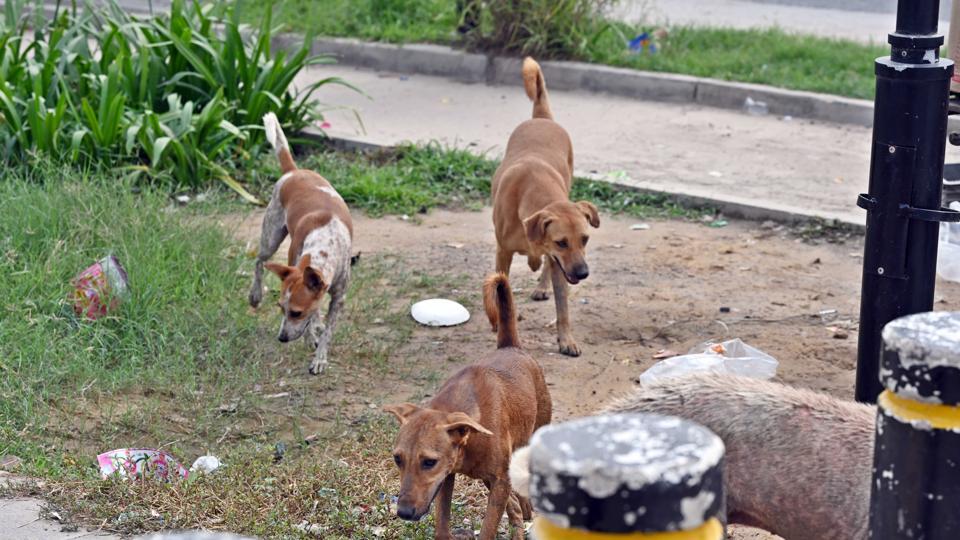
From space requirements to funding gaps, experts and officials agree: the capital is simply not equipped to execute the order.
They add that the failure of the Municipal Corporation of Delhi’s (MCD) Animal Birth Control (ABC) and immunisation programme has worsened the problem, making large-scale capture and housing both impractical and inhumane.
No permanent shelters
At present, MCD operates 20 Animal Birth Control (ABC) centres in partnership with NGOs. These are temporary holding units for sterilisation, where dogs are kept for up to 10 days post-surgery before being released back to their territories -- a system in line with the Animal Birth Control (Dogs) Rules, 2023.
Also Read: SC orders removal of all stray dogs from Delhi-NCR streets within 8 weeks
Turning these ABC units into permanent shelters, officials warn, would at best accommodate 3,500–4,000 dogs at a time. With Delhi’s street dog population estimated close to a million, that would leave more than 96% of the animals without a place to go. “Even if every existing kennel is repurposed, the space is a fraction of what would be needed,” a veterinary department official said.
An unknown population
The last pan-Delhi dog census was conducted in 2009, when the population was pegged at 560,000. A 2019 Delhi Assembly sub-committee estimated the number at 800,000. Officials now put it close to a million, but no formal survey has been conducted in years.
Without accurate data, experts say, the city cannot even plan for the space, manpower and feeding costs required.
Feeding costs alone could cripple the cash-strapped MCD. Standing committee chairperson Satya Sharma estimates that even at a modest ₹40 per dog per day, feeding close to a million dogs would cost around ₹3 crore daily — or over ₹1,000 crore a year.
“And that’s without factoring in salaries, transport, medical care, or construction,” said an MCD official, adding that sterilisation payments to NGOs are already delayed. At present, NGOs are paid ₹1,000 per dog for sterilisation and post-operative care, but many say dues remain pending.
Maneka Gandhi, former MP and animal rights activist, called the SC’s timeline “impossible” without billions in funding. “They would need 1,000–2,000 centres so dogs don’t fight, all located away from residential areas. Construction alone would cost ₹4–5 crore per centre. Feeding alone could cost ₹5 crore a year for the most basic arrangement. Overall, they’d be looking at spending around ₹10,000 crore — money the Delhi government simply does not have,” she said.
The lack of space
Under current rules, each dog needs a minimum of 12 sq ft of space during sterilisation. For permanent housing, veterinary experts say, that rises to 40–45 sq ft per dog to prevent stress, disease and fights.
“To humanely house even half the estimated population, you’d need hundreds of acres and thousands of enclosures. You can’t just pile dogs into overcrowded sheds — they will fight, spread disease, and die in large numbers,” said Ravindra Sharma, former director of veterinary services. “And you cannot mix dogs from different territories; they will become aggressive.”
The MCD sub-committee on dogs has asked officials to identify community halls, unused municipal properties and 77 Delhi government veterinary facilities as potential shelter sites. But none of these are equipped for long-term animal care.
Then comes the issue of catching and transporting a million dogs, which itself would require hundreds of animal catchers, trained handlers, ambulances, and quarantine units -- all of which the MCD lacks. At present, only two dog-catching vans operate in each of the 12 administrative zones.
Even the SC’s directive to start with “ferocious” dogs poses logistical hurdles. The MCD plans to prepare a list of 1,000 aggressive dogs per zone — 12,000 in total — based on repeated bite complaints. But officials admit that identifying and capturing even this smaller group will stretch resources.
Experts warn
Animal welfare groups have reacted sharply to the SC order, warning of mass suffering if dogs are removed en masse without infrastructure.
“This is not public safety -- it is an inhumane approach that will backfire,” said Sanjay Mohapatra of House of Strays. “Attempting to build and maintain enough shelters for these numbers overnight is impossible. Overcrowding will cause immense suffering, spread of disease, and deaths.”
Gauri Maulekhi of People for Animals said the MCD’s own facilities are already “underperforming” and cannot handle lifetime care. “Existing NGO shelters are overcrowded. Without capacity, any large-scale capture will end in disaster,” she said, accusing authorities of inflating sterilisation figures and refusing independent oversight.
Also Read: Animal protection body flags concerns, legal violations, after 'shocking' SC order on stray dogs
Many experts point to the failure of the MCD’s ABC and vaccination programme as the root cause. According to an MCD report, 2,70,172 dogs were sterilised over the past three years — about 10,000 a month. Over seven years, officials claim nearly 700,000 sterilised, but activists dispute the numbers. “Even if these numbers were accurate, sterilisation has to be sustained at over 70% coverage in each locality to stabilise populations. That has not been happening,” Maulekhi said.
Sonya Ghosh, an activist who has worked on setting up feeding points in Delhi, said the ABC centres themselves have minimal capacity. “Most hold only 20–30 dogs at a time — just enough for one surgical batch. The city’s 77 veterinary hospitals are poorly staffed, under-equipped, and not being used for animal care as they should be.”
Several activists have also stressed that the eight-week timeline set by the SC is not grounded in operational reality.
Maneka Gandhi said any attempt to rush the process would cause “dogs to be crammed together in unsafe, unsanitary conditions” leading to high mortality. “Dogs are territorial. Moving them en masse will make them fight. You will create a bigger problem.”
The SC’s order also raises legal contradictions. Under the ABC Rules, community dogs must be sterilised, vaccinated, and released back to their territories — not permanently relocated. Mohapatra warned that bypassing this framework could invite legal challenges and worsen human-animal conflict.
“The law is designed to stabilise populations over time while maintaining community balance,” he said. “Sheltering all dogs is neither feasible nor legally supported.”
As Delhi’s civic bodies scramble to identify properties and prepare lists of “aggressive” dogs, activists warn that the outcome could be chaotic: overcrowded pounds, disease outbreaks, mounting public complaints, and massive financial strain.



Stay updated with all top Cities including, Bengaluru, Delhi, Mumbai and more across India. Stay informed on the latest happenings in World News along with Delhi Election 2025 and Delhi Election Result 2025 Live, New Delhi Election Result Live, Kalkaji Election Result Live at Hindustan Times.


