E-Paper



Delhi: Yamuna water level up after drop over 2 days, no need to panic, say officials
Minister Atishi said heavy rainfall in parts of Haryana has led to the increase even as an official attributed it to the release of water from drains in Delhi

 Prefer HTon Google


The water level in the Yamuna increased from 205.45 metres at 6am to 205.50 metres at 8am and 205.76 metres at 11:00am even as it continued to be above the danger level after a steady drop over the last two days amid forecast for light rains on Monday.
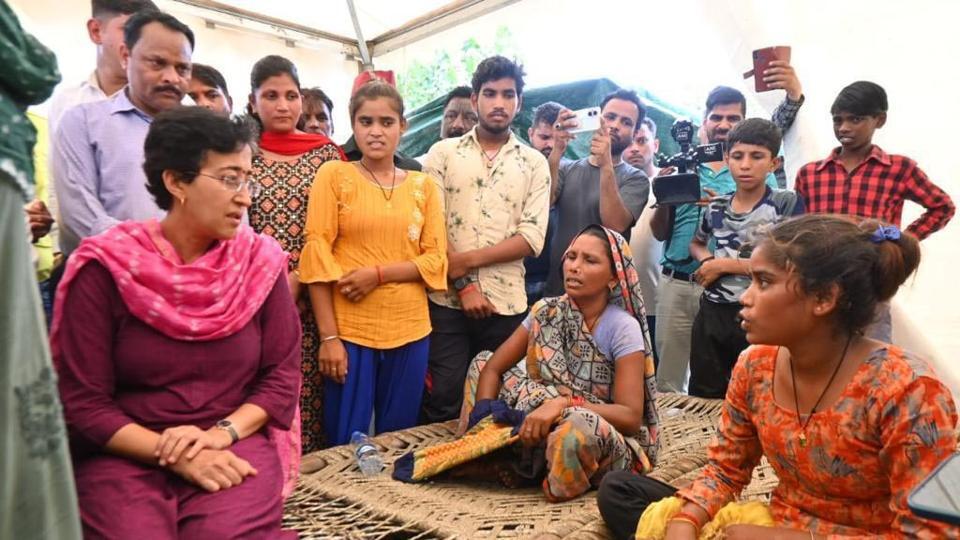
Minister Atishi said heavy rainfall in parts of Haryana has led to the increase even as an official attributed it to the release of water from drains in Delhi. “The Central Water Commission has estimated that the water level can reach up to 206.1 metres tonight. Delhi does not face any danger due to it but the people in relief camps are requested not to go back. They should return when the water level falls below the danger mark [205.33 metres],” she said.
The official cited above said the discharge from the Hathni Kund Barrage in Haryana has not increased significantly. “...around 45-50,000 cusecs water was being released at an hourly rate which is not alarming,” said the official, who did not want to be named.
The official cited dewatering operations and added the accumulated water from drains in Delhi was being dumped into the river. “[This] is leading to minor fluctuation [in water level]. People should not be alarmed.”
A yellow alert, the second of the warnings asking people to watch and be updated, has been issued for Tuesday as India Meteorological Department said moderate rainfall was expected.
The river reached an all-time high level of 208.66 metres at 6pm on July 23, breaking previous records and flooding low-lying parts of the city.
Flooded arterial roads were reopened as the water levels receded over the last two days. Dewatering operations continued near Rajghat, Red Fort, and Vikas Marg.
Chief minister Arvind Kejriwal said as the water level has gone down, people evacuated from flooded areas will start returning to their homes. “We will help to restore normalcy to life. I appeal to everyone to help these people,” he said. The government has said every flood-hit household will get ₹10,000.
The flooding on Thursday led to the closure of three water treatment plants, impacting a third of the city’s water supply. The Okhla and Chandrawal plants have been restarted while the biggest plant at Wazirabad is only partially operational.
Kejriwal said that the capacity of the Wazirabad plant is 134 MGD. “It has started producing 54 MGD. The equipment got most damaged in this plant. Hopefully, it should start working at full capacity soon. Engineers are working 24x7,” he tweeted.