
 E-Paper



Delhiwale: Mathura's enduring legacy
A tasty landmark in the Walled City.


It’s been three years since he passed into the great unknown. His legacy in this drastically changing world is staying inviolated.
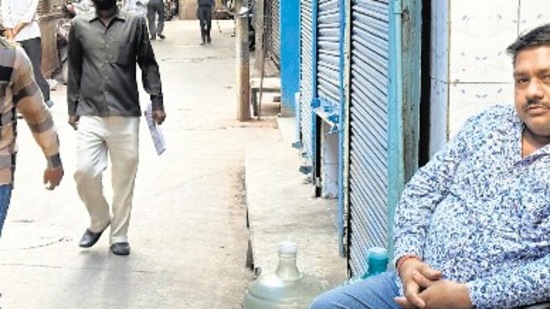
The sweet shop that Manohar Lal Garg left behind is very small, and it is not even very old, but the landmark inspires a reverence. It is as much a heritage as the locality it is a part of. Kucha Pati Ram in the Walled City is a magnificence of old houses with arresting balconies and doorways. This small establishment boasts of no similarly vintage character, but one is awed by its endurance. Even though its principal offering celebrates a place other than our Delhi.
The Manohar Lal Doodh Waale offers the most delicious Mathura ka peda. A few hours away from Delhi, Mathura is the holy land of playful Krishna, the god famously fond of doodh, makhan and mithai. The town is also known for its sweet, gooey, dark-brown pedas. In 1970, a halwai—Manohar Lal—moved from that city’s Chhata Kasba to the capital, and opened his mithai shop in this picturesque address. He died in March, 2019.
This afternoon his son, Sanjay, is sitting by the counter. Giving him company: rabri, khurchan, malai laddu, milk cake and the tasty-swadisht peda. “I changed nothing here after papa went away,” he says. “Because this shop continues to belong to papa… he had started it… it remains his.” There is only one alteration. The wall behind is decked with a framed portrait of Manohar Lal.
With his practised hands, the late peda pioneer would effortlessly transform, within minutes, an entire heap of caramelised cardamom-flavoured khoya, lying shapeless in front of him, into dozens of pedas, as witnessed by a repeat visitor in the past. He would concentiously dust each peda with grounded sugar, after which he would stack the sweet spheres one upon another in a chipped steel tray for display. Son Sanjay follows the same modus operandi, though “we also have a karkhana (kitchen) with karigar (cooks) for basic preparations.” He gestures towards the lane ahead.
The place rustles out 10kg pedas daily, priced at 500 rupees per kilogram, and opens daily from 7am to 10pm. While here, do not forget to look for the two flutes hanging from the shop’s ceiling. “As you know, Bhagwan Krishna plays bansuri… Papa had hung it many, many years ago. These bansuris are his darohar (legacy).” In his late 40s, the father of three doubts for the shop’s future after him. “I think my children will want to do something else.”


