
 E-Paper



2 tanks at Basai WTP dry due to shortage at source
Basai water treatment plant in Gurugram faces water shortage as canal water supply decreases due to farmers diverting water for irrigation, impacting city's water supply.

 Prefer HTon Google


Two water storage tanks at the Basai water treatment plant of the Gurugram Metropolitan Development Authority (GMDA) have gone dry, leaving only one day’s water supply stock remaining, GMDA officials said on Thursday. The shortage is due to a reduction in canal water supply from the NCR (National Capital Region) water channel over the past 10 days.
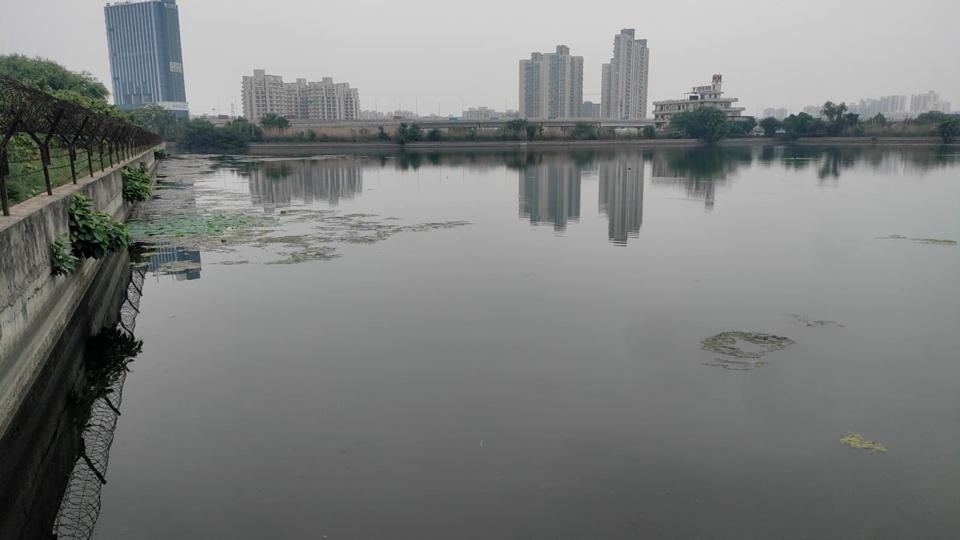
GMDA officials reported that the canal water supply has diminished significantly, forcing them to rely on the buffer stock maintained at the Basai plant. The decrease in supply is attributed to farmers in villages along the NCR water channel diverting canal water for irrigation due to lesser rainfall this year.
The GMDA supplies 570 million litres per day (MLD) of water to the city from its Basai and Chandu Budhera plants, treating raw water from the Yamuna provided by the irrigation department. The authority maintains a three-day buffer supply for the city, but any reduction in raw water availability from the Yamuna impacts storage and could affect supply if the shortage persists.
According to officials, typically, the GMDA receives 240 cusecs of canal water from the NCR water channel, but in the last eight to ten days, this has reduced by 20 to 25 cusecs daily.
On July 17, the GMDA wrote to the agriculture department, stating that reduced canal water supply from the NCR Water Channel and Gurugram Water Supply channel has begun to impact their ability to provide potable water to the city. “The supply has particularly decreased in the last ten days, and we are now receiving 20 to 25 cusecs less water daily, affecting our operations. We have been meeting demand by using buffer stock, but the situation is alarming as two tanks at Basai are completely dry, leaving only one day’s buffer stock,” said Abhinav Verma, executive engineer, GMDA.
Verma added that the GMDA typically maintains a three-day buffer stock at both Basai and Chandu Budhera. If the raw water shortage continues, they may need to ration water in the future. “We have requested the irrigation department to improve water supply in the coming days,” he said.
Officials noted that a portion of canal water is being diverted by farmers for crop irrigation due to inadequate monsoon rains. The agriculture department stated they are supplying all available water through the existing canal network to the GMDA and are taking action against individuals involved in water theft. “We supply as much water as the infrastructure allows to the GMDA daily. We are also taking action against violators who divert canal water for irrigation and have deployed three patrolling vehicles with officials to prevent theft, with police assistance,” said Haryana irrigation department’s executive engineer Manjeet Hooda.


