
 E-Paper



3rd sero survey: Over 69% of children in Gurugram show immunity against Covid-19
Over 69% of children aged 6-17 years in Gurugram district were exposed to Covid-19 during the second wave of the pandemic, showed results of the third serological survey released by the health department on Monday


Over 69% of children aged 6-17 years in Gurugram district were exposed to Covid-19 during the second wave of the pandemic, showed results of the third serological survey released by the health department on Monday.
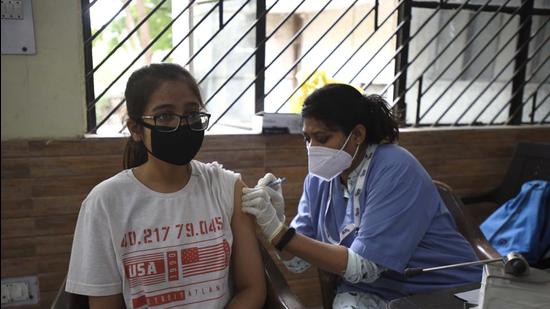
According to the results, antibodies were found in 68.4% of children between the age group of 6 and 9 years, while antibodies were found in 70.4% of the children aged 10-17 years. Gurugram reported overall seropositivity of 78.3%, higher than the overall seropositivity in Haryana of 76.3%.
In urban areas of Gurugram, antibodies were found in 80.3% of the surveyed population and in rural areas, antibodies were found in 77% of the population. Around 3,000 samples were collected from Gurugram, including those of 1,200 children.
In the second statewide serological survey, held in October 2020, 16,512 samples, including 800 from Gurugram, were tested, following which a seropositivity rate of 14.8% was recorded, with the urban population showing a seropositivity rate of 25.9% and rural population 10.1%
A serological survey finds the level of antibodies that may have been developed either after an infection or being vaccinated. The results will help the department plan strategies and assess their preparedness for the third wave of Covid-19. In the third sero survey, children were included for the first time to assess the level of immunity in this vulnerable and unexposed cohort.
State health minister Anil Vij, while releasing the report on Monday, said, “The survey was conducted in all districts of Haryana by health department in collaboration with department of community medicine, PGIMS, Rohtak. In this round of sero survey, sample size was increased up to 36,520 as compared to previous sero surveys conducted in the state where it was 18,700 (seroprevalence- 8%) in first round and 15,840 (seroprevalence -14.8%) in second round. As per the analysis done, the seropositivity in third round was found to be 76.3% (urban 78.1% and rural 75.1%).”
Explaining the results, Rajeev Arora, the additional chief secretary for health, said that such results are an impact of the aggressive Covid-19 vaccination programme that supplemented a higher seroprevalence in the community.
“Although, the results of this round of sero survey are somewhat near to the level of achieving herd immunity, large proportion of population is still vulnerable. Therefore, enforcing Covid-19 appropriate behaviours is still our utmost priority to safeguard our population of Haryana,” Arora said.
Dr Virender Yadav, the chief medical officer of Gurugram, said, “The seropositivity is according to what had been predicted by the experts, we now also know what percentage of children were exposed to Covid-19. But, as cases are still being reported, the main focus should be on following all safety protocols. Along with that, people should get themselves vaccinated for better precaution.”
In Haryana, the highest seropositivity was observed in Kurukshetra (85%) and lowest was observed in Faridabad (64.2%).
Dr Rajesh Kumar, a former head of the department of community medicine and school of public health at PGIMER, said, “These results show that a high percentage of children in Gurugram were exposed to Covid-19 during the pandemic whether it was symptomatic or asymptomatic along with the general population and have developed antibodies. We also have to see the transmissibility factor of the virus, the Delta variant was highly transmissible, but if there is a mutation again then seroprevalence can be higher too. But, still a large part of the population has not developed antibodies, so Covid-19 appropriate behaviour is a must.”
In the first statewide serological survey, held in August 2020, 18,905 samples, including 844 from Gurugram, were tested, following which a seropositivity rate of 8% was recorded, with the urban population showing a seropositivity rate of 18.5% and the rural population 5.7%.
Stay updated with all the Breaking News and Latest News from Mumbai. Click here for comprehensive coverage of top Cities including Bengaluru, Delhi, Hyderabad, and more across India along with Stay informed on the latest happenings in World News.


