
 E-Paper



Ammonia emissions worsening Gurugram air pollution, study finds
A new report found ammonia levels in Gurugram’s Sector-51 breached national safety limits, with pollution trends continuing to rise in 2026.

 Prefer HTon Google


Gurugram continues to remain among Haryana’s most polluted cities, with a new study identifying ammonia emissions as a major but largely overlooked contributor to worsening air quality in the region.
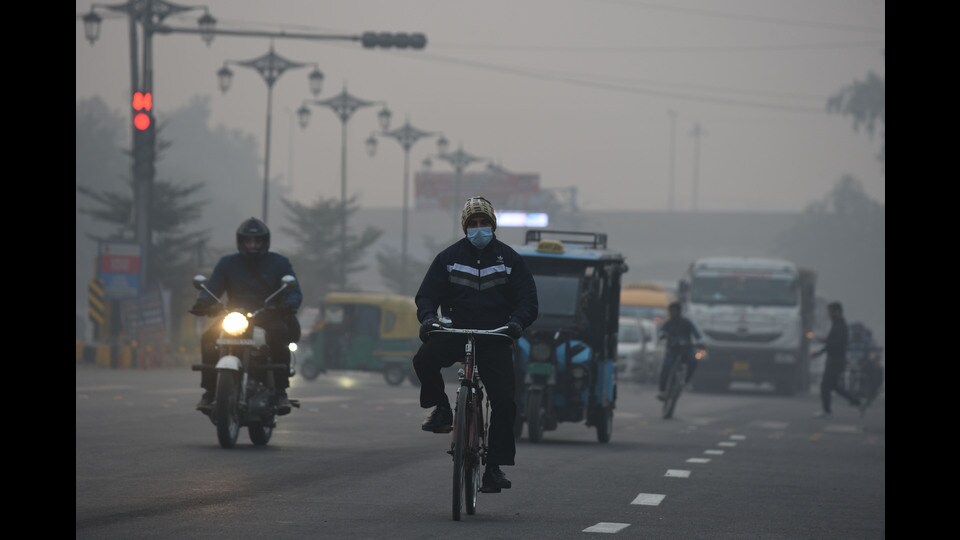
The main air pollutants in Haryana are PM2.5, PM10, nitrogen oxides (NOx), sulphur dioxide (SO3), ozone (O3), carbon monoxide (CO) and ammonia (NH3). PM2.5 and PM10 are the most critical pollutants due to their direct health impact. While ammonia is not a primary pollutant, it plays a key secondary role by reacting with other gases to form fine particulate matter and contributes nearly 30% to 40% of PM2.5 pollution, experts said.
The report by Respirer Living Sciences, published on Tuesday, found that particulate pollution levels across Haryana consistently exceeded national standards between 2024 and early 2026, with cities in the southern belt—Gurugram, Faridabad, Bahadurgarh and Manesar—recording the highest concentrations of PM2.5 and PM10.
According to the analysis, annual PM2.5 levels ranged between 62 and 77 micrograms per cubic metre, significantly above India’s prescribed limit of 40 µg/m³. PM10 concentrations were also found to be more than double the permissible annual standard.
In Gurugram, ammonia levels breached safety thresholds at multiple locations. Sector-51 recorded an annual average ammonia concentration of 138.3 µg/m³ in 2025, exceeding the national limit of 100 µg/m³, the report stated.
Respirer Living Sciences analysed air quality trends using data from 31 monitoring stations across Haryana between 2024 and early 2026, primarily using data from the Haryana State Pollution Control Board (HSPCB) continuous ambient air quality monitoring network, along with validated datasets from IMD and other research sources. The study examined PM2.5, PM10 and ammonia (NH3) levels through multi-year trend analysis, hotspot mapping and cross-correlation techniques to assess ammonia’s role in secondary particulate formation. It also analysed seasonal variations, particularly during winter and early summer, to understand changing pollutant interactions. The analysis found that average ammonia levels rose around 8% year-on-year between 2024 and 2025, with early 2026 trends indicating a continuing rise. Specific hotspots in Gurugram were also found breaching prescribed limits.
Experts and evironmentalists, meanwhile, said ammonia emissions largely originate from agriculture, livestock waste and fertiliser use in peri-urban and rural areas surrounding Gurugram. Simultaneously, vehicular emissions, construction dust and industrial pollution release NOx and SO2, which react with ammonia to form secondary PM2.5, further worsening air quality. They added the ammonia itself is not particulate matter but a precursor that contributes to PM2.5 formation. Vaishali Rana, Gurugram-based environmentalist, said ammonia is a gaseous pollutant that reacts with nitrogen oxides (NOx) and sulphur dioxide (SO2), mainly emitted by vehicles and industries, to form secondary particulate matter such as ammonium sulphate and ammonium nitrate. “These fine particles are what we measure as PM2.5 and are harmful to human health,” she said.
Rana added that the process is especially significant in Gurugram due to its proximity to peri-urban and rural areas with high agricultural emissions. “When these mix with urban emissions, they create a chemical environment that accelerates secondary PM formation,” she said.
Separately, a World Bank assessmentfrom March cited in the report noted that nearly 30% to 40% of PM2.5 pollution in Haryana is linked to secondary particulate formation. “Crucially, one of the most significant sources of PM2.5 is secondary particles, formed when ammonia and other nitrogen gases from agriculture react with sulphur dioxide and nitrogen oxides from transport and industry,” the assessment noted.
The findings come as Haryana recently secured $300 million (around ₹2,500 crore) support from the World Bank under the Haryana Clean Air Project for Sustainable Development. Signed in March this year between the World Bank, Government of India and the Haryana government, the project aims to strengthen pollution monitoring systems, expand air quality networks and enable data-driven policymaking across the state.
However, the report said existing air quality management strategies remain focused on primary pollutants and do not adequately address secondary particulate matter driven by ammonia emissions.
Founder and CEO, Respirer Living Sciences, Ronak Sutaria said, “Haryana sits at the intersection of intensive agriculture, rapid industrialisation, and high population density. Our data shows that ammonia is no longer just an agricultural footnote—it is a measurable, growing contributor to the PM2.5 that millions of people breathe every day. A dedicated NH3 monitoring network is the logical and necessary next step.”
He added, “We know ammonia is a problem and the data makes that clear. However, a dedicated system to track it in real time, at the source, is missing. The Haryana Pollution Control Board, the Union Environment Ministry, and the Agriculture Ministry can come together and support such a network. Ten sensors, two kinds of locations, one goal: cleaner air for Haryana.”
The report recommended setting up a pilot network of 10 ammonia sensors across Haryana, including five in urban hot spots such as Gurugram and five in agriculture-dominated districts including Hisar, Sirsa and Jind, to generate real-time emissions data.
Environmentalists also flagged gaps in the existing monitoring network, stating that many stations are located near industrial zones and fail to adequately capture agricultural pollution affecting peri-urban regions like Gurugram.


Stay updated with all the Breaking News and Latest News from Mumbai. Click here for comprehensive coverage of top Cities including Bengaluru, Delhi, Hyderabad, and more across India along with Stay informed on the latest happenings in World News.


