
 E-Paper



As Gurugram’s air quality dips, Grap comes into force in Delhi-NCR
The city had last recorded “poor” air on October 1, with an Air Quality Index (AQI) reading of 219 as per the data shared by Central Pollution Control Board. On Wednesday, Gurugram recorded an AQI reading of 238, a significant drop from Tuesday’s AQI reading of 168


The city’s air quality deteriorated from “moderate” to “poor” after three days on Wednesday, leading to the district administration directing all its agencies and departments to implement stage one of the Graded Action Response Plan (Grap) to curb pollution in accordance with directions of the Commission for Air Quality Management (CAQM).
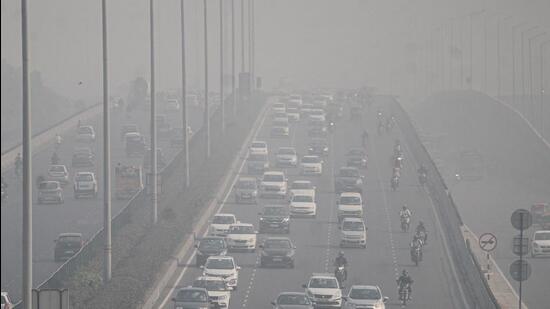
The city had last recorded “poor” air on October 1, with an Air Quality Index (AQI) reading of 219 as per the data shared by Central Pollution Control Board. On Wednesday, Gurugram recorded an AQI reading of 238, a significant drop from Tuesday’s AQI reading of 168.
An AQI reading between zero and 50 is considered “good”, 51 and 100 “satisfactory”, 101 and 200 “moderate”, 201 and 300 “poor”, 301 and 400 “very poor”, and 401 and 500 “severe”.
Under Grap stage one, which is invoked when air quality deteriorates to “poor”, authorities are to halt construction and demolition at sites spread over at least 500 sqm, which are not registered on the state pollution portal. There will be increased focus on mechanised sweeping and sprinkling of water, and steps will have to be taken to ensure proper management of solid waste, construction debris and similar material, the order by CAQM said.
The CAQM on Wednesday observed in its order that there has been a sudden dip in air quality in the last 24 hours in the region. While this is likely due to a localised influence and the forecasts do not predict any further deterioration, the sub-committee decided that all actions envisaged under stage one of the Grap should be implemented with immediate effect in the NCR as a precautionary measure.
Gurugram deputy commissioner Nishant Yadav said that directions have been issued to all the departments to enforce Grap seriously. “We have already asked government departments to appoint nodal officers to implement Grap and we shall ensure it is enforced in letter and spirit,” said Nishant Yadav, deputy commissioner, Gurugram.
On Wednesday, Gurugram recorded a maximum temperature of 34.4 degrees Celsius and a minimum temperature of 24.6 degrees Celsius.
The India Meteorological Department in Chandigarh, meanwhile, said that there could be light to moderate rain and thunder showers at isolated places across the state in the next four to five days. The increase in wind speed and light rain may help in dispersal of pollutants, experts said.
Sachin Panwar, a city-based air quality expert, said that wind is changing direction and the temperature has also started to dip, which will increase pollution levels across the NCR in coming weeks. He, however, said that in the next few days, wind speed is expected to increase and there is going to be light rain, which will help reduce the pollution levels for some time. “Pollution will rise by the middle of the month as temperature dips and stubble burning starts. The peak pollution levels will be less this year as Diwali is earlier than usual, and the weather is still warm but things will become difficult starting November,” he said.

Stay updated with all the Breaking News and Latest News from Mumbai. Click here for comprehensive coverage of top Cities including Bengaluru, Delhi, Hyderabad, and more across India along with Stay informed on the latest happenings in World News.


