
 E-Paper



Cops nab 3 from Delhi for illegal call gateway racket tied to foreign scammers
Police say gateways made 3,000 calls daily for fraud gangs abroad; cloud-hosted software traced to China and one device seized from Gurugram during raids.

 Prefer HTon Google


Three suspects, including two Tibetan refugees, were arrested from Delhi’s Majnu Ka Tilla for allegedly smuggling and installing makeshift call rerouting gateway devices that converted internet calls into domestic calls to aid cybercrime gangs operating from abroad, police said on Wednesday.
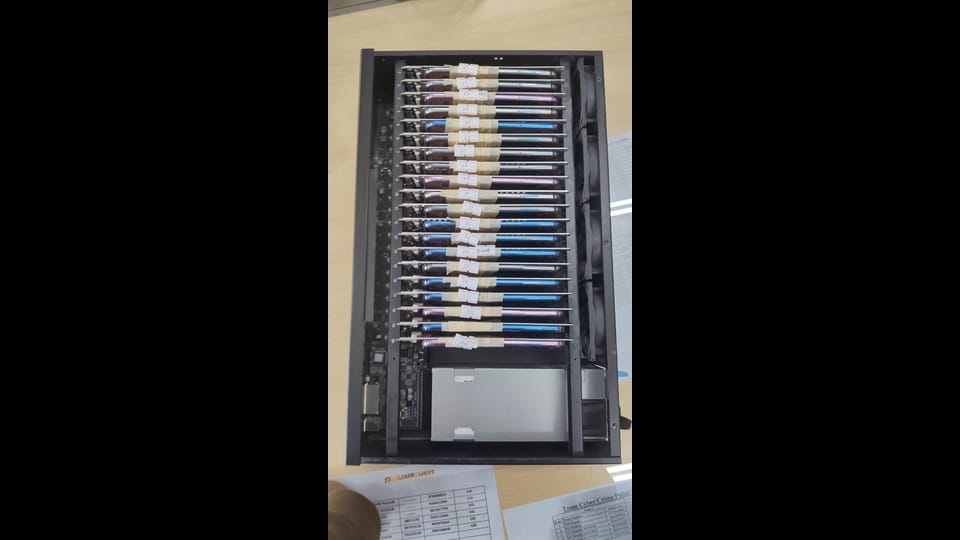
The Voice over Internet Protocol (VoIP) – Global System for Mobile Communication (GSM) gateway, comprised of multiple phone motherboards spliced together as a grey-route termination setup, functioned as illegal virtual high-frequency telephone exchanges, routing voice over internet protocol (VoIP) into domestic GSM calls to facilitate digital arrest, gaming, and stock market frauds, investigators said.
Police stated the trio was in contact with a Chinese national, Tsega, operating from Kathmandu, Nepal. Tsega had sent two SIM box gateways—fitted with motherboards of 23 phones and Virtual Desktop Server Manager (VDSM) software—via courier on a bus from Nepal to Delhi.
“One exchange, containing three phone motherboards, was discovered in a four-storey residential building in Sikandarpur, Sector 28, and was busted during a raid on February 10. A second box was discovered in a residential building in Majnu Ka Tila but was yet to be made operational,” said Priyanshu Dewan, ACP (cybercrime).
The accused were identified as Karma, 32, of Dimapur in Nagaland; Lobsang Tsultrim, 33, of Mandi in Himachal Pradesh; and Ngawang Gyaltsen, 35, of Dharamshala in Himachal Pradesh, police said. Karma and Tsultrim were arrested on Saturday, and Gyaltsen on Monday. The trio were allegedly trying to flee to Nepal when caught, they added. Karma’s wife, Kung Panmae, 30, was arrested on February 11 after the Sikandarpur raid, officers said. Following Gyaltsen’s interrogation, police recovered the second SIM box gateway, 20 phone motherboards, and a laptop from Majnu Ka Tilla.
Dewan said, “Gyaltsen and Tsultrim were born in China and had been living in Dharamshala after arriving in India in 2005 as Tibetan refugees. The duo were experts in Mandarin and Taiwanese. Gyaltsen was connected to Tsega via WeChat, an app banned by the central government. Tsega had lived in Dharamshala from 2005 to 2008 as a Tibetan refugee before taking Chinese citizenship.”
The ACP claimed this was the first time such virtual exchanges used by Chinese cyber gangs had been busted in the country. “Investigation shows the VDSM software used for making remote GSM calls was hosted in a cloud service in China.”
Police said Tsega paid ₹50,000 to Gyaltsen and Tsultrim to make the exchange functional. Karma and his wife received ₹1 lakh a month earlier to keep the SIM box gateway operational at their accommodation. Inspector Amit Sharma, station house officer of the Cybercrime police station (east), said, “At least 3,000 calls a day were made from the box at Karma’s house, making it appear callers were in India.” Karma worked as a translator for Chinese engineers at an EV battery factory in Sohna.
Karma and Tsultrim were on three-day police remand for interrogation and were forwarded to judicial custody with Gyaltsen on Tuesday.
On complaint of a police official, an FIR was registered against the suspects under sections 318 (4) (cheating and dishonestly inducing delivery of property), 319 (cheating by personation) and 61(2) (criminal conspiracy) of Bharatiya Nyaya Sanhita and sections 42(2) (unlawful access to telecom network) and 42(3) (misuse of telecom identifiers) of The Telecommunication Act at Cybercrime police station (east) on February 10.

Stay updated with all the Breaking News and Latest News from Mumbai. Click here for comprehensive coverage of top Cities including Bengaluru, Delhi, Hyderabad, and more across India along with Stay informed on the latest happenings in World News.


