
 E-Paper



DTCP notifies land purchase policy for Gurugram metro corridor
The policy allows direct negotiation with landowners and offers compensation plus rehabilitation benefits under the 2013 land act.

 Prefer HTon Google


The Department of Town and Country Planning (DTCP) has notified a new land purchase policy for the Gurugram metro project, aimed at quicker settlement of claims of landowners whose properties and structures will be acquired for the metro corridor from Millennium City Centre to Cyber Hub via Old Gurugram.
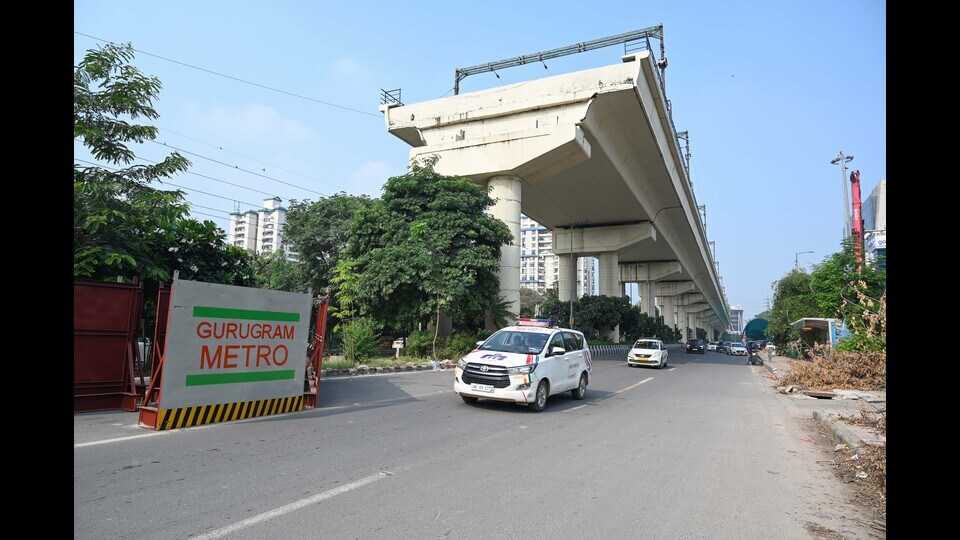
As per GMRL survey, total balance land required for the project is 24.76 hectares besides the right of way and the metro corporation requires 1.27 hectare land which is under private ownership, while 23.49 hectares is government land that it needed for construction of stations, viaduct and metro depot.
The report further said total structures impacted by the project are 210. Out of these 14 properties are owned by title holders, eight are occupied houses and 24 are shops. The number of non-title holders is 138, one property is owned by a trust, the properties owned by the government are 52, one property is owned by a religious trust and four are owned by a community
Under the policy, notified on January 8, the cost of direct land purchase and all associated expenses will be borne by Gurugram Metro Rail Limited.
According to the notification, the key feature of the policy is the adoption of a direct purchase method that is inclusive of all compensation, relief and rehabilitation benefits as specified under the Right to Fair Compensation and Transparency in Land Acquisition, Rehabilitation and Resettlement Act, 2013, for titleholders. In addition, the policy offers an incentive of 25% over and above the compensation calculated under the 2013 Act, inclusive of relief and rehabilitation benefits. The land acquisition policy will be based on direct negotiations with the owners. In case an owner is not ready to sell the land, then the policy states that land will be acquired under the act.
“In view of the very lengthy process of land acquisition through the Right to Fair Compensation and Transparency in Land Acquisition, Rehabilitation and Resettlement Act, 2013, and the need to ensure timely commissioning of the metro project, a policy has been formulated for acquisition of private land in Gurugram for metro projects in Gurugram. This policy will be implemented for very critical cases of private land requirement affecting the commissioning of the project,” said AK Singh, additional chief secretary, town and country planning, in the notification.
The policy lays down eight steps for direct purchase of land. The process will begin with a site inspection by the chief project manager of GMRL, followed by presentation of land details before the land acquisition committee. A public notice will be issued prior to purchase, and after completion of the process, the acquired land will be transferred to GMRL.
As per GMRL surveys, two houses in Sector 4 and one house in Sector 9 fall within the alignment of the Gurugram metro rail and will need to be acquired. Additionally, under the Old Gurugram Metro project, a metro depot is planned in Sector 33, where around 100 labour rooms constructed on about one-and-a-half acres of land will have to be demolished.
GMRL officials said most of the Millennium City Centre–Cyber City metro corridor, including spurs to the Dwarka Expressway and Gurugram railway station, passes through government land. However, in certain stretches, the viaduct passes through or close to private properties that will need to be acquired or demolished. A small patch of private land is also required for the metro depot despite it being largely planned on government land.


Stay updated with all the Breaking News and Latest News from Mumbai. Click here for comprehensive coverage of top Cities including Bengaluru, Delhi, Hyderabad, and more across India along with Stay informed on the latest happenings in World News.


