
 E-Paper



Excise policy shake-up ends unchecked Ahata culture in Gurugram
The changes have significantly impacted the region’s nightlife economy, particularly in Gurugram, where several large ahatas—some spread over 25,000 square metres—now face closure

 Prefer HTon Google


A sweeping overhaul of Haryana’s excise policy has upended the state’s BYOB (bring your own bottle) culture, with the government capping tavern (ahata) size to 1,000 square metres, banning live performances, and tightening visibility and licensing norms. The policy—approved last week by the state Cabinet—aims to crack down on rogue ahatas that had mushroomed in districts like Gurugram, Faridabad, and Sonipat, often operating like unlicensed pubs.
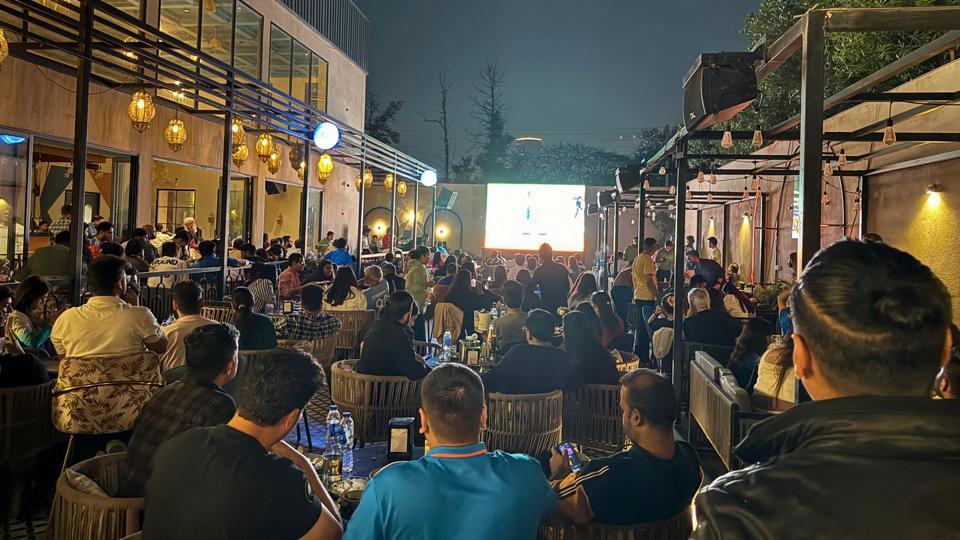
The changes have significantly impacted the region’s nightlife economy, particularly in Gurugram, where several large ahatas—some spread over 25,000 square metres and built at costs exceeding ₹15 crore—now face closure or major operational adjustments.According to the new policy, ahatas must be capped to 1,000 square metres in size and require additional license fees, which vary by district. A fee of 4% of the license fee will be levied in Gurugram, 3% in Faridabad, Sonepat and Panchkula and 1% in other districts.
“We had invested nearly ₹12 crore to set up one of our ahatas—interiors, soundproofing, kitchen equipment, everything. It was a high-end space. Now, it’s worthless overnight. How can the government treat serious investors like this?” said Shashank Sangal, who owns the Liquor Forte chain and several premium taverns.
The government contends that the reforms are intended to restore regulatory order in a sector plagued by violations. Until now, ahatas functioned in a regulatory grey zone—offering live entertainment, full-fledged food service, and even valet parking, all under the pretext of being attached to retail liquor vendors. Several such establishments had allegedly violated land use norms, encroached on green belts, and evaded commercial taxes, officials claimed.
“These ahatas were never meant to become entertainment venues or multi-storey clubs. The new policy is meant to bring them back to their original function—controlled, enclosed drinking areas linked to licensed vends. It’s about restoring regulatory clarity and consumer safety,” said Jitender Dudi, deputy excise and taxation commissioner (west), Gurugram.
“These measures help restore the original purpose of taverns—as modest, enclosed drinking spaces attached to licensed vends—not as de facto bars, nightclubs, or entertainment venues operating under a retail license,” said Rahul Singh, trustee of the National Restaurant Association of India (NRAI). “The new conditions—including restrictions on liquor service, entertainment, and size—ensure consumer safety, policy clarity, and a level playing field in the hospitality ecosystem.”
Neeraj Yadav, another prominent ahata operator, said the policy disrupts a long-standing informal practice where new vend winners would pay a premium to take over existing taverns. “We would get good compensation each year from the new tender holder. But with this space cap and restrictions, no one will touch these venues now. The entire trade is being pushed to a corner,” he said.
Licensed bar and restaurant operators, long frustrated by what they saw as unfair competition from unregulated ahatas, have welcomed the crackdown. “These ahatas operated without accountability. They hosted live bands, served food without fire safety or FSSAI licences, and sold liquor at higher rates without GST,” said Varun Duggal, head of alliances at Massive Restaurants. “Legal bars were losing business due to this parallel system,” he added.
Duggal, however, flagged concerns about the increase in excise licence fees for restaurants. “With the hike, profitability could take a further hit in an already struggling sector.”
The policy marks a shift from a revenue-maximisation model to a compliance-first approach. The excise licence fee for Gurugram has been raised from 3% to 4% of the liquor zone fee, and enforcement mechanisms have been strengthened. Officials believe these reforms will curb illegalities and boost VAT collections while dismantling a grey market that had thrived for years. The crackdown comes in the wake of a series of investigative reports by HT that exposed the misuse of ahata licences, illegal live performances, and rampant encroachments.
“We remain committed to collaborating with the state to promote safe, compliant, and vibrant hospitality experiences for all,” Singh added on behalf of NRAI.

Stay updated with all the Breaking News and Latest News from Mumbai. Click here for comprehensive coverage of top Cities including Bengaluru, Delhi, Hyderabad, and more across India along with Stay informed on the latest happenings in World News.


